Pittsfield Subcommittee Supports Paint Stewardship Efforts
PITTSFIELD, Mass. — The discussion of paint stewardship has reached the City Council.
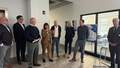
On Monday, the Public Works and Utilities subcommittee voted to draft a letter in support of paint stewardship legislation that diverts unwanted paint from waste streams. Paint stewardship is part of the product stewardship approach, in which manufacturers take responsibility for the end life of their products.
Tom Irwin, a member of Dalton's Green Committee, has gotten a number of the county's communities on board and the bill is co-sponsored by Berkshire legislators.
"Why is product stewardship or paint stewardship important? In 2022, Massachusetts generated 6 million tons of solid waste. That was up by 6 percent from 2018 but the state only has 3.2 million tons of incineration capacity per year. This means that there's going to be at least 2.5 to 2.7 million tons of waste that has to be landfilled," he explained.
"There are only five municipal landfills still existing in the state so it results in approximately 2.5 million tons and growing of waste that must be hauled out of state to places as far away as Ohio and South Carolina. This is expensive with increases of 30 percent to 35 percent over the last five years and it has an extremely large carbon footprint. Product stewardship in general and paint stewardship in particular, because of its near-term benefits are important tools to help decrease this expensive burden and better position Massachusetts for the future."
Through the paint stewardship program, residents bring unwanted liquid latex and oil-based paint to participating retail stores or transfer stations. The products are then hauled to reprocessing plants where 80 to 85 percent of liquid latex paint is reblended and about 80 percent of oil paint is burned as coal fuel in industrial furnaces.
Consumers pay between 75 cents and a dollar per gallon at the time of purchase or $1.75 for five gallons, as Irwin said "The goal is not to make money it's to break even."
He explained that the program is of no cost to municipalities, significantly decreases toxic waste, and serves as a model for expanded product stewardship legislation.
Last month, the Environment and Natural Resources and Agriculture Committee voted in favor of the legislation and passed it to the Ways and Means Committee.
"I think where the manufacturers benefit and paint stores benefit is this provides an outlet where their materials can be disposed of which makes it worthwhile to them etc.," Ward 1 Councilor Kenneth Warren said.
"So it's an advantage to them that advantage to the homeowners or consumers and it's an advantage the communities because I keep being told we're going to be talking about waste disposal in the City of Pittsfield, looking at other ideas in the near future anyway so this would dovetail that."
Ward 2 Councilor Brittany Bandani asked where the point-of-sale fee goes and Irwin clarified that the money is collected by the retailer and sent to the paint manufacturer who then gives it to the organization that does all the hauling and reprocessing.
It was also clarified that the paint is then sold as a "recolored" product and is not rebranded as the original paint.
"From an environmentalist perspective, anything to do with waste management that saves materials and prevents toxic waste from being dumped inappropriately is great," Bandani said.
"I always tried to look for what would potentially be a financial incentive for the manufacturer just because that's the world we live in but I'm glad to hear that that money is collected, even though they represent the manufacturer, the money is used exclusively for the processing transportation collection sites so nobody's benefiting financially from this. It's just to save paint and prevent improper disposal."
Ward 5 Councilor Patrick Kavey asked how this would coincide with the new waste transfer station that is expected to open in the spring.
Casella Waste Management purchased the waste transfer facility on Hubbard Avenue from Community Eco Power LLC, which filed for bankruptcy in 2021 and has demolished it for redevelopment into a waste transfer station.
Irwin reported that the company is in support of the effort because it will not be in their hands.
The subcommittee will send this to President Pete White asking for a letter of support to the Berkshire delegation and the chairs of the two committees where the bill is being discussed.