North Adams Seeks Federal Grant to Repair Walnut Street Retaining Wall
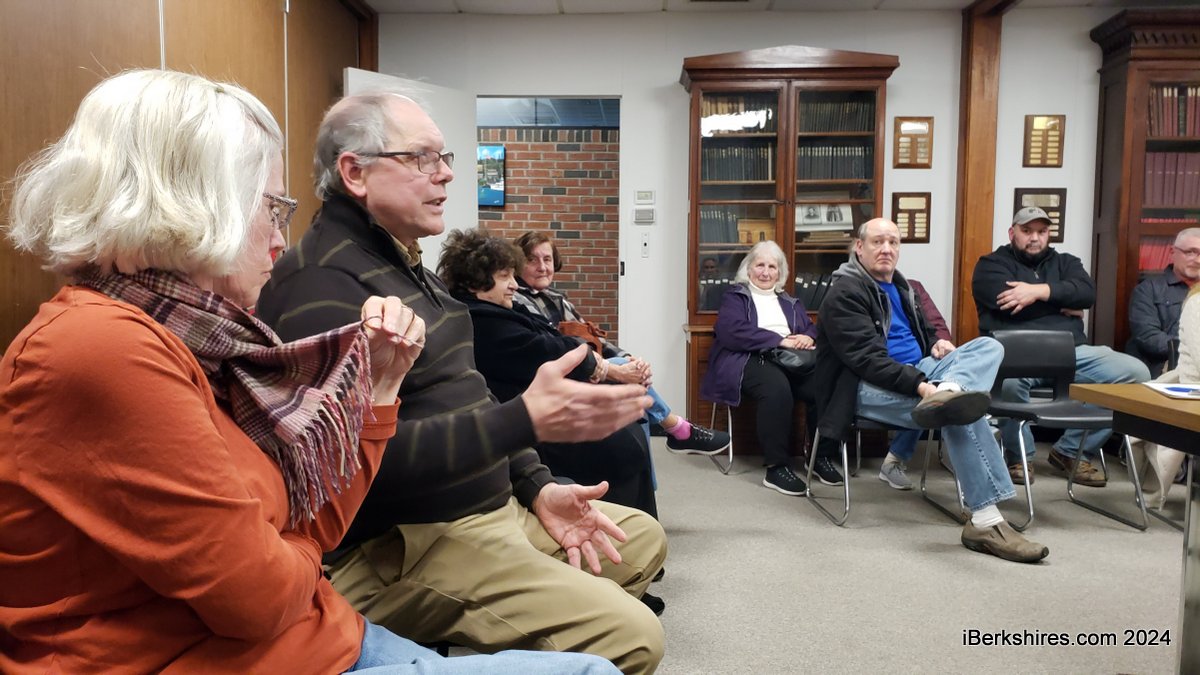
Residents raise concerns about flooding and road safety at the meeting on March 11.
"Don't think that we're not doing anything because we've done quite a bit of work internally," Mayor Jennifer Macksey told about two dozen residents in person and online recently during a meeting at City Hall. "You're not forgotten. So the takeaway from tonight is you're not forgotten."
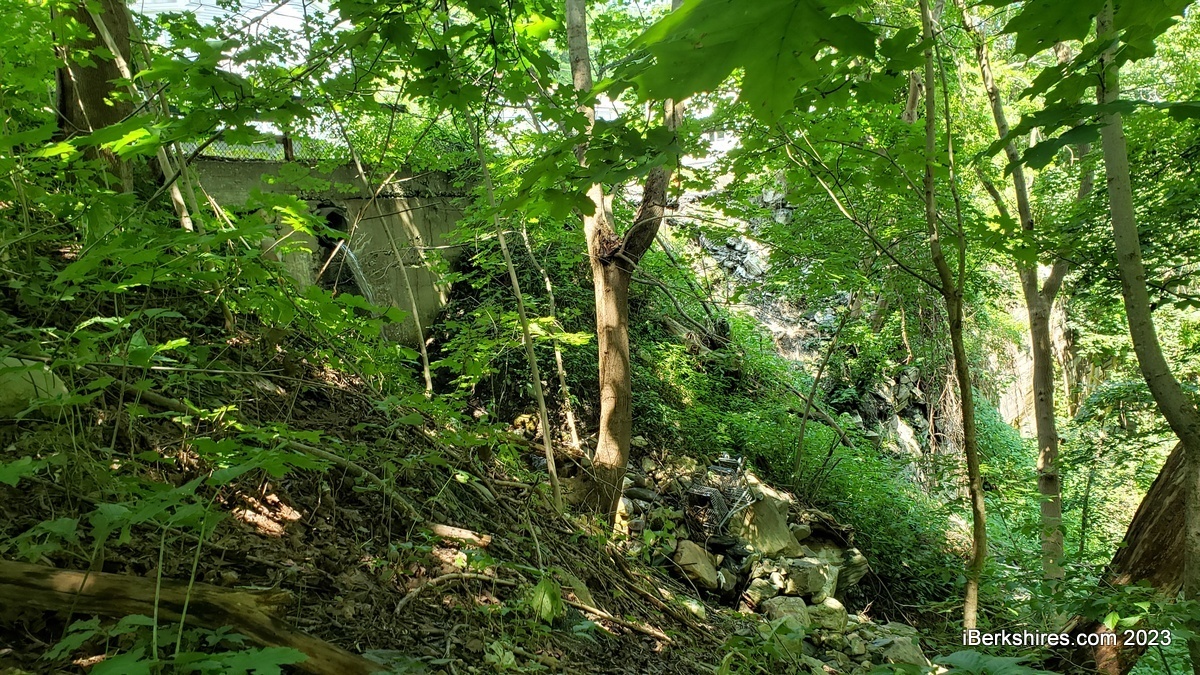
Neighbors have complained for years about the deterioration of the road above the wall and the supporting infrastructure, particularly after the east edge gave way two years ago. The recent heavy rains have also contributed to the undermining of the roadway.
The mayor said Tighe & Bond was hired to provide some preliminary engineering with the Department of Public Works. The city's grants and procurement specialist Stacy Abuisi has been seeking the grant funding to make the repairs.
The proposal is to reconstruct some of the dry-laid stone retaining with new cast-in-place concrete and to relocated the existing drainage and stabilize the slope. The runoff will be tied into the storm drainage system at the bottom along State Street.
The estimated cost is $1,999,791 of which $1,499,843 would be covered by a grant through the Massachusetts Emergency Management Agency. The mayor says the balance of $499,948 is "doable."
"It's not all about the wall itself. It's about a lot of storm remediation, and capturing the runoff that I know goes to Keith and Laurie's property because I've walked that several times with them," the mayor said, referring property owned by the Simons along State Street.
"We know that there's a storm remediation issue coming off the mountain. We especially know what happened to us on State Street on July 10, the infamous date that we never forget, in 2023 when we had a significant collapse on State Street. We know it's coming off the mountain and it's the same issue that's happening in your neighborhood."
Walnut Street runs above State Street and the section that collapsed is above a large gorge just north of Oak Avenue. A pipe runs under the road and streams water into the gorge — a 20- or 30-foot drop.
"Now to all of you and me maybe seems slow. But we've been working with Berkshire Gas and Tighe & Bond and the Highway Department monitors that area regularly," Macksey said.
The repairs are dependent upon the Building Resilient Infrastructure and Communities grant the city applied for in January. The federal government has $1.8 million for BRIC and Flood Mitigation Assistance for this round of funding for hazard mitigation projects. The grant awards are expected to be made later this year.
"We feel confident we will get the grant but then awarded versus funding are two different things," the mayor said, also noting that the budget and the bids may also be different. "Now in the meantime, the team is always working on grant opportunities. I don't feel comfortable taking this to a full band and have the city be on the hook for the whole $2 million project when we have opportunities for grant money."
Either way, fixing the issues is at least a year or more away, something that had residents worried although the mayor assured them that the engineers say the area is stable even though "it's frustrating and it's even scary."
One resident was concerned about "the safety and strength of the road" and others about the water issues affecting their properties.
A resident of Dean Street said the gutter that ran along her road has mostly disappeared; Commissioner of Public Services Timothy Lescarbeau said he will address it.
The mayor acknowledged that the city has "water issues in places where we've never had water issues" but that the road is being closely monitored. Lescarbeau has marked the road and said Tighe & Bond comes regularly to check it for movement.
"You're going to get some cracking but we're more worried about it sloughing off," he said. "[Tighe & Bond] have gone up there right after it rains, during a dry spell, they don't go as often. ... we're up there all the time during the heavy rains."
Resident Richard Dasatti asked if more could be done right now to stabilize the wall. Lescarbeau said putting up a frame wouldn't address the underlying issues causing the deterioration. These include wooden pipes that are/were carrying the water.
"I feel if we just put the wall back we're going to be in the same situation further down the line without proper drainage," said Lescarbeau. "It's the heavy rains, it's saturated and it can't take anymore. ...
"It's a 130-year, 140-year-old dry stack wall with no proper drainage because they didn't do that. then. The dry stack allows the water to flow out through the stones. But when you get the water that we've had in the last 10 years — it's gonna go somewhere."
Dassatti also asked that more signage be put up because of how narrow the road is in that section, it's closer to one lane than two. (He requested to be put on the City Council agenda for Tuesday to discuss the topic; Councilor Ashley Shade is requesting his request be referred to the Traffic Commission and Public Safety Committee.)
Tags: federal grants, flooding, road damage,