Williamstown Youth Center's History Explored
WILLIAMSTOWN, Mass. — For about 100 years, in one incarnation or another, the Williamstown Youth Center has been improving the lives of the town's children.
It is a legacy of service that, for current Executive Director Michael Williams, is summed up in the story of one longtime member of the WYC family.
"One of the first people I met here when I joined the organization was someone who first started coming when he was in first grade and continued participating in programs, and, when he aged out of the programs, started working for the Youth Center," Williams said, referring to Andrew Agostini, now a teacher at Mount Greylock Regional School. "A few years ago, he joined the board of directors. Now, he's the vice president of the board.
"His story got me thinking about the impact this place has had on people and what an important part of the fabric of the community the Youth Center is."
Those thoughts helped motivate Williams to partner with the Williamstown Historical Museum on an exhibit about the center's history.
The special exhibit kicks off with an invitation-only reception for WYC board members past and present on July 20.
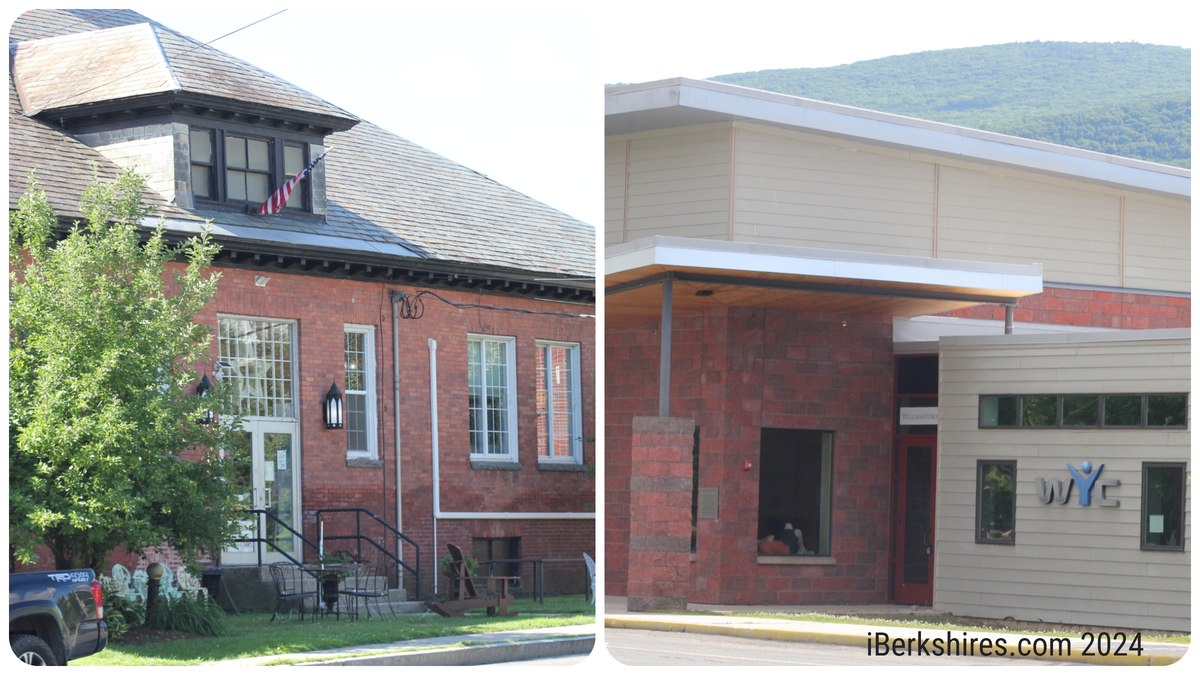
Many town residents remember that the WYC has its roots in a different youth organization and more remember when it was housed on Cole Avenue before moving into its current digs on the campus of Williamstown Elementary School.
But even Williams, who served as an assistant director at the center from 2006 until taking over as director in 2017, has learned something about the organization he leads in the process of developing the exhibit.
"I knew most of the recent history," Williams said. "The evolution from the Boys Club to the Boys and Girls Club to the Youth Center. I was familiar with that general information.
"What really surprised me was how the Great Depression really profoundly affected this community. If I look at the earlier history, there was a lot of conversation, a lot of awareness around the economic struggles of the community and a real desire by the people organizing the youth center that they needed to help other people.
"I was really struck by that."
Williams' exploration of the Youth Center's genesis revealed that the idea predates even the Great Depression by nearly two decades, hearkening back to the Progressive Era at the turn of the 20th century.
"If you want to go way back, the first mention of having something like a youth center in town was in 1901," Williams said. "A Williams [College] professor started talking about Williamstown not having a YMCA, not having a library, etc.
"In the 1920s, Williams undergrads felt they needed to start offering some things for ... it was just boys at the time. And there were a number of different clubs for boys that sprung up in the mid-1920s. The Boys Club really was the consolidation of those different clubs. Back in the day, they decided it would make more sense to have everything under one roof."
For a while, that roof was the former Spring Street School (located where the post office now stands), before the club relocated to the former Cole Avenue School after it closed in 1932.
It affiliated with the national Boys Club organization in 1927, was incorporated as the independent Williamstown Boys Club in the 1953, changed to the Boys and Girls Club in the '70s and was rechristened the Williamstown Youth Center toward the end of the 20th century.
Youth sports were an emphasis for the center in its various iterations from day one, though the sports themselves have changed.
"Baseball, football, boxing, wrestling, volleyball, Ping-Pong and tug-of-war," Williams said. "Camping was a big outdoor activity — hiking and also camping.
"The programming has really evolved for the organization."
Today, in addition to sports ranging from soccer to hockey to track and field, the Williamstown Youth Center offers arts and theater programs, school vacation camps and an after-school program.
True to the progressive spirit that birthed the antecedent clubs of the 1920s, the contemporary WYC provides "full financial assistance to … families who still might need help," according to its application to town meeting for its fiscal year 2025 allotment of town funds.
Where the original clubs were started by students at Williams College, the current center is governed by a board that includes college professors, area professionals and parents of children who participate in WYC programs.
Williams wants to give dedicated volunteers like that a chance to enjoy the exhibit at the WHM at the opening reception, and he hopes any who do not yet know about the event reach out to him at the WYC or by email at mike@williamstownyouthcenter.org.
"I feel like I've tracked down a good percentage of that group, but I know there are people I'm missing," Williams said. "I'd hate for someone who should have been part of the celebration to miss it because I wasn't able to track them down. If you are a former director or a former board member, reach out directly to me."
A 2017 lecture by Jane Allen sponsored by the Williamstown Historical Museum helped provide some information for this story.
Tags: williamstown youth center,