Child-Care Providers Want Mental Health Support, Better Wages
PITTSFIELD, Mass. — Local child-care providers called for mental health support and equitable pay at a listening session with state officials this week.
"We don't provide resources for our educators so that they have a strength in the classroom. They're putting out fires constantly. How are they educating? How are they teaching?" said Elise Weller, senior director of child care services at 18 Degrees.
"The social-emotional development of these children is so important."
Katherine Von Haefen, director of community impact at Berkshire United Way, said a single parent with school-aged children needs to make between $70,000 and $80,000 annually just to meet basic needs and a great many local parents are not making that mark — including teachers.
"Just over half of our population now in Berkshire County is considered to be economically challenged, working yet still struggling to make ends meet. Too many of our local educators are part of this economically challenged population," she said.
"Frequently we hear directors sharing stories of staff refusing raises or bonuses so that they do not lose out on key benefits. This is not OK. Early childhood compensation is truly a very complicated issue and one that frankly, has not yet been fully successfully addressed across the country. It's one that's complicated yet, we still need to look at a variety of possible solutions. Multiple solutions that can be piloted and road tested before engaging in large-scale efforts."
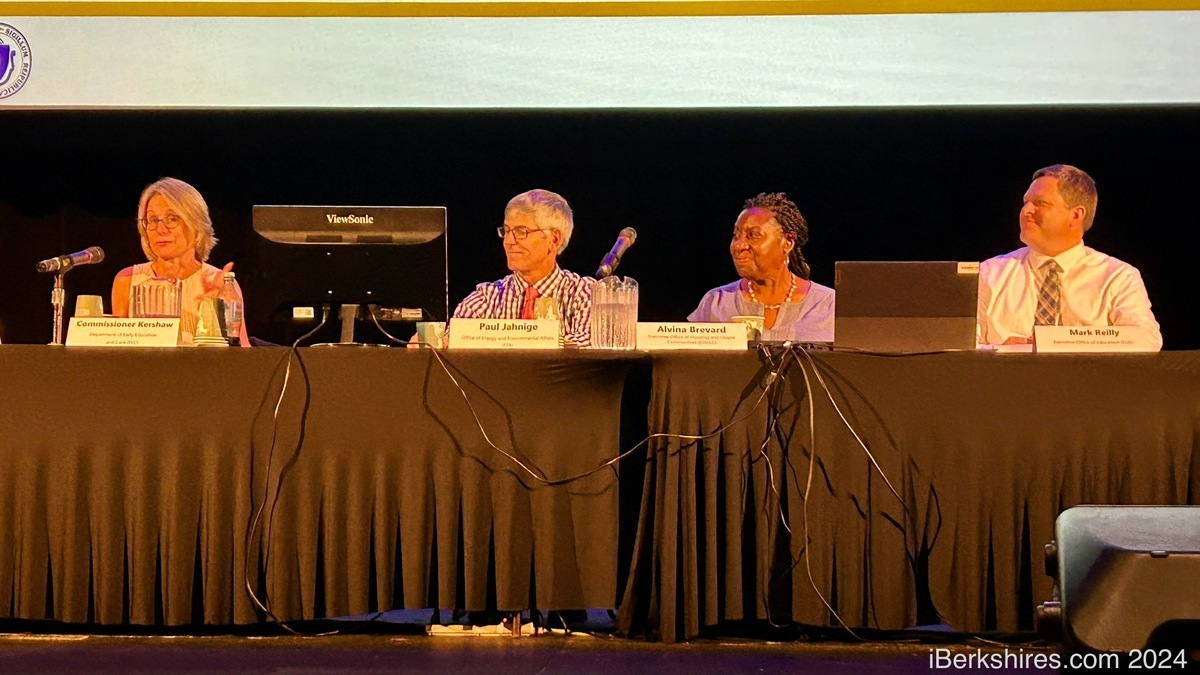
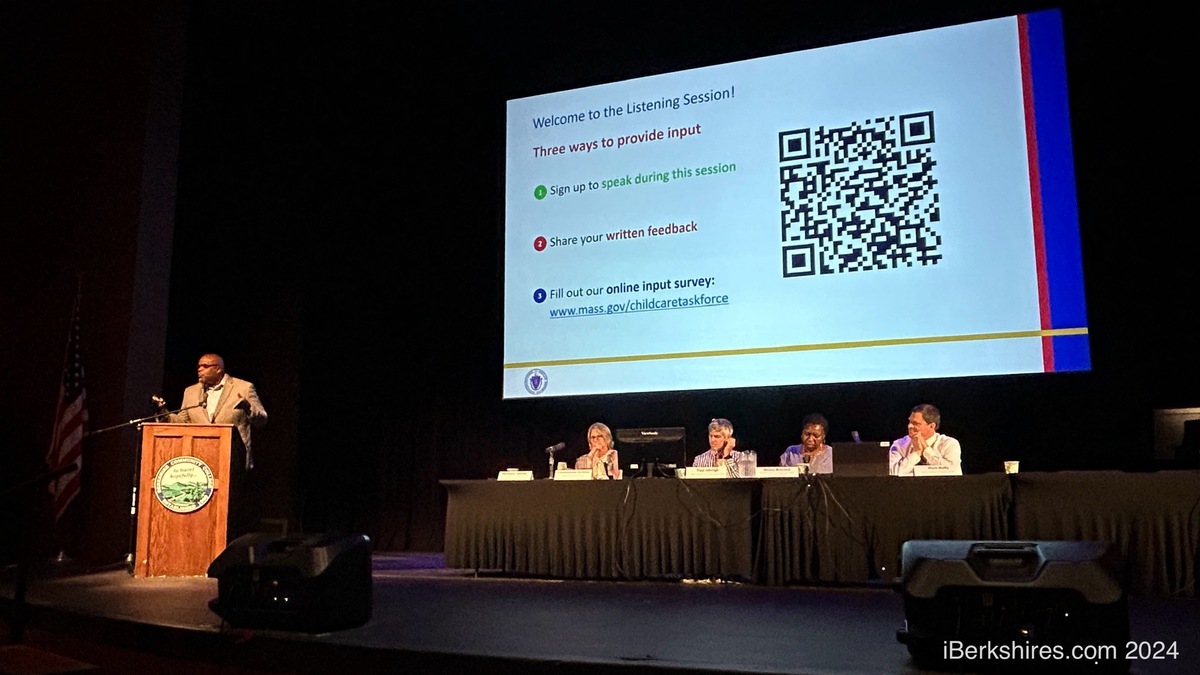
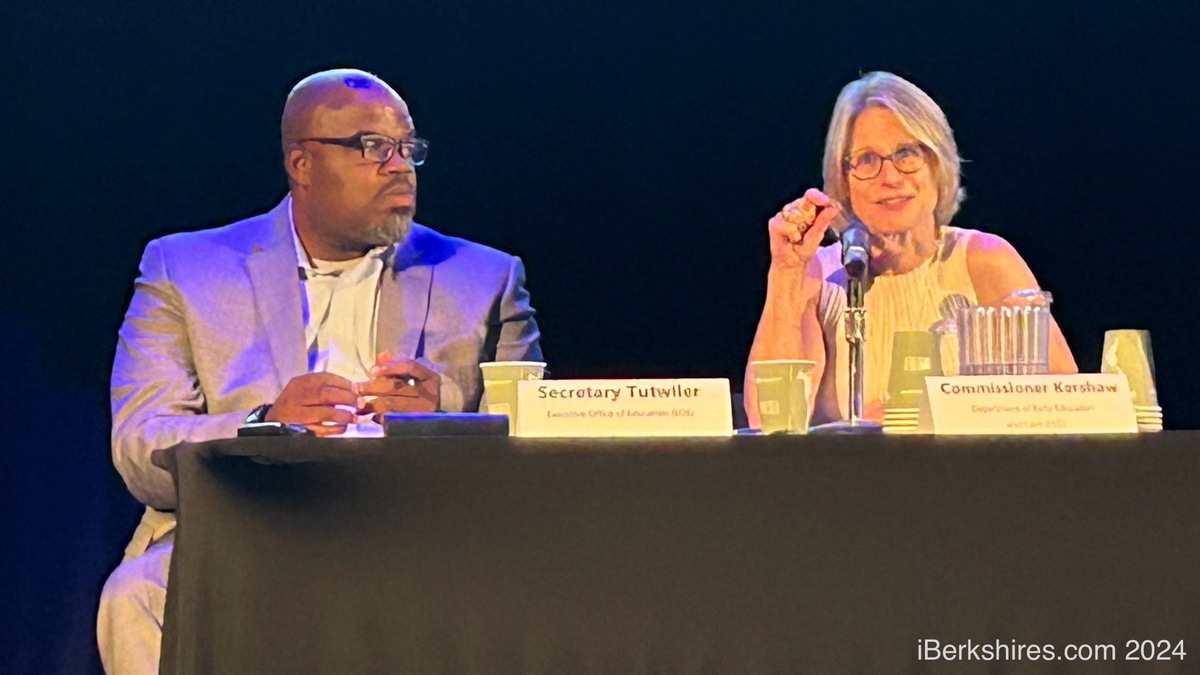
Education Secretary Patrick Tutwiler and Early Education and Care Commissioner Amy Kershaw hosted the childcare listening session Wednesday at Berkshire Community College. The panel also included state Outdoor Recreation Director Paul Jahnige, Alvina Brevard of the state Executive Office of Housing and Livable Communities, and Undersecretary of Education Mark Reilly.
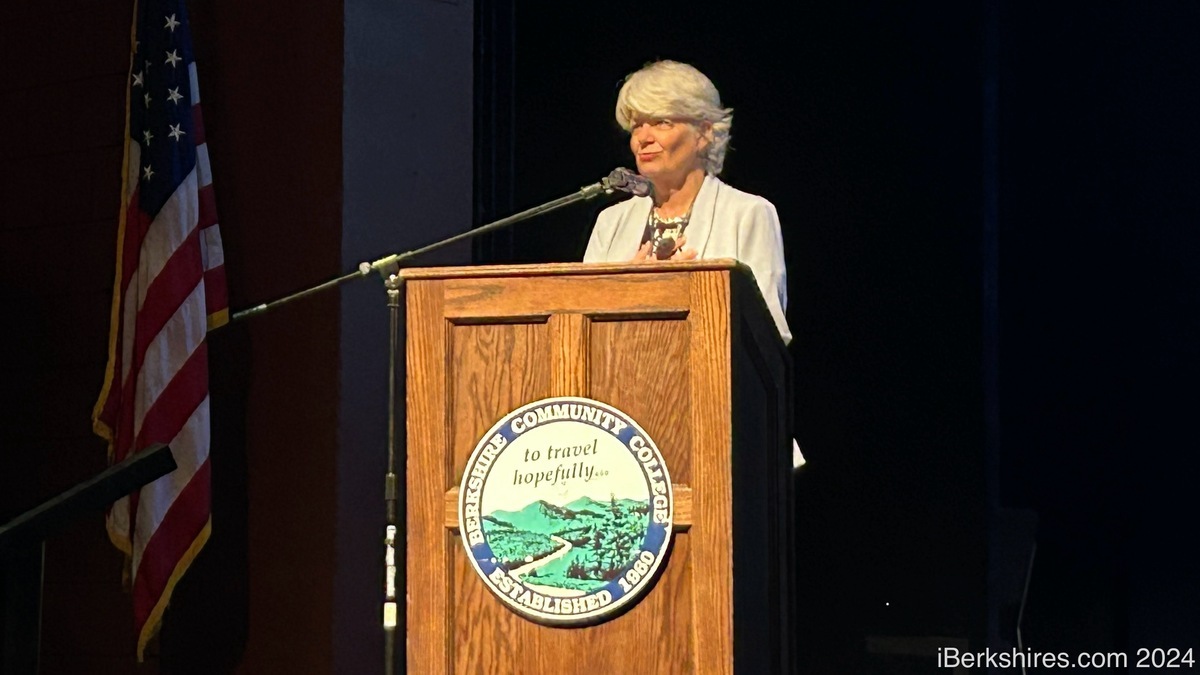
"We know that there are some really difficult barriers facing this particular field: accessibility, affordability for families, opportunity, and so we will be discussing, I'm sure, all of that," BCC President Ellen Kennedy said.
"I am particularly committed to this. I am the parent of a son who is now in his thirties with a son who was at a child-care center but my son went in at eight weeks old and I have shared on one or two occasions that it was the professionals in the child-care center that made me a better parent, that actually taught me how to parent, and I am forever in their debt for the ways in which they helped me help my son."
This was the 11th of 14 sessions to inform the Early Education and Child Care Task Force's efforts to ensure accessible and affordable high-quality child care for Massachusetts families.
"This interagency task force was born out of an executive order that [Gov. Maura Healey] signed on Jan. 16 that called on, as has been mentioned, the whole of state government to lean into finding solutions to the pressing challenges that we know exist in the early education sector," Tutwiler explained.
"And when I say the whole of government, I mean every secretary, every agency leaning into this work, bringing their perspective, bringing their ideas, bringing their resources to bear on coming up with solutions."
He added that the governor feels strongly about this effort and signed the executive order because "education begins at birth, not in kindergarten."
The task force's work includes surveying practices of other states and nations; assessing how better coordination among state agencies could support families in accessing early education and childcare; identifying resources for building capacity and increasing affordability in the system; identifying strategies to recruit, train, upskill, and retain members of the workforce; and reviewing existing assets to identify potential locations to establish center-based early education and childcare.
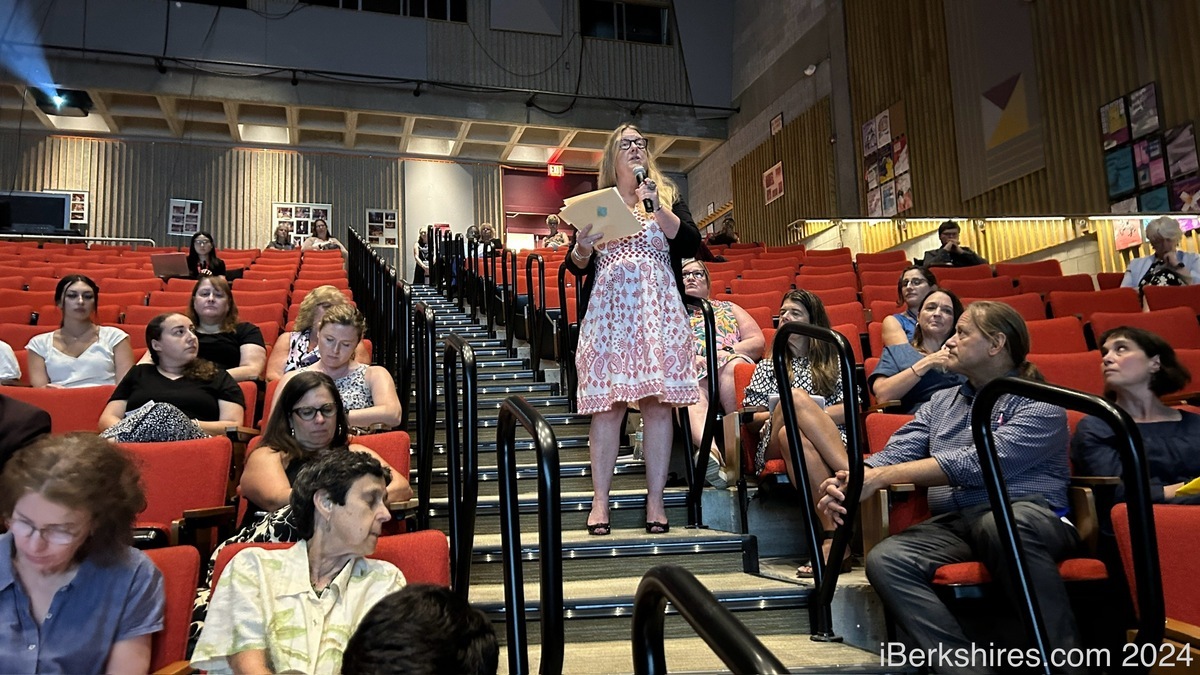
The need for mental health support in the classroom and properly compensating education and childcare workers was sung by many attendees.
Alice Barber, a mental health consultant for the Northampton Public Schools, spoke about trauma's impact on the functioning of young children.
"As you know, the pandemic did children no favors in this regard. The referrals for therapy and consultation for young children are overwhelming and the current systems to the current systems that are in place," she said.
"It is imperative that early childhood programs are equipped to handle the mental health challenges that children may face."
When Barber is treating a child who has experienced toxic stress, she tries to increase experiences that are the opposite of trauma, "Experiences of care, love, safety, success, and agency."
"Children who do not experience these cannot learn," she added. "I want to say that again. Children who do not experience these cannot learn because they're trying to survive. I try to help create environments in which the child is the most important person in the room and where the child's voice is the most important voice in the room."
Barber said this environment includes small classes, safe outdoor space, and teachers and staff who are supported and valued emotionally and financially. She called on the staffing shortages in childcare centers and underpaid workers, urging change.
Weller explained that when you walk into a classroom, you unfortunately see multiple children who are having social-emotional challenges. She said that Berkshire County has "very limited" mental health support services for families, children, and educators.
"Behavior is a language and we need to listen. We see children who are on tables and throwing items and hitting other children and sobbing in corners and how are we addressing that in the classroom?" she said.
"We have young educators. They haven't experienced that. When you are growing up as a child and you want to be a teacher, you think about how you're going to be in the classroom and the children are going to sit at a circle and they're going to respond to you back and forth. You're not thinking about how you're in the classroom and you're ducking a block, or you're being bit, or you're being spit at, and what do you do with that? We don't know. The educators that we're bringing into the field don't know."
Von Haefen pointed out that the key ingredient to high-quality care is staffing educators.
"Research consistently shows that a skilled, consistent educator in a classroom creates long-lasting change for children and their families. However, wages are stagnant and they are all too frequently not providing educators with even basic financial stability. All too often we're hearing of folks who leave the field because they are unable to make their finances work. Wages need to improve to better reflect the expertise and huge impact our educators have," she said.
"When we look specifically at our data here in Berkshire County, as Berkshire County emerges we COVID, in addition to struggling with transportation, affordable housing, and lack of mental health resources, much like the rest of the state and nation, we are also seeing a huge rise in economically challenged households after nearly 10 years of decline."
According to data from the Berkshire Regional Planning Commission, the county has experienced a "significant jump" in income inequality, exceeding state and national trends and far above comparable countries.
Von Haefen called for piloting solutions with local government, the corporate community, child-care providers, philanthropy, and advocates.
"For example, is there a local tax structure that could be fed into the system? What about cannabis fees? What expertise and funding can the local corporate community provide to the system?" she asked.
Von Haefen asserted that early learning educators deserve livable wages for their impact on our youngest neighbors and their families, as "Massachusetts could actually lead the nation if we seriously address and comprehensively crack the compensation conundrum."
Melissa Fawcett, owner of Ready Set Learn, said the Commonwealth Cares for Children funding helped her increase pay for teachers and offer benefits as a small-business owner. However, she lost more than $30,000 when there were cuts in the program this year.
"We were understanding that the funding would be through June, and then it was dramatically cut," she said.
Fawcett said she has retained employees over the last 10 years because she "pays really well." But she understands that this is difficult to achieve in all centers.
Alicia Ginsberg, BCC's Career Pathways grant coordinator, spoke on the program's support for teachers to succeed while working full time. Through the early childhood education cohort at the college, the grant pays all tuition and fees for students working in child care or interested in working in child care within six months of starting classes.
Many voiced appreciation for the program.
"It's amazing that MassEducate and MassReconnect are there to provide for tuition and fees, but our students need so much more," she said, reporting that 90 percent of students in the ECE program are working full time.
"While our students who are parents and teachers would be here today to talk if they could, they're all busy working, taking care of our community children, so that we can be here to advocate on their behalf."
Since 2019, 373 BCC students students have received funds to take courses to earn certificates or degrees in the field. The program also offers mentor support.
"This vital support to our students is so necessary for their completion. Our students are teachers who are highly stressed due to the vicarious trauma experienced through their daily interaction with children and sometimes our mentors, are their guiding light through their week," Ginsberg explained.
"Our students have said they could not do college without the supports."
Tutwiler acknowledged what the child-care providers do as "extremely important as critical for families, for young people, for this commonwealth."
Tags: child care, children & families, listening tour, state officials,