Pittsfield's Site 9 to See Mill Town Development
PITTSFIELD, Mass. — Mill Town Capital is continuing its investment in the city by purchasing 4.7 acres of Site 9, William Stanley Business Park's largest parcel.
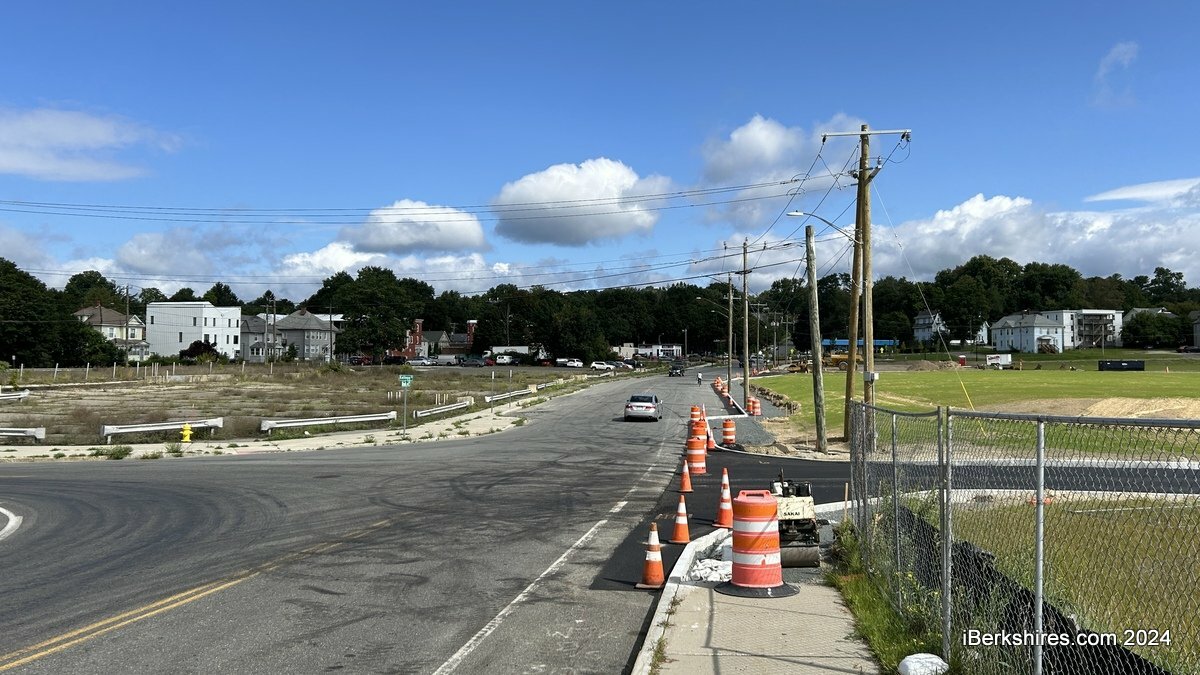
Across the street at 100 Woodlawn Ave., the investment firm intends to build a mixed-use development that includes housing. This will be a far cry from the abandoned, moonscape-looking block that General Electric left behind.
"Mill Town has had an interest in Site 9 since 2018. During this time, we have invested in it and developed over 200 units of housing in Pittsfield, with a particular focus on the Tyler Street Neighborhood," said Timothy Burke, CEO and managing director, at a press conference on Thursday morning.
"Our financial support is also extended to the Berkshire Innovation Center, the Tyler Street Lab, the Berkshire Dream Center, all the Tyler Street neighborhood, and numerous other regional nonprofit organizations. Overall, we have invested over $80 million in the region, addressing crucial needs and supporting local assets across various sectors and platforms, much of which is community driven."
The Pittsfield Economic Development Authority approved a letter of intent for the sale on Thursday and over the next couple of months, it is expected to become a definitive purchase agreement.
The price is $200,000 for the 4.7 acre parcel at Site 9. The 100 Woodlawn block will be conveyed to Mill Town for the purchase price equal to PEDA's cost of acquiring and reconveying the parcel.
Mill Town's vision includes evaluating the development of a commercial building upwards of 20,000 square feet to provide office and lab scape for growing local businesses.
"We've been having conversations with mostly local businesses for quite a while now and I think there is a lack of Class A office space out there for growing local companies so we have a group of companies that we're working with to define their needs," Burke said.
"And I think now that we're at this point where we can hopefully progress to the next step. We're going be looking to network with other businesses as well but I think our approach would be looking to secure local companies that are growing and looking to add jobs and running out of their current space and then potentially looking to add some capacity for companies that may be looking to start or move here from other locations but I think the first focus is on local businesses that we know, that we work with, that are already growing."
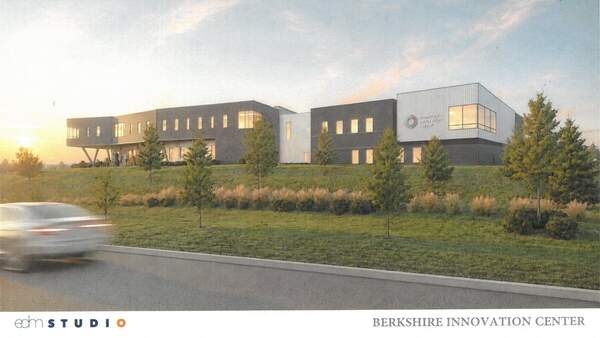
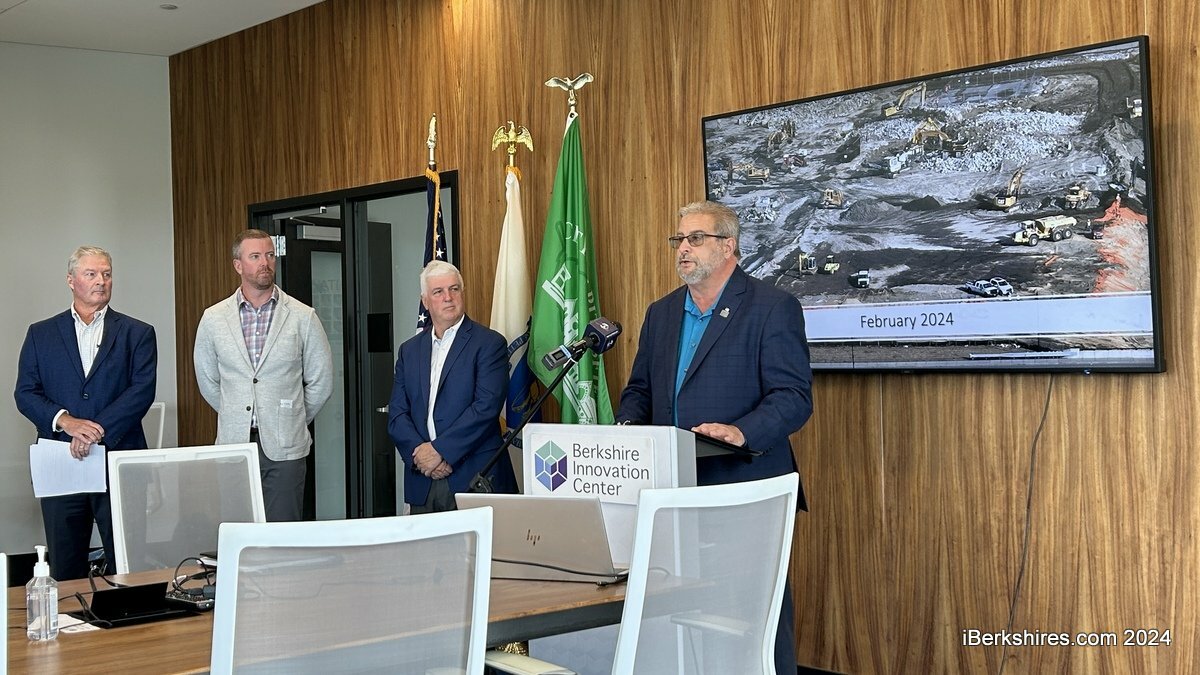
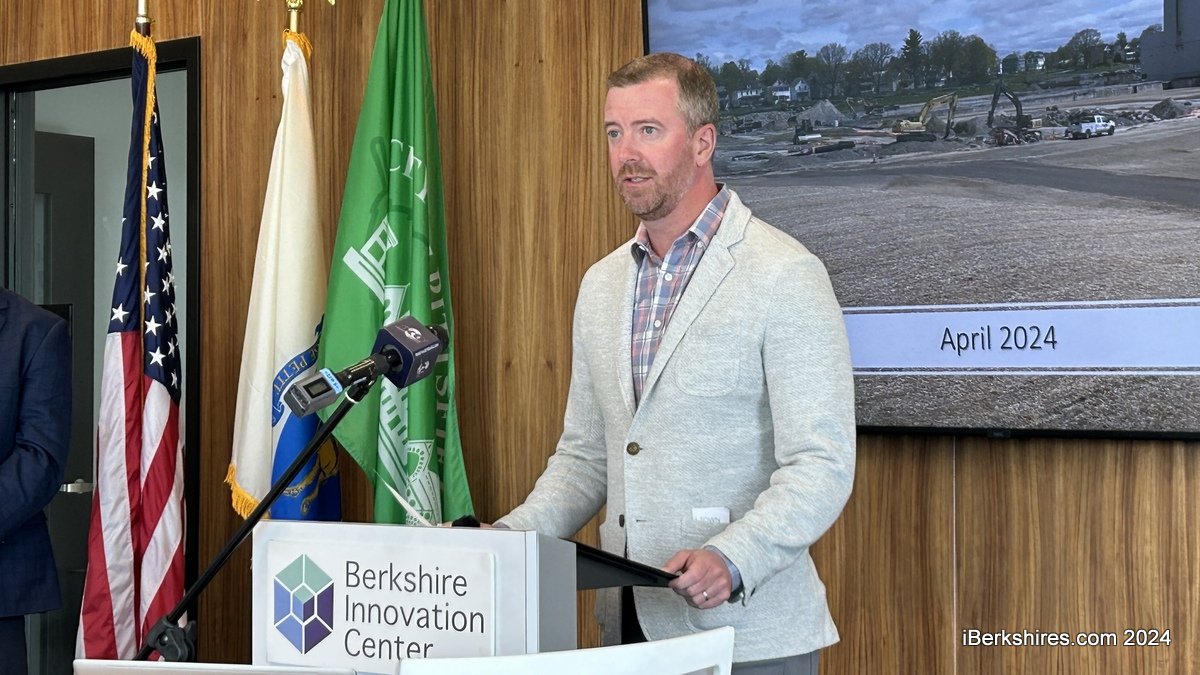
Mayor Peter Marchetti, interim director of PEDA and the city's Business Development Manager Michael Coakley, PEDA's Chair Michael Matthews, Burke, and other local officials gathered at the Berkshire Innovation Center on Thursday for the announcement.
"The sustainable redevelopment approach by Mill Town Capital and PEDA has the potential to transform this abandoned space and create reinvestment opportunities benefiting future generations," Marchetti said.
"The city is committing to working with PEDA and Mill Town on the next phase of this redevelopment work."
He said no city taxpayer funding is going toward this project.
Linda Tyer is pleased to see this project come to fruition after passing the torch. The former mayor and Marchetti spent a lot of time together during the transition and she emphasized a couple of important items — this being at the top of the list.
"We worked really hard to identify the funding sources to emphasize the importance of the redevelopment of the parcel with roadways and utilities and green space for a couple of reasons," she said.
"It's important to the neighborhood and the people who live around Site 9, but it's also important in marketing for future occupants of that parcel, because, as [Coakley] said, we would host people, and they couldn't envision themselves running a business there or building a business there but with this redevelopment, it's really accomplishing two things: It's taking care of a wound that's in the heart of this neighborhood but also making it ready for future development."
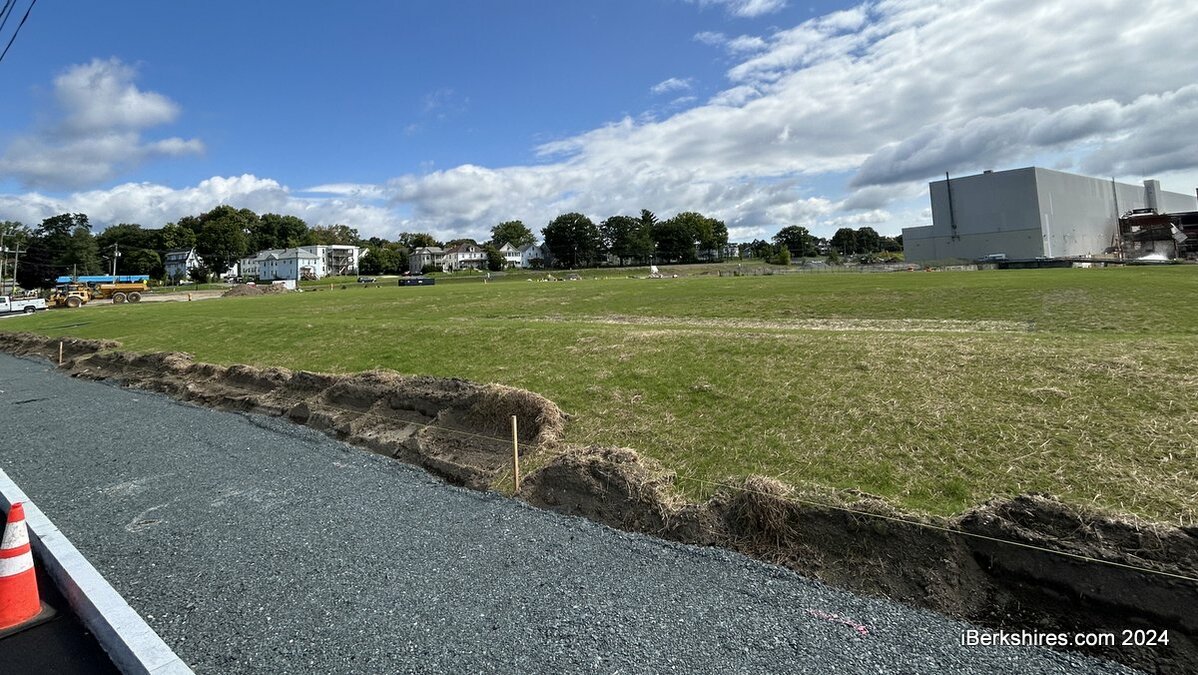
The $11 million redevelopment of the 16-acre parcel is on schedule for completion in October after ground was broken early this year. Since 2021, the city and PEDA have worked to secure funding through a variety of sources:
- 2021: MassDevelopment Brownfields Grant, $264,000
- 2021: MassDevelopment Site Readiness Grant, $880,000
- 2022: Economic Development earmark (Rep. Farley-Bouvier), $500,000
- 2022: MassWorks Grant, $3,000,000
- 2023: GE Landscaping Fund, $1,300,000
- 2023: PEDA Foundation Fund, $400,000
- 2023: Under Tyer's administration, $4.5 million of American Rescue Plan Act funding was designated for Site 9 towards construction in phase one, securing the final piece to propel the project forward.
More than 26,000 cubic yards of material has been crushed and grass is sprouting over 100,000 cubic yards of clean fill. Onlookers will soon see plantings within the stormwater basins and trees planted along the streets.
Marchetti said he was born and raised in the Tyler Street neighborhood and it has a lot of sentimental value to him, "And so I think this is just one more step in the progress of righting some of the wrongs that have happened in the city."
"For many decades, residents have looked at this blighted property that has been previously described as a moonscape," he said.
Coakley added that when he would take potential developers to the site, they would "do the moonwalk back and get out of there" because it was undevelopable.
"This project is boosting our local economy through the work by our local contractors and the residents who work for these companies," he added. "If you have driven by it all this summer, you'd see plenty of equipment and workers out there in that site. It's pretty amazing to put what's been done out there."
Burke credited PEDA's work with the city and GE for aiding Mill Town's acquisition of the Woodlawn Avenue parcel. He explained that a lot of housing in the state is affordable or market rate so blending the two is "critical in terms of the fabric of the neighborhood."
"This is a once-in-a-generation opportunity to reimagine Pittsfield thoughtfully," he said. "Integrating commercial and residential spaces allows us to tackle the housing challenges, create new job opportunities, and increase the city's tax revenue while continuing to consider the neighborhood's fabric and history."
The firm is optimistic about the project, though there will be a lot more work to make sure it can be an effective housing development that can accommodate a meaningful number of units.
"You formally have the moonscape and it's hard to build a residential site across the street from that but now that we've got the investment on Site 9, I think the parcel would on out become more compelling," Burke said.
Mill Town has invested more than $22 million into the Tyler Street area. It directly built 36 units at 748 Tyler St. and 765 Tyler St., was an investment partner on the Morningstar Apartments in the former St. Mary's Church, and owns several multifamily buildings in the neighborhood.
Remediation of any possible PCB remnants will likely be part of the transfer agreement with GE. There will be an opportunity to do due diligence on that site but since it has been owned by GE up until this point, no one knows what lies beneath.
"It's critical that our stakeholders and businesses and residents are patient because I think we want to go get that input for people and talk to people about what the neighborhood needs are from a housing perspective or from a commercial perspective," Burke said.
"And obviously construction and financing take time as well so I think this will be a lengthy process but we're committed to kind of seeing it through like we have multiple projects over the last seven or eight years."
Tags: business park, mill town, PEDA, redevelopment,