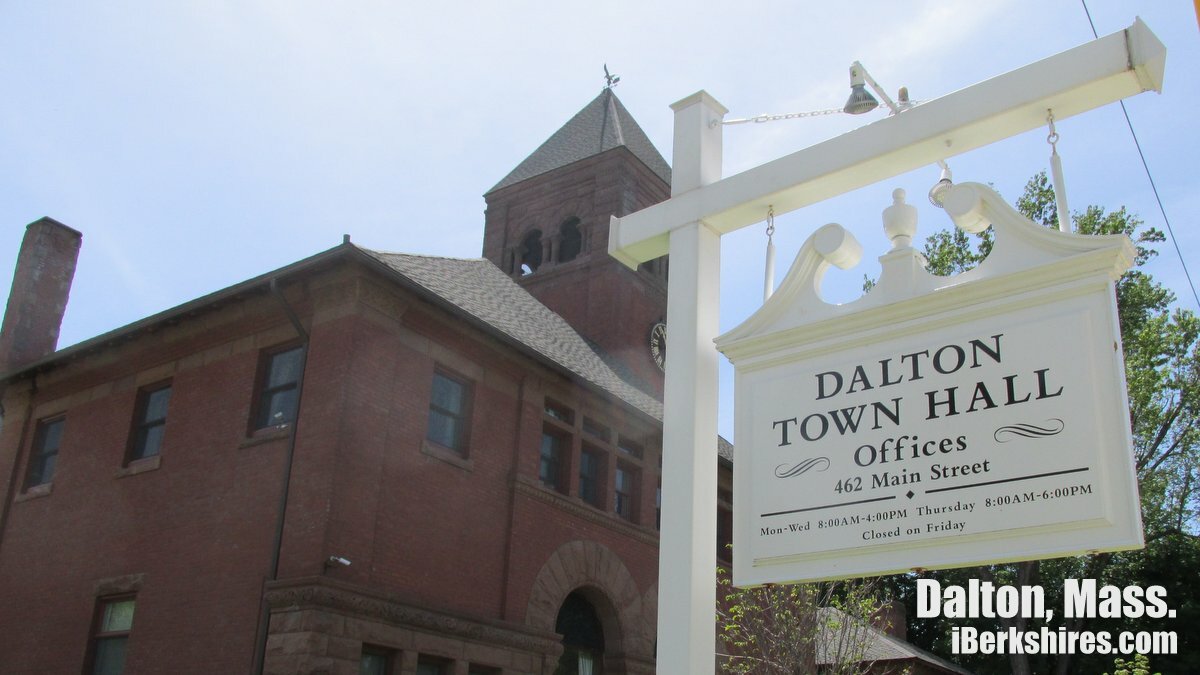
Dalton Petition Calls for Special Election for Select Board Seat
DALTON, Mass. — Voters can expect a special election to fill the vacant Select Board seat left open when Joe Diver stepped down.
A citizen petition with 237 signatures from residents calling for a special election was handed in on Wednesday afternoon. Town Clerk Heather Hunt said the town clerk's office is now in the process of certifying the signatures.
Robert Collins, who previously ran for a seat on the Select Board and now serves on the Planning Board, took out the petition on Oct. 2.
Since then, he worked with Thomas Irwin and several other supporting town members to gather signatures.
While gathering signatures, Collins said residents were confused as to why the board didn't want to fill the seat, especially considering the vacant spot on the five-member board is what would break a tie.
"With all the turmoil and situations that are going on in town at this time, with the article about the police chief and the police department and the lawsuit, the people feel that the town needs to be fully represented on the board with these matters," Collins said.
"... None of the people collecting signatures, nobody declined not to sign. Everybody that was asked about the petition and told about the petition happily signed, and we're on board for having a special election."
During its meeting on Tuesday, the board discussed how to fill the vacant seat. Members had to decide whether to hold a special election or wait until the annual town election in May.
Diver's three-year term concludes this May so the winner of the special election would complete the half-year left.
The board voted to take no action on the matter and to revisit it in November once they see legal counsel and gather more information on legal, financial, and logistical aspects of a special election before deciding how to proceed.
Select Board expressed concerns about having a special election due to the cost, it not requiring mail-in voting, proximity to holiday and winter weather that could lower voter turnout, and the additional strain on the town clerk's office because of how close it would be to the presidential election in November.
"And I don't see the reasoning to spend that kind of money for a two, or probably about a three to three and a half months appointment when the person will have to turn right around and get re-elected again," Select Board Chair Robert Bishop said.
Hunt said that although mail-in ballots are not required for a special election, the board makes that decision.
If the board decided to include mail-in ballots, especially considering older folks who don't go out in the winter, it would increase the cost of the special election.
Board members at the meeting knew that a petition had been taken out, and Hunt informed them that if it reached 200 signatures, the decision on how to fill the vacant seat was no longer the board's; the special election would have to happen.
Member John Boyle pointed out that Massachusetts law states that a Select Board can only delay a special election if it is close to the annual town election.
According to MGL (Chapter 41 Section 10), the request for a special election must be submitted at least 100 days before the next annual election.
This does not include the presidential election; rather, it refers to the annual elections, which Dalton holds in May.
During the discussion on the petition, Bishop questioned whether those who agreed to sign knew that the board had yet to make a decision.
The petition does not say anything about the cost or other matters surrounding a special election, Bishop said.
Board members agreed they would rather wait until the presidential election is over before calling a special election.
The town clerk's office would have 64 days to set up the special election if they did that. In addition, there are specific deadlines for obtaining nomination papers, 51 days prior, submitting signatures, 49 days prior, and publishing the warrant, 14 days prior.
If the board were to hold a special election after the presidential election the earliest election that could happen would be the beginning of January, Vice Chair Dan Esko said.
"Beginning of January, let's say we had an election, the next election is [about] five months away. In any case, my point being, as a board, I don't know that it makes sense for us to even call one, considering the timing and the cost. I don't now. If the special elections called by citizens, so be it. We'll have to just take care of that," Esko said.
Board members said many people are misinformed about the situation. Boyle said there are legalities surrounding whether to hold a special election, some of which will require answers from the town's legal counsel.
"I would say, these people that are circulating this petition, I don't know who they are, I've heard the rumors, too. Right now, we're only acting on rumors," Boyle said.
"That is not only irresponsible, it is expensive for the town of Dalton to be doing this."
Bishop asked whether petitioners who signed the petition and later changed their minds would be allowed to remove their names from the petition.
At the meeting, Hunt said she had never been asked a question like that before and was unsure of the answer.
In a follow-up, Hunt said the town has not heard from any signers expressing an interest in removing their names from the petition.
If that changes and a number of signers express an interest in removing their names from the petition, they will spend more time researching whether that is an option, she said.
Tags: special election,