Lanesborough to Mall Owners: Pay Your Taxes
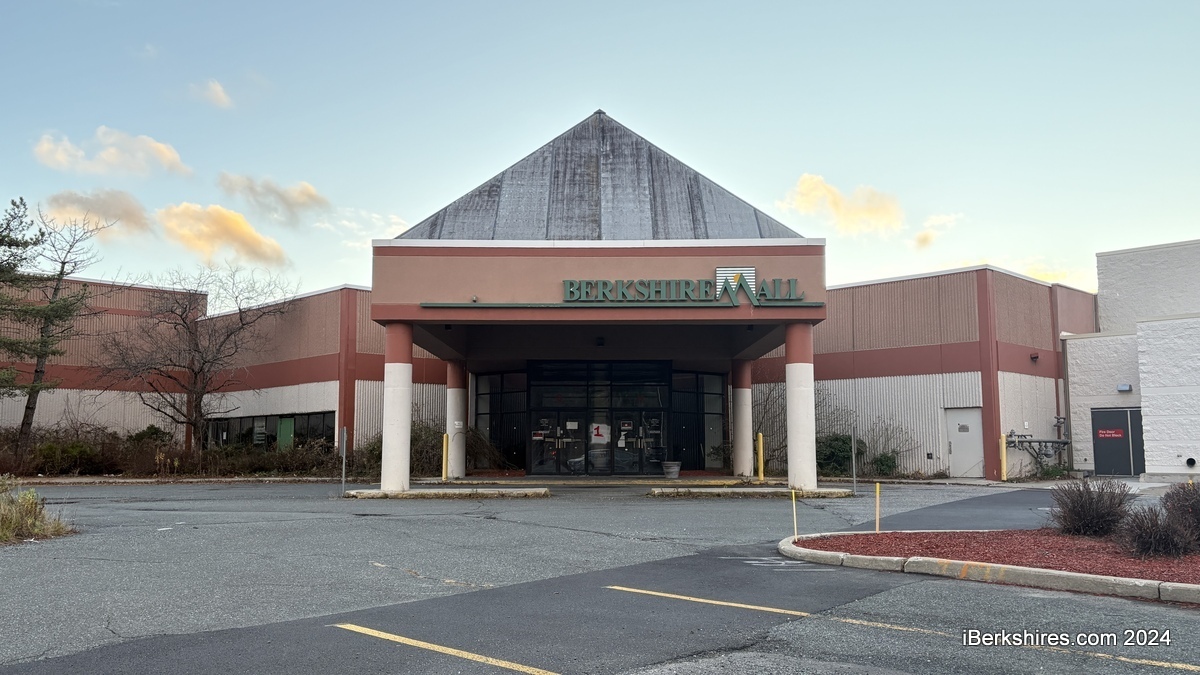
LANESBOROUGH, Mass. — The Select Board would like to see movement on the Berkshire Mall — markedly the payment of taxes.
Earlier this month, the Lanesborough Fire and Water District filed a suit for more than $105,000 in back taxes and interest. JMJ Holdings, which purchased the mall last year, owes about $211,000 to the town.
The owners say they are plagued by the costs of stabilizing a rundown property that should not have gotten to its current state and cite "inhibitive" taxation from the Baker Hill Road District.
"Because you have not paid fiscal '24, all those real estate taxes that are due to the town, they are affecting our free cash certification," Selectwoman Deborah Maynard said.
"Our free cash is lowered by the amount of money that you owe the town in real estate taxes so it does really hurt the town when you don't pay your taxes and you don't pay them on time."
She said the mall also hasn't paid the first two quarters of FY25, making it six payments behind, and the tax collector is beginning the process of putting the property into tax title.
Chairman Michael Murphy observed that the owners, who want the BHRD dissolved, were "holding $211,00 over our heads to get what you want."
"We are about six or seven million dollars into this property so I think, I believe, and I know we will be able to handle a $211,000 tax bill," Jones said.
He noted the JMJ did pay $800,000 in the first year of ownership.
Jones said the taxes fell behind because of all the work that needed to be done to the vacant mall, as "it will never function right unless it's totally gutted." On top of the $4 million purchase investment, he reported spending almost another million to get it in shape for use.
"We will be paying our taxes and we will be doing that shortly but it will be for the town of Lanesborough," he said.
"As far as we're concerned, the Baker Hill Road District is a separate situation and we would like to come back to the town a second time and suggest something different in terms of the taxes when we have our other partner on board."
Jones said JMJ has been in talks with another company for the past year on partnering transforming the former mall into senior housing and assistive living.
The BHRD is an independent municipal district within the town with a governing body that oversees the maintenance of the Route 7 to Route 8 Connector road as a public way. It is charged with ensuring the timely payment of the Berkshire Mall's bond and that the mall meets obligations to the community regardless of ownership.
JMJ has hired Timothy Grogan of the Housing Development Corp. of New York City as a consultant to guide a feasibility study for a senior community. He said that due to the road district, the mall is paying over five times more taxes than any other Lanesborough business aside from Target.
According to The Berkshire Eagle, the BHRD is considering a suit for over $725,000 in taxes, interest, and demand fees.
"The Baker Hill Road District, throughout the life of the project that we see, it's just not fiscally feasible," Grogan said.
"We want to get the assessed value of this property up by putting a lot of money into it. We dream of 400 to 500 units and that all depends on what the feasibility study can support. We're not just looking at a standard run-of-the-mill senior care facility. We're looking at independent living, skilled nursing, memory care, palliative care, hospice care, and that's all being fed into this analysis as well as additional complexities such as exploring affordable housing although that is not the primary means of what we're for for this project."
He said the owners do not feel represented by William Prendergast, chair of the BHRD, and questioned his election and the length of his term.
"We're really trying to make as many strides as we can to get this to a financeable property and utilizing this to its highest and best use but we want the town to recognize how inhibitive the Baker Hill Road District is," Grogan said, later adding that they are trying to turn it into a win-win for everyone.
There was some back and forth between the two bodies about the authority of the Select Board in making choices about the district. Siegars attempted to contribute to the conversation on Monday but was told that it was between the Select Board and the mall owners. In his email Tuesday, he noted that town meeting in 2023 "resoundingly defeated a citizen petition to dissolve the road district."
"I'm not saying pro-Baker Hill or anti but I can tell you for the town, the Baker Hill Road District helps us because they are, for a lack of a better word, the taxing entity who, when you pay your bill, they give money to the town to pay for two officers, they give the money to pave, maintain the road," Selectman Timothy Sorrell said, asking how they can trust the mall owners when they aren't paying taxes.
He suggested that the town look into the governance of the BHRD and Murphy suggested that the owners identify a person they would like to represent them on it. The prudential committee is made up of two members appointed by the town and one by the property owners.
The feasibility study is expected to take another two months. The Select Board reiterated its wish to be informed about how the town can help move development along and get the property functioning again.
"The point is and the real concern is, we want you to be comfortable, we want to bring these jobs and the situation here," Jones said.
Tags: Berkshire Mall, property taxes,