'Wayfinding' Study Group Presents Plan to Williamstown Select Board
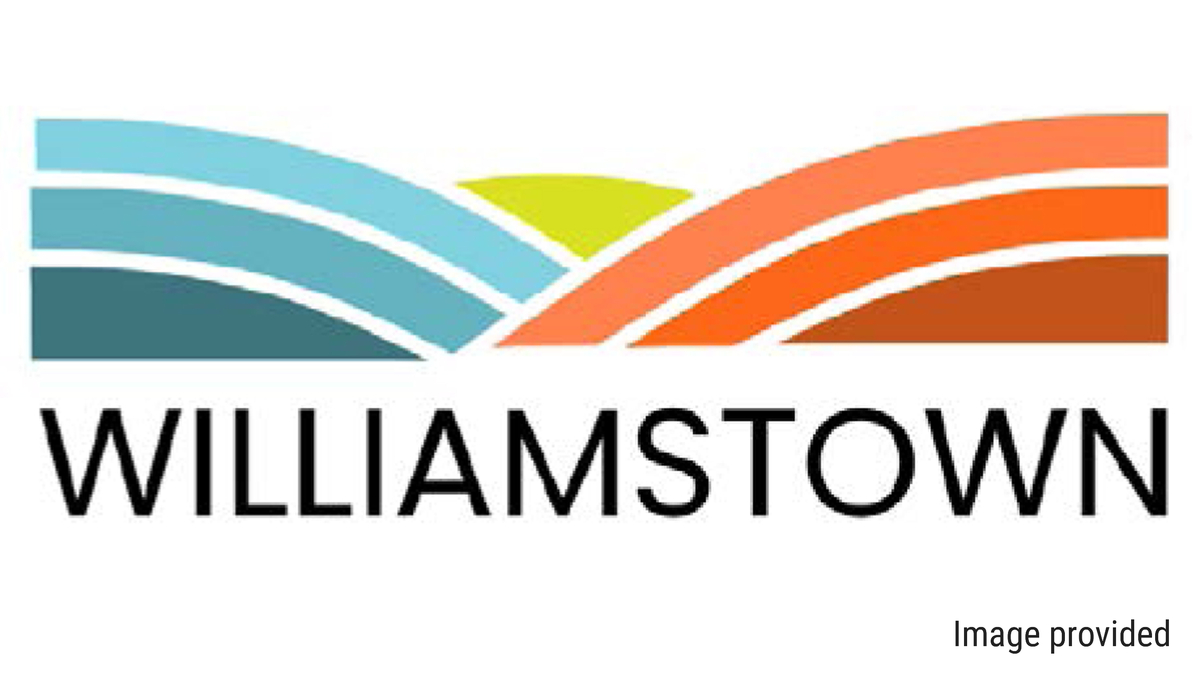
A new Williamstown logo developed by a working group formed to create a new system of 'wayfinding' signage for the downtown.
Whitney Burdge of engineering, architecture and environmental consulting firm Stantec shared the results of a study intended to help the town replace its outdated and counter-intuitive signage with new markers that help visitors navigate the downtown and "speak to a distinct visual brand or identity that is unique to Williamstown."
The executive director of the Williamstown Chamber of Commerce and the town's community development director took the lead on the project, which was funded by a grant from the Massachusetts Downtown Initiative.
Burdge boiled down a 66-page final report into a brief discussion that highlighted some of the issues with the current signage and how new signs with a uniform brand can help "capture visitors."
"We did some general observations to understand what is and isn't working," Burdge said. "That comes to sightline issues, maintenance issues, conflicting messaging, conflicting ways we name things, different graphic aesthetics — a whole range of things we considered."
As the report notes, the current downtown signage does not have a cohesive style because it evolved over time, resulting in a town inventory of 46 signs in an area bounded roughly by Whitman Street to the north, Cole Avenue to the east, Taconic Golf Club to the south and the Milne Public Library to the west.
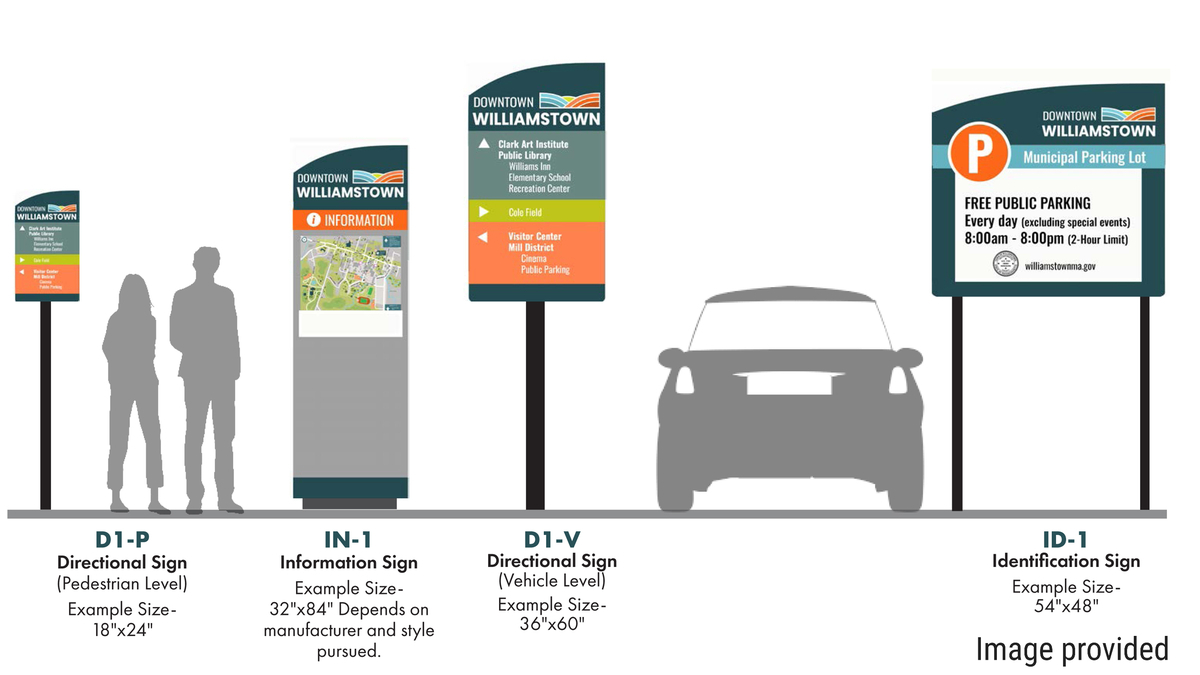
The report from Stantec recommends a network of 45 signs of four different types: three "gateway" signs with one at the east end of Main Street, one at the junction of Main Street and Spring Street and one at the Field Park rotary; 30 "directional" signs (19 for vehicles, 11 for pedestrians); six "identification" signs indicating municipal facilities and public parking; and six "information" signs for pedestrians at key navigation points.
To create a unified look for the proposed new signage, the committee developed a logo that, much like the current logo on the town website, evokes local mountain ranges. The new logo also suggests the open pages of a book, symbolizing "higher learning as the core of the town's identity."
Briggs told the Select Board that the new brand is the result of a conversation among a diverse group of stakeholders and a spring survey that elicited more than 100 responses from the community.
"We assembled a community group, which consisted of people from Town Hall, DPW, the Police Department, Williams College, the Clark, Stockbridge-Munsee [Band of Mohican Indians], Rural Lands and others," Briggs said. "We tried to get a very good cross section of the town, and we did open the questionnaire up to the public."
She said the task force reached a consensus on the brand presented as its preferred choice on Monday evening.
"One of the great things I was proud of with this team in particular was that there were so many diverse groups and interests, but we were generally able to come to a consensus on the colors and the design approach, generally without too much conflict," Burdge said. "[Conflict] can often be the case for many communities because signs are personal, and we want everyone to feel connected to them and that it truly represents how they feel about the downtown.
"So we did the best we could. And we hope this can be a great tool going forward to finalize the next steps into making them a reality and turning them into a longer term approach that can be updated easily and maintained over a longer period of time as well as integrated into other platforms that would represent the brand, such as websites, etc."
There was no discussion in Monday's presentation about the potential cost of new full-color signage for the downtown area.
But Briggs indicated that help could be available from the commonwealth.
"This was only the first step in a long, multiyear process," she said. "This was only to do the analysis and the proposal. Our next step would be to find funding for the actual fabrication and installation.
"The Massachusetts Downtown Initiative, which funded this [study] does expect us to apply for the next round of funding."
In other business on Monday evening, the Select Board learned from Stephanie Boyd that relevant town committees were supportive of a proposed process to evaluate Chapter 61 lands in the rare instances when they are removed from the program.
The next step is to send the proposed process to town counsel for a review. The Select Board still has not settled on whether to keep the process as a board policy or send it to town meeting in May to be codified as a town bylaw.
The board also discussed a new process for getting updates from its Diversity, Inclusion and Race Equity advisory committee. At the committee's request, those updates in the future will come from either the DIRE Committee chair or a different member of the committee rather than from the Select Board member who serves on DIRE, who has, in the past, acted as a liaison between the two panels.
Town Manager Robert Menicocci reported that the Milne Library boiler has been an issue heading into winter, and the town is working with a contractor to see if a heat pump can be used to carry more of the load for the town structure.
Tags: downtown, signage,