Mount Greylock School Committee Hears Need for More Teachers
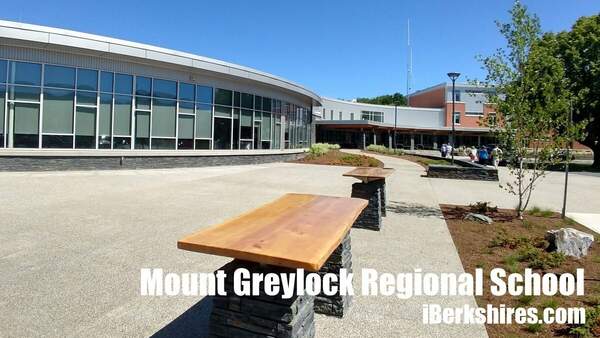
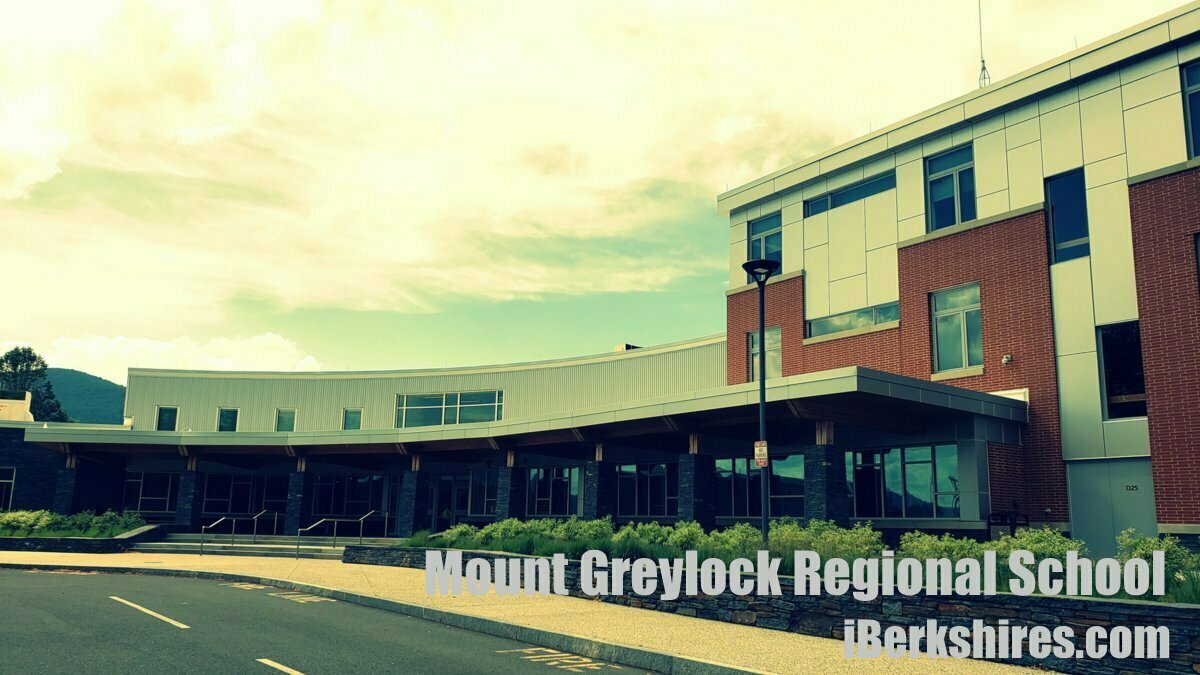
WILLIAMSTOWN, Mass. — Things are not adding up for the math department at Mount Greylock Regional School.
And there are at least two other departments that are struggling with numbers, the School Committee learned on Thursday.
Mount Greylock Principal Jacob Schutz outlined for the elected officials the fiscal year 2026 budget request from the School Council, one of three appointed bodies of faculty, staff and community members charged with advocating for the member schools in the regional district.
It's a big ask for a committee that has been making hard choices to contain costs and limit assessments to the member towns of Lanesborough and Williamstown. The middle-high school council is requesting the addition of three full-time teachers in the next fiscal year — one each in the math, wellness and world languages departments.
Those are the three "needs" for Mount Greylock, Schutz told the School Committee. The council also submitted a list of its top three "wants" for the school. That list includes three more FTE positions: a visual arts teacher for the middle school, a behaviorist and a district-wide coordinator of 504 plans, the programs that outline accommodations for students with disabilities.
For teachers, the district has a ballpark course of between $80,000 and $85,000 to cover salary and insurance, depending on a new hire's qualifications, interim Superintendent Joseph Bergeron told the School Committee.
Schutz outlined why the School Council is asking the district to make those investments, all of which would align with the previously presented School Improvement Plan for Mount Greylock.
"We currently have seven math teachers," he said. "We are operating one short compared to two years ago. It's a similar situation to wellness. We absorbed [a position] when one left."
The staffing shortage means the school is unable to offer certain courses ranging from advanced to remedial, Schutz said. Mount Greylock's Advanced Placement math classes have more than 25 students, which is not optimal, and its algebra 1 and accelerated math for seventh graders each have nearly 30 students.
"We have about 10 students taking college level math, whether at Williams, BCC or MCLA," Schutz said. "I know some are doing BC calculus, specifically, as independent studies. We have students enrolling in the AP exam and doing alternative methods of study, but, ideally, it would be great to run a class."
In the wellness department, Mount Greylock is pulling teachers from other departments (English, biology and history) and using its social workers to cover classes.
"Teachers are allowed to teach one class outside their licensure," Schutz said.
"With that, we are unable to run creative writing, film studies and intro to theater."
The ripple effect has also forced larger class sizes in ninth-grade English and biology, not to mention the physical education classes themselves, where the teacher/student ratio has jumped from 1/26 to 1/44 in the middle school and from 1/17 to 1/39 in the ninth grade, Schutz said.
"Both social workers are unavailable one block per day for student sessions or unexpected crises," Schutz said. "Our social workers are being called on so often that we're having subs in those classes more often than not. Their value is working with students in session or taking care of crises and, right now, they're not able to do that as much as we'd like."
The world language department currently has three Spanish teachers and one Latin teacher, Schutz said. Two of the teachers are working on "extended contracts," meaning they are teaching one more class per day than required under the standard contract. That means higher cost than a standard FTE employee and that the school is at risk if the teacher chooses not to continue accepting the extended assignment.
This comes at a time when demand for Spanish is rising.
"Currently, we have 370 students enrolled in world language — 312 in Spanish, grade 7 through AP, and 58 in Latin," he said. "In Spanish, it's up 23 percent over the last two years.
"We're looking to reduce our class sizes. The ideal is 15 to 18 [students] for languages. Currently, only six of our 16 Spanish classes meet that ideal."
Middle school Spanish classes, for example, have 25 students.
If anything, the middle-high school should be expanding its world language offerings, Schutz said.
"It's been a goal to offer a heritage course for native speakers – students who already have some oral language proficiency but need to work on listening skills, writing skills, things like that," he said. "We've also been trying to add a cultural survey class."
As for the School Council's "wants," the middle school visual arts teacher has been on the School Committee's radar since at least two years ago when a group of parents lobbied for its inclusion in the FY24 budget. Bergeron said that a new behaviorist would help Mount Greylock implement the restorative justice practices that are a district-wide priority. And a 504 coordinator for the district would handle a caseload of 70 active 504s and four referrals — taking the burden off school counselors and providing better support for teachers who implement the accommodations.
Bergeron told the School Committee that the School Council funding request is the first step for the committee in producing the FY26 budget it will send to both member towns for approval at the spring's annual town meetings.
"In January, we'll be coming back and looking at a potential program of study for Mount Greylock," Bergeron said. "That will undoubtedly include a conversation about what we currently have and, ‘If we were to have an additional staff member in an area, here's what we could do.
"As we work internally on this, we'll do the usual dance of, 'Could we do half of this here and half of that there.' We are a district that has said, 'Can we do a .6 [FTE] of this and a .4 of that, and can we make it work from a schedule perspective and a human being perspective."
Bergeron said the requests from the School Council are the school's perspective on its budget needs. The district office' perspective on a proposed budget comes later.
"It's incredibly valuable to have the staff and families who comprise the School Council, along with the principal, talk about their priorities," Bergeron said. "We see six positions here tonight that, in theory, could be highly valuable positions for the school.
"I don't think, in my wildest dreams, that we're going to add six positions in the next fiscal year."
Tags: fiscal 2026, MGRSD,