Healey, Driscoll Talk Transportation Funding, Municipal Empowerment
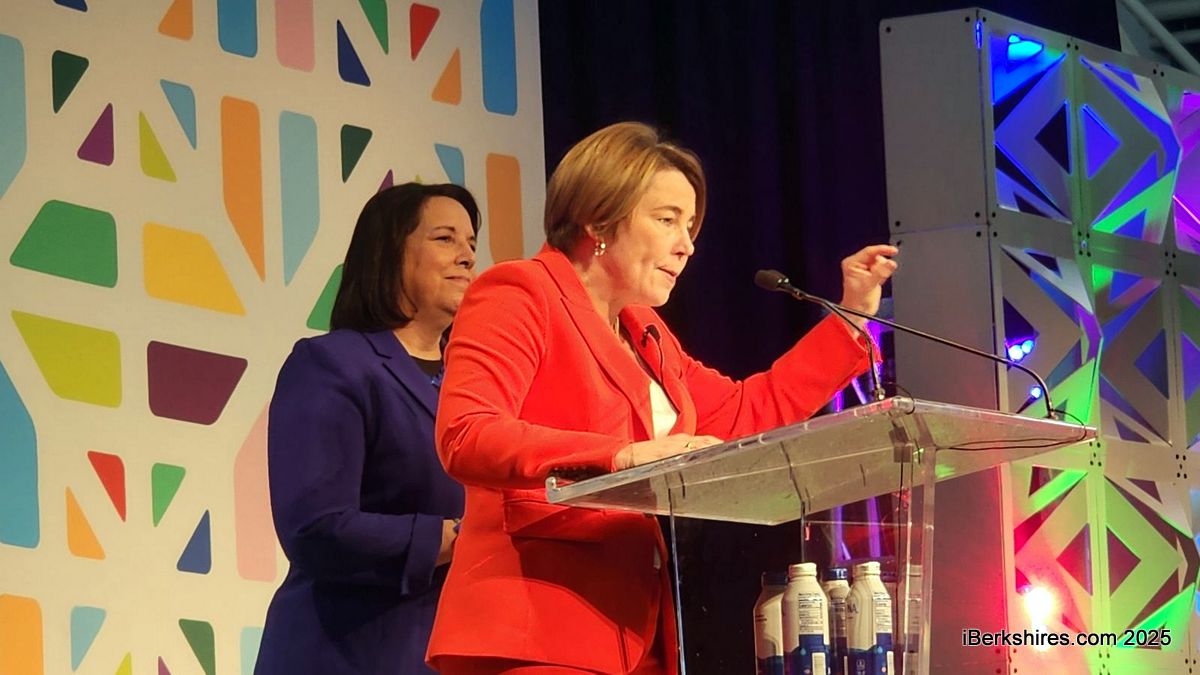
The governor talks about a transportation bond bill filed Friday and its benefits for cities and towns.
Those were just a few of the initiatives to aid cities and towns, they said, and were based what they were hearing from local government
"We also proposed what, $2 1/2 billion the other day in higher education through investment in campuses across 29 communities statewide," the governor said.
"Really excited about that and with those projects, by the way, as you're talking to people, you can remind them that that's 140,000 construction jobs in your communities."
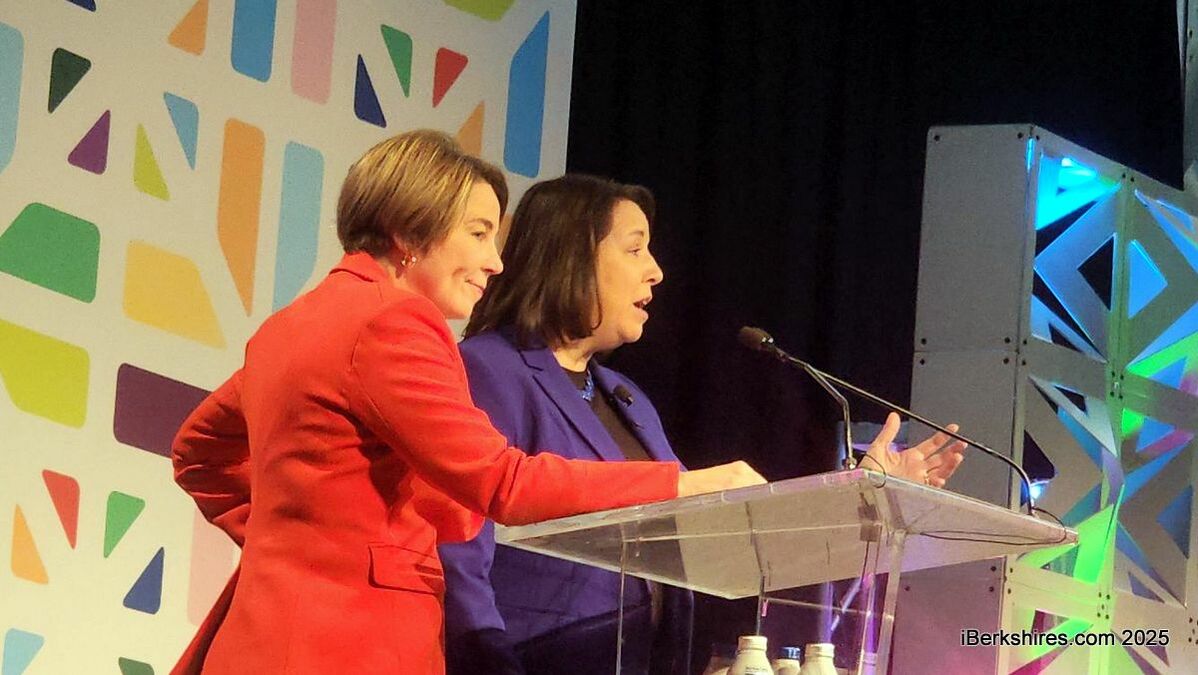
The governor and Driscoll were speaking to the annual Massachusetts Municipal Association's conference. Branded as Connect 351, the gathering of appointed and elected municipal leaders heard from speakers, spoke with vendors in the trade show, attended workshops and held their annual business meeting this year at the Boston Convention and Exhibition Center.
Healey and Driscoll followed a keynote address by Suneel Gupta, author, entrepreneur and host of television series "Business Class," on reducing stress and boosting energy, and welcomes from MMA Executive Director Adam Chapdelaine, outgoing MMA President and Waltham councilor John McLaughlin, and from Boston Mayor Michelle Wu via her chief of staff Tiffany Chu.
"We know that local communities are really the foundation of civic life, of democracy. We invented that here in Massachusetts, many, many years ago, and that continues to this day," said Healey. "It's something that we're proud of. We respect, and as state leaders, we respect the prerogative, the leadership, the economy, the responsibility of our local governments and those who lead them, so you'll always have champions in us."
Healey noted that it was municipal leaders responsibility to "squeeze every last dollar" and that her administration was doing the same with federal funds.
"We brought back $9 billion in federal funding and sent them to work. And I think the return on that investment has been huge," the governor said. "We want you to know our statewide transportation investment is designed for regional equity and local impact. And what do I mean by that?
"It's about injecting funds to fix infrastructure in every single city in town across our state, accelerating progress through a faster moving small bridge program for locally owned bridges."
About 80 percent of the state's road are locally owned, but communities often don't have the resources to maintain them as prices increase and the climate changes.
"Funding our [regional transit authority]'s matters, funding bridges matters, investing $200 million to fix culverts matter," Healey said to applause. We have seen the devastation caused by flooding in just the last two years alone. And God help us, look at what's happening in California. The impact of climate is all around us."
In addition to the $100 million added to Chapter 90 road funds, through the Fair Share Act, the bond bill to be filed Friday seeks to reform the funding formula and increase funding to cities and towns.
"How many years have we advocated for more Chapter 90?" said Driscoll, former mayor of Salem. "I think every year I've been involved in local government the costs go up, the formula only stays in a certain frame of mind. And then you can't do as many roads, can't do as many sidewalks, can't buy the equipment."
Driscoll also highlighted two new grant programs in the Community One Stop for Growth portal, which opened for applications on Friday. The competitive Vacant Storefront Program offers access to up to $50,000 worth of refundable 2026 tax credits and the Transformative Development Initiative's Equity Investment Program provides grants ranging from $25,000 to $250,000 to incentivize vacant commercial properties.
"One Stop last year resulted in 1,200 awards totaling $260 million bucks in 284 communities," she said. "Those are direct investments going back into cities and towns. We're really, really thrilled with the level of interest we have in One Stop."
The administration will be also rolling out the Municipal Empowerment Act 2.0, building on and refiling last year's bill.
Driscoll said it will include items from last year, including making hybrid public meetings a permanent option, more flexibility on procurement, expanding financial tools for school building and removing barriers to those lower cost school bus services, and easier to enforce property tax exemptions.
"These are efforts underway to improve the way of doing business," she said, adding, "it's not Republican or Democrat. It's just work that's got to get done in the get-stuff-done branch. We want to make it easier for that to happen and uplift and empower that work along the way."
The governor this was an opportunity not just to work together but to work smart and strategic. They all, like her, have had to make tough calls and realize not everyone was going to be happy with those calls as costs rise and the federal pandemic funding has disappeared.
"There will be a need for you to message and explain and tell your story about the acuity of the crisis you're facing in your cities and towns," Healey said.
"It's important for everybody to understand what it is you're really confronted with, and know there's nobody better than you. All of you have the knowledge, you have the experience, you certainly have the interest and the drive in communicating and articulating why certain reforms are absolutely necessary, why they're going to benefit local residents.
"When local residents win, Massachusetts wins, when local economies thrive, Massachusetts thrives."
Tags: Chapter 90, driscoll, healey, MMA, transportation bond,