Pittsfield to Study Speeding on Lenox Avenue
PITTSFIELD, Mass. — The city wants to ensure that upcoming construction doesn't turn Lenox Avenue into a bypass.
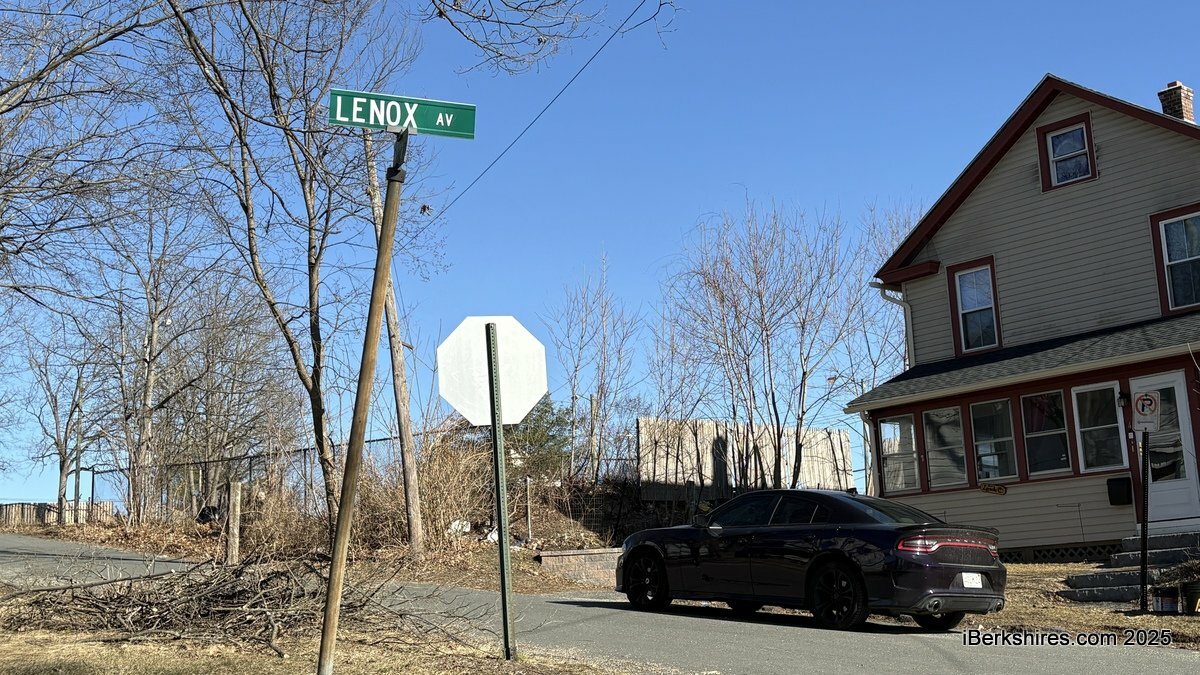
On Thursday, the Traffic Commission tabled Ward 1 Councilor Kenneth Warren and Ward 7 Councilor Rhonda Serre's request to resolve excessive traffic and speeding on Lenox Avenue until after the city gathers speed data.
Serre explained that this is about the upcoming detour from the Bel Air Dam removal and a general increase in speed on the southern end of the street. Because it is split between Wards 1 and 7, she and Warren got together to request a review of the detours, signage, and traffic calming measures that will be enacted when traffic is disrupted for the project.
"On or about July 1, the detour will be put in place and we certainly hope that Lenox Ave is not used as a bypass," said project manager James McGrath, the city's parks and open space program manager.
He reported that folks from the city and state are concerned about the street, "and there's only so much that signage can do, so we're going to look to monitor that."
Funded by the American Rescue Plan Act, the $20 million dam removal will kick off soon and take up to 18 months. Around July 1, one lane of Wahconah Street will be shut down; northbound traffic will be able to pass down Wahconah Street, but southbound traffic will be diverted south on North Street and west on Pontoosuc Avenue.
Warren said constituents on the section of Lenox Avenue between Weller Avenue and Pontoosuc Avenue have reported speeding and fears of people being injured by vehicles, noting "With or without the Bel Air dam, there are problems."
"It's several people having problems with the traffic, so I was wondering if you guys could brainstorm what might be happening, what we can do temporarily to see if that'll do it," he said.
"Maybe do a speed study or something like that, and then maybe these speed 'calmings' will also impact."
Commissioner Patrick Kavey, Ward 5 councilor, asked if a study could be done before the changes go into place so the city has an idea of the traffic flow before the project. City Engineer Tyler Shedd said that meters for a speed study could go up the next day.
"I have no doubt people speed on it like every other street," Shedd said.
Kavey added that "before we put in the speed bumps or anything else, we just want to make sure that people are."
Shedd observed that vehicles are likely detouring around the construction near Berkshire Medical Center, where a traffic circle is being installed.
"I think engineer She'd makes a very good point about what may be generating some of the extra traffic because in my first term, I didn't hear from anybody, and then I've heard from multiple people this time," Warren said.
"It may be very well that people are self-selecting because I know I go different routes to avoid certain sections, intersections, lights, because I know the city very well, and other people may be doing that, and so that may adjust it."
McGrath gave the commission a map of Wahconah Street's changes during construction. The street will be reduced to one lane just before the Wahconah Heights Apartments.
"In that location just north of the apartments, there will be a jersey barrier split right down the middle of the road. Northbound traffic will be pushed into the current southbound lane. The current northbound lane will be a construction right of way for vehicles," he explained.
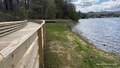
"If you are familiar with that area, the pond comes right up to the edge of practically the sidewalk, there's a small bank, some trees, and then the sidewalk, so there's not a lot of room for the contractors to work within."
He added that it is important to understand that folks traveling south on North Street won't be able to veer right onto Wahconah Street for through traffic. The detour is being enacted after school recesses for the summer so as not to disrupt bussing.
"There will be signage indicating that the road ahead is closed, only available for local traffic, so you would be instructed to stay on North Street and you'd be instructed to take a right on to Pontoosuc Avenue as part of the detour, down the hill on Pontoosuc to the stop light, where you will again be presented with Wahconah Street," McGrath said.
He reported that prior to the detour being implemented, there will be signage on either end and mailings to nearby residents.
"We're really trying to communicate this out as best we can," he said.
"This will be disruptive, but I think folks will quickly fall into the pattern of how they navigate around it, but it's the intention of the city and working with the state to execute this as quickly, efficiently, and swiftly as we can."
Also next year, the ‘poor' Pontoosuc Avenue bridge replacement will kick off. It is recommended that the bridge be fully closed during construction. A 0.7-mile detour will use Briggs Avenue as a connection between Wahconah Street and Pontoosuc Avenue.
The $7.7 million project will be funded through the 2026 Transportation Improvement Program for the Berkshire Metropolitan Planning Organization. Construction is expected to begin in fall 2026 and continue for about a year.
The aim is to provide a new bridge that meets current requirements, enhances existing multimodal access with bike lanes and sidewalks, maintains or improves the existing bridge opening, and avoids unnecessary abutter impacts by minimizing changes to the alignment and vertical profile.
An evaluation was done on the strength, stability, and condition of the more than 30-year-old structure. The concrete abutments are in fair condition with adequate strength, but the stability of the existing abutments doesn't meet current design standards, and a full bridge replacement is required.
Tags: dam removal, speeding, traffic commission,