Images Cinema to Screen Antarctic Documentary
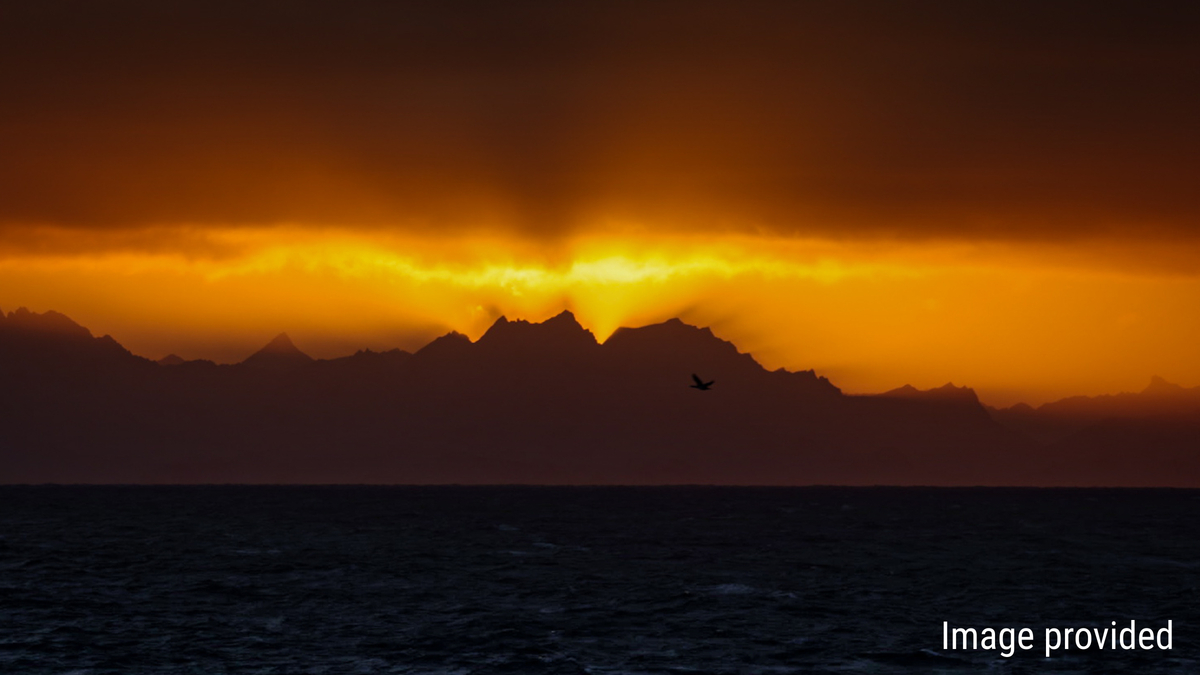
Sunrise over the Antarctic during southern winter from 'Antarctic Voyage.'
Not many have to go under the knife for it.
Documentary filmmaker Kevin Schreck screens his documentary "Antarctic Voyage" on Monday evening at Images Cinema.
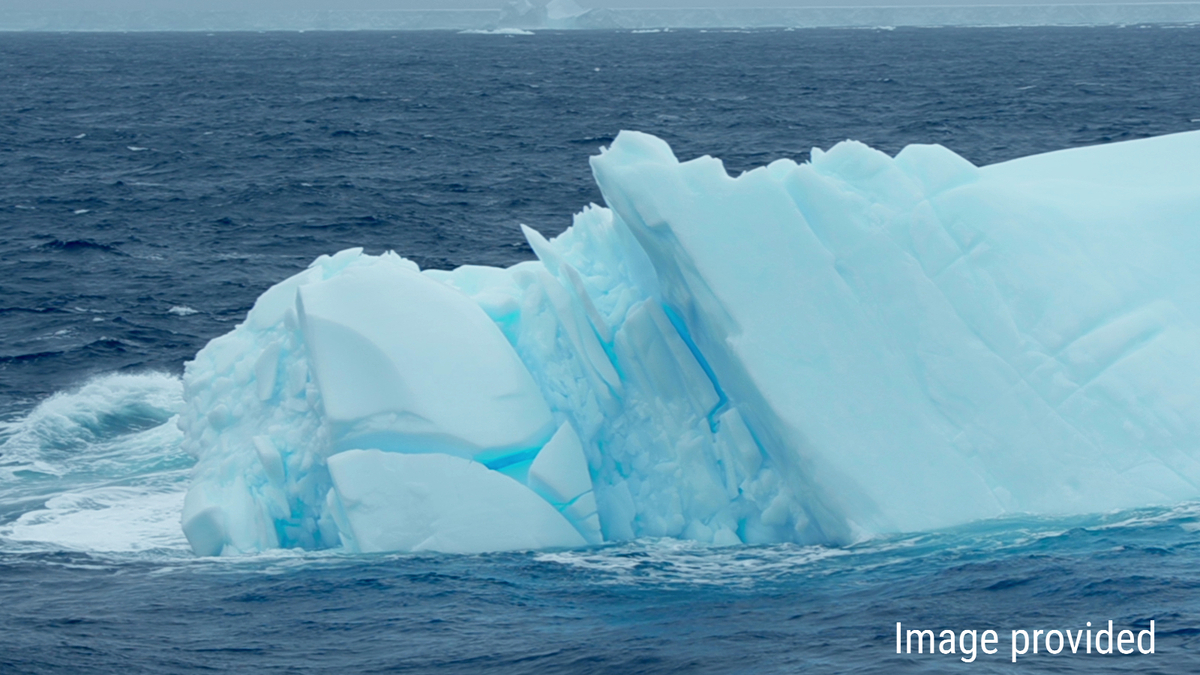
The film follows environmental scientist Samantha Monier on a research expedition to the remote South Atlantic island of South Georgia.
It was a project years in the making and one for which Schreck had to go above and beyond.
"I had to endure surgery to qualify for this [voyage,]," Schreck said in a recent telephone conversation from his base in Brooklyn, N.Y.
"They want to make sure, with you being thousands of miles from a doctor or dentist or medical facility, that you're OK. They can't risk anything that is preventable or expected. … I had a wisdom tooth that was a millimeter or so out of place. I was fine with it. I probably could have lived for years and never had a problem with it. But the government was like, 'If that thing ruptures while you're at sea, it jeopardizes the whole mission, and I agreed."
Monier's work was sponsored by the National Science Foundation, which suggested that the researcher find a way to make the trip's findings more accessible to a larger audience than those who typically might read a scientific paper, Schreck said.
"It was Sam's idea to have a documentarian," he said.
Fortunately for her, she knew one, a college friend with a talent for filmmaking and a love for biology … even if the two had not always been connected.
"Growing up, I'd watch science and nature films on PBS or from the BBC with David Attenborough," Schreck said. "Things like that were incredibly inspiring to me.
"I knew I wanted to be a filmmaker since I was 10 years old. Going to college, I had this liberal arts approach of exploring lots of passions and biology, and I had always been interested in the natural world — probably at least as long as I was into making movies, maybe longer. I was thinking, 'Should I be a biology major?' "
Ultimately, he gravitated toward film after realizing that a career in making movies would leave the door open to pursue a host of passions.
Most of his career, it turned out, tended more toward biography than biology.
His 2015 documentary on animator Richard Williams, "Persistence of Vision," was screened in film festivals from Melbourne, Australia, to Oslo, Norway, to Boston. In 2018, he released "Tangent Realms," which examines contemporary Turkish artist C.M. Kösemen and was named Best Documentary by Cleveland's Indie Gathering International Film Festival.
HIs next release, a feature-length documentary on rapper/producer/Ph.D. candidate Enongo Lumumba-Kasongo, is seven years in the making, Schreck said.
But in between creating all those character studies, the opportunity arose to join Monier in her studies.
"I jumped at the chance," Schreck said.
Even if it meant going to one of the coldest places on Earth … in the dead of winter.
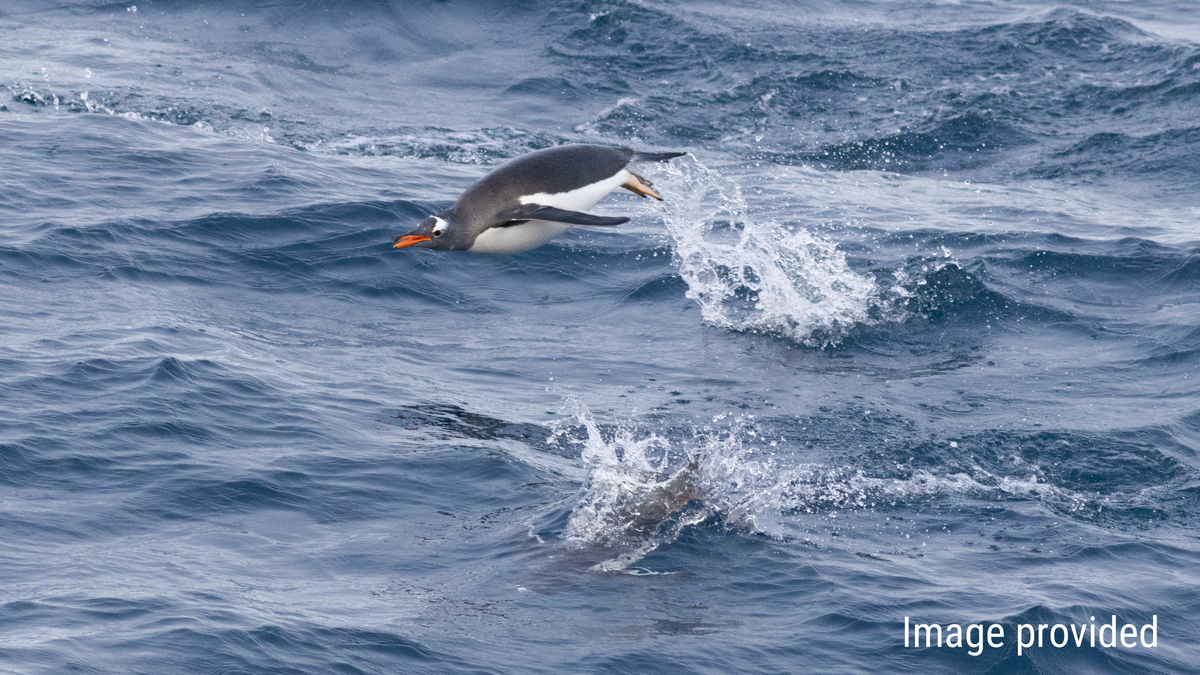
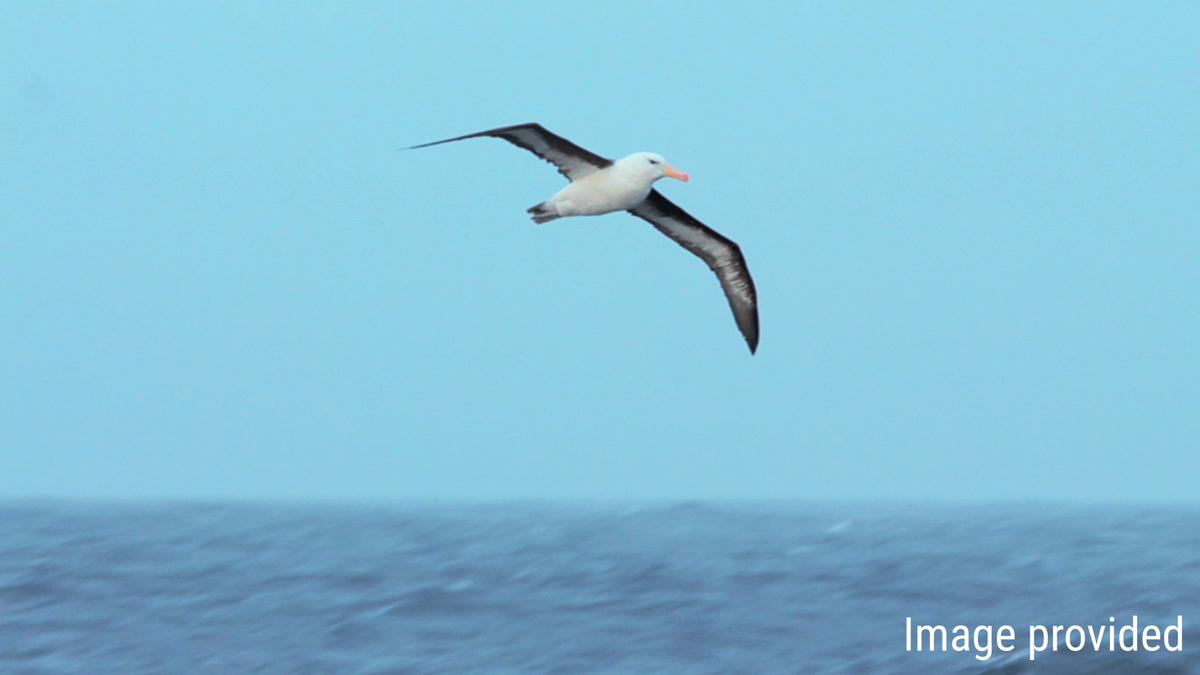
"What's significant about this research is there hasn't been research funded by the National Science Foundation or conducted by anyone from the United States about what wildlife is up to in the southern winter around that region … in 30 years," Schreck said. "A lot can happen in 30 years.
"Most research is done during the local summer time — for obvious reasons: It's more comfortable, wildlife is more active, they're breeding, you get a lot more daylight. But if you don't know what the wildlife is up to for half of the year for 30 years, you're missing half the story."
In the (southern) winter of 2023, Schreck set sail for four weeks in the South Atlantic to help tell that story as well as the story of the researchers.
"Even though I was inspired by nature films, I didn't want to emulate a style that's already there," he said. "I was making a film I wanted to see. Sometimes, these films don't focus on the scientist. Sometimes it's just the data, and they don't focus on the biography.
"I knew I wanted to really make it feel like an adventure — in an authentic way. I want to make it feel like the audience was there on this unique adventure. Getting to know the people involved is an important element of that."
Because space was limited on the research vessel, Schreck was a film crew of one, but that fit in with his process. On most projects, he has had maybe two or three other people along on locations, he said.
"Yes, it was a very lean operation, but that's kind of how I roll with these things," he said.
"Even though this shoot required the most of me physically and was on such a tight schedule by necessity, it was one of the easiest things I've edited. It was something I've always wanted to make, even though I didn't consciously think about it.
"I'm very lucky to be part of a very small club of people who have been able to make a creator-driven, artful film in the Antarctic, get paid to do it and have full creative control over it."
"Antarctic Voyage" screens at Images Cinema in Williamstown on Monday, April 14, at 7 p.m. Director Kevin Schreck will be on hand for a conversation after the film. Admission is "pay what you can."
Tags: documentary, images, natural history,