Concerns Over Screen Time Prompts Parent Presentation
DALTON, Mass. — Concerns about the effects of digital devices and social media on children has prompted one local parent to bring awareness to her community.
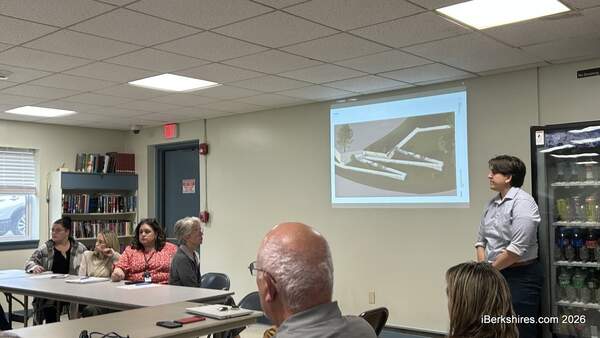
Amanda Baumann gave a presentation on the harmful effects of screen usage on kids last week at St. Agnes' Academy. She has a 5-year-old attending the parochial school.
She recently read "The Anxious Generation: How the Great Rewiring of Childhood is Causing an Epidemic of Mental Illness" by Jonathan Haidt, which argues that the use of screen time is affecting the mental health of children.
Baumann decided to approach the school's principal about educating the public and what they can do to help.
"I didn't know she was gonna agree so much with me on this, but that we had a little bit more wiggle room to make these suggestions, to maybe do policy changes, to experiment a little bit with these independence homework assignments," she said. "And this is a great place to start, because once we have a little bit of we've done this, it works. We're seeing great results, like we can share that. And ultimately, that's what we want."
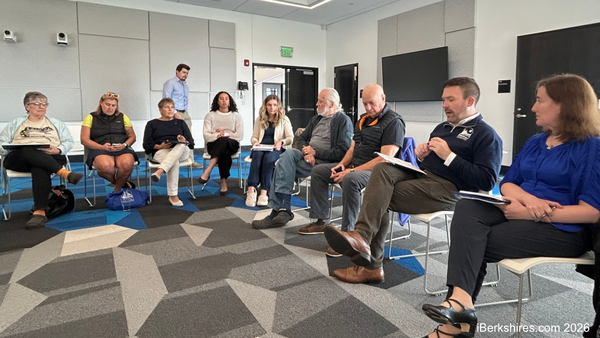
Her free presentation on Thursday spoke about the dangers of children being online at such a young age not only with access to strangers but how it has affected their mental health.
One of her slides suggested some options schools and parents could help enforce to get a child off of the screen.
The three suggestions included banning or putting a limit on phones, and looking at the Let Grow Movement and "playful schools."
The Let Grow Movement promotes more childhood independence. Baumann said her friend recently let her child walk home from the school bus by herself instead of being picked up, which was an exciting endeavor for their child.
Haidt says parents have become overprotective in this world because of the dangers society presents but allowing more freedom for a kid will help them grow.
Playful schools encourages to giving kids more access to recess and outside play time.
"Opening a playground like a half an hour before school could also work. Did you know that the average elementary school student gets only about 27 minutes of recess a day, and then subtract however many more minutes they need to get these kids to stand in line and pay attention," Baumann said.
Baumann also suggested letting them get out and explore with some degree of "risky play" allowing kids to learn and be able to take care of themselves without supervision.
"Kids need risk taking opportunities," she said. "There's an element of uncertainty and a risk of physical injury, like within reason, right? You don't want to plan for your kid to break their leg, but if they get a cut or something along the way, that's OK. It's important to know that this happens so much more during unsupervised play versus an adult-supervised activity."
Baumann hopes this helps parents and teachers work with children and get them off their screens for their mental health and well-being.
"I was hoping to enlighten or open people's minds a little bit to the way that this norm of technology use might not be so harmless just because we see all the other kids at the grocery store using their parents phone in the shopping cart doesn't mean like, it's OK, right?," she said.
"And we've seen this in so many other industries, like tobacco, and we used to be able to go to a vending machine and get cigarettes, until they realized how bad it was for you. So I'm hopeful that there will be a wave of this a little bit to tighten the reins and help our kids get back to how it used to be, for lack of better terms. So to open even one person's mind to that, would've been a win today. So that's really why we're here."
Tags: mental health, phone, social media,