Williamstown Con Comm OKs Pedestrian Ramps for Bridge
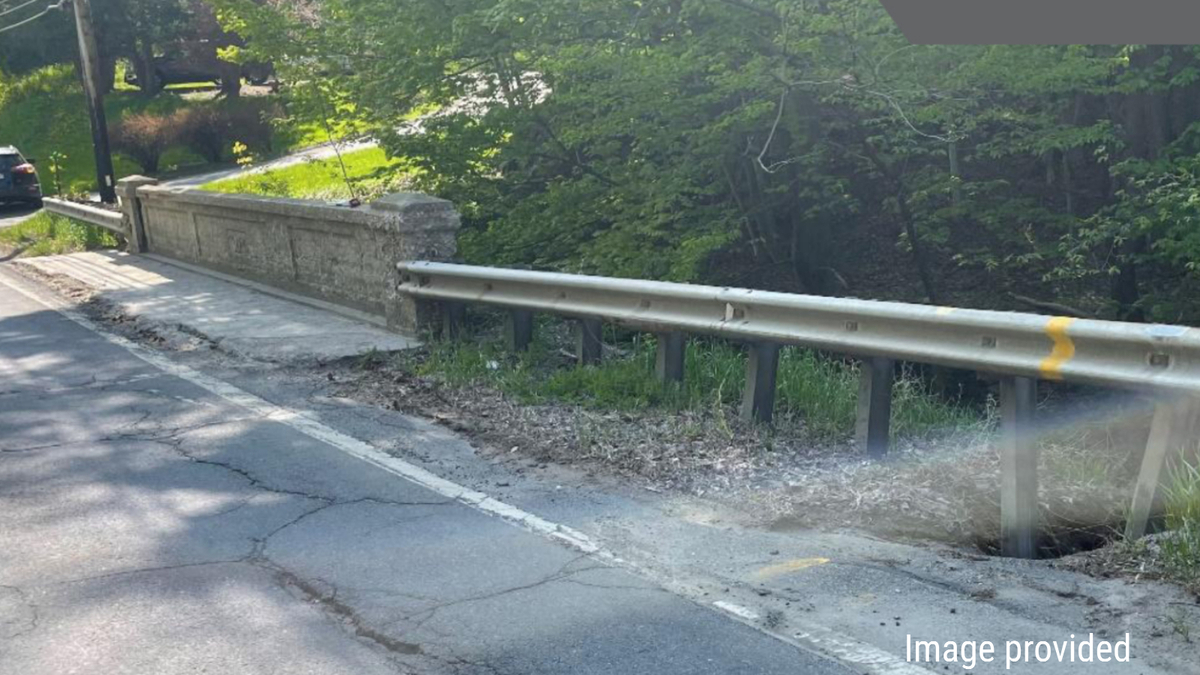
WILLIAMSTOWN, Mass. — The Conservation Commission on Thursday OK'd a state plan to build two accessible curb ramps on a sidewalk where Cold Spring Road (Routes 2 and 7) crosses Hemlock Brook.
It is one of several pedestrian ramp reconstruction projects that the Massachusetts Department of Transportation has underway throughout the agency's District 1, which covers Berkshire County plus parts of Franklin and Hampden Counties.
MassDOT was represented at last week's hearing by a senior project manager from Boston's Benesch Engineering.
"Sometimes [the ramps] are at intersections," Sean Barry told the commissioners. "In other cases, like this one, we are trying to upgrade the pedestrian access across the bridge to make it as safe as possible. The existing bridge has a cement sidewalk.
"The goal of this project is to marry up with the limits of the bridge, extend our sidewalk ever so slightly to create ramp systems to draw the pedestrian down onto the shoulder."
The bridge in question spans Hemlock Brook in an area where Route 7 (a north-south U.S. highway) and Route 2 (an east-west state road) run more or less east-west, just south of Field Park, between Cold Spring Road's intersections with Sabin Drive to the east and Thornliebank Road to the west. The bridge's sidewalk is on the "north" side of the bridge, along the southbound lane of the highway.
According to the narrative submitted by Benesch, one panel length of concrete sidewalk will be installed on the east side of the bridge (the first part you see traveling south on Route 7), "and the west side sidewalk will extend to the nearest existing driveway."
Because the project will increase impervious coverage near the brook by 191 square feet, MassDOT was before the Con Comm for a determination that the Wetlands Protection Act does not apply to work.
Commissioner Lauren Stevens asked whether the MassDOT project will include the installation of piped drainage at the site.
"The intent is to maintain country drainage as much as possible," Barry said. "In other [ramp] projects, we may have minor drainage adjustments."
The Con Comm voted unanimously to find that the work proposed is exempt from the Wetlands Protection Act because it is, "maintenance within the right-of-way of an existing highway."
Barry told the panel that the state hoped to get Americans with Disabilities Act-conforming ramps installed in the 2026 building season.
A higher profile project that has been making its way through the permitting process was continued for the second straight meeting last week.
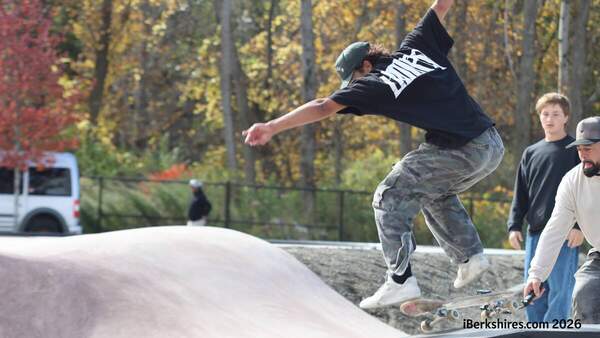
The town's request for an order of conditions to redo the skate park on Stetson Road will have to wait until the commission's Aug. 14 meeting.
Community Development Director Andrew Groff, who also serves as the town's conservation agent, told the Con Comm that Williamstown is still waiting for signoff from the water supply division of the Department of Environmental Protection, which needs to review the project because of its proximity to two town drinking water wells.
"It shouldn't be an issue," Groff said. "The [Mohican Trail] bike path was not an issue for the public water supply, and we're simply swapping some impervious area for some existing impervious area.
"Hopefully, we can get it approved in August so the skate park people can keep fund-raising."
The replacement of the existing skate park is a private-public partnership between town hall and the non-profit Purple Valley Trails.
In other business on Thursday, the Conservation Commission retroactively approved an emergency permit that Groff issued two days before the meeting. The director of Williams College's Hopkins Forest came to the town for approval to stabilize a weir on Birch Brook.
"There's an equipment shed there with sensors and computers and radios," Groff said. "It measures water temperature, flow rate and other parameters. It was getting undermined. I gave folks permission to temporarily stabilize it and get water away from where it was getting underneath it. … [Water] was getting dangerously close to the shed."
Groff told the commissioners that the college already had workers on site and likely would have the repair work done prior to last weekend's rain.
The Con Comm supported Groff in his decision to grant an emergency permit on a vote of 5-0.
Tags: MassDOT, road work,