West Nile Isolations Could Trigger Mosquito Spraying in Pittsfield
PITTSFIELD, Mass.— Continued West Nile Virus detections in the city's mosquito population could reinstate adulticide spraying.
Last week, there were two confirmed isolations in Pittsfield: One on Garland Avenue and another on South Street near the Dan Fox Drive intersection. If there is a consecutive WNV isolation in the same area, the threshold for spraying application is reached.
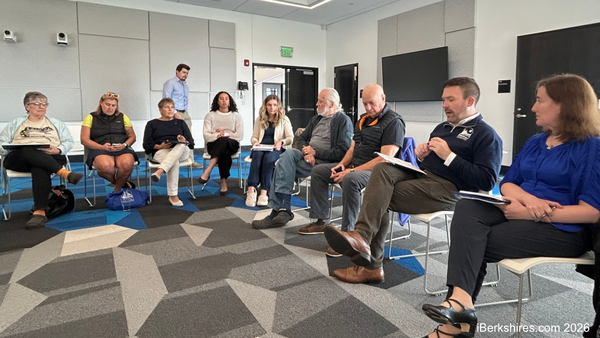
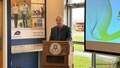
Chris Horton, superintendent of the Berkshire County Mosquito Control Project, told the Board of Health that we are in a "juncture" in mosquito season. It is currently the primary transmission cycle, and the goal is to keep numbers as low as possible until the season is over.
"But there are a couple of troubling factors that we're seeing in the last couple weeks," he said on Wednesday, displaying a chart with culex collections at the city's eight sites throughout July.
There were two West Nile Virus positives in different mosquito traps last week. Results of this week's traps will be in on Thursday.
"West Nile, I think, is our primary concern right now," Horton said.
That same day, there were 40 positive WNV samples statewide.
BCMCP has done more than 960 treatments over 42 acres this year. In April, the BOH approved a mosquito control plan that mimicked previous years, excluding adulticide spraying under normal circumstances.
Mosquito spraying was discontinued in 2021 and has been a contentious issue, with the City Council taking votes against it and residents polarized — some believing that the spray does more harm than good, and others arguing that it is necessary.
"The only thing that we can do if we have continued presence of positives and our risk level starts to go up, would be adult mosquito control to reduce the infected mosquitoes and stop the amplification process between the birds and the mosquitoes,"
The city's mosquito plan triggers adulticide spraying when isolates are detected for two or more consecutive weeks within one focal area or a moderate risk for human infection is assigned by the Massachusetts Department of Public Health.
"We'll get the results tomorrow, and if we have a positive on one of those traps, then we will likely want to move to adulticide," Chair Roberta Elliott said.
Director of Public Health Andy Cambi intends to meet with the administration to discuss the situation.
A couple of years ago, the BCMCP was granted the use of extended-release larvicides that last for 30 days. Areas with WNV detections were treated.
WNV is most commonly transmitted to humans by the bite of an infected mosquito. The mosquitoes that carry this virus are common throughout the state and are found in urban as well as more rural areas. While WNV can infect people of all ages, people over the age of 50 are at higher risk for severe infection.
Between May and October 2024, more than 25,700 mosquitoes were collected. Out of the 188 pools submitted to the Department of Public Health, five pools tested positive for West Nile virus. There were 15 positive instances of West Nile in the county but no human cases, though there were south of Sheffield.
Tags: mosquito spraying,