State Rep. Davis Emphasizes Collaboration Through Uncertain Future
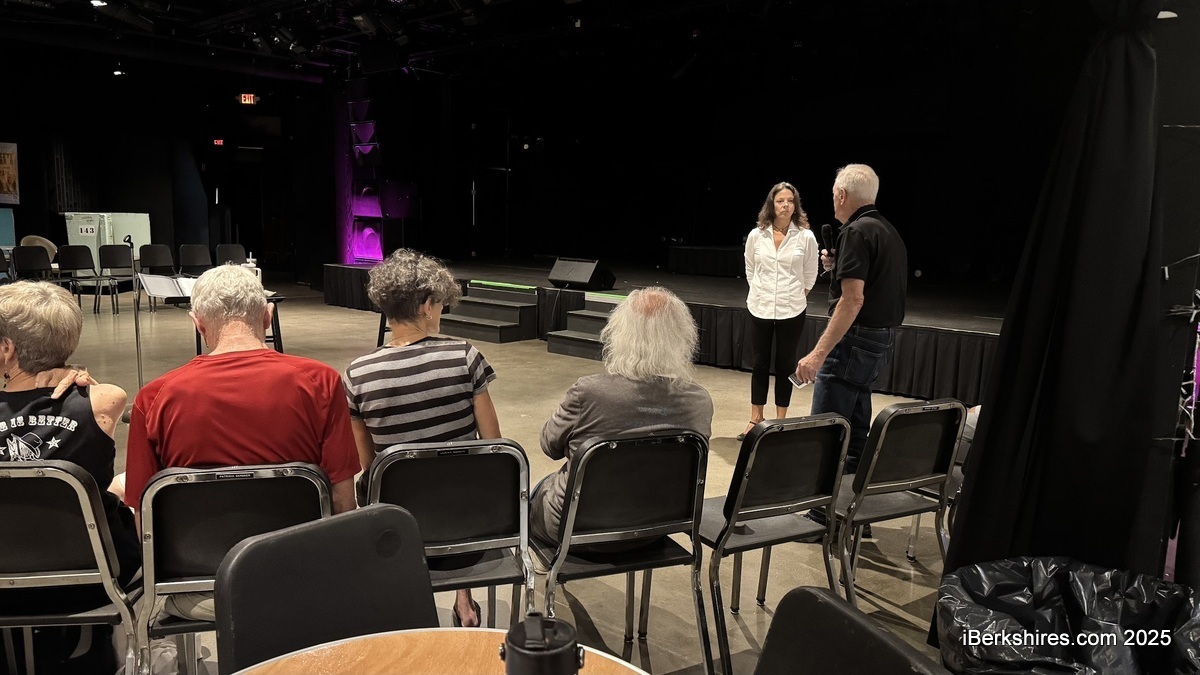
State Rep. Leigh Davis says feedback from constituents has informed the bills she filed in her first year in office and she will continue to hold 'min town halls' to discuss to solutions to pressing issues.
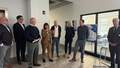
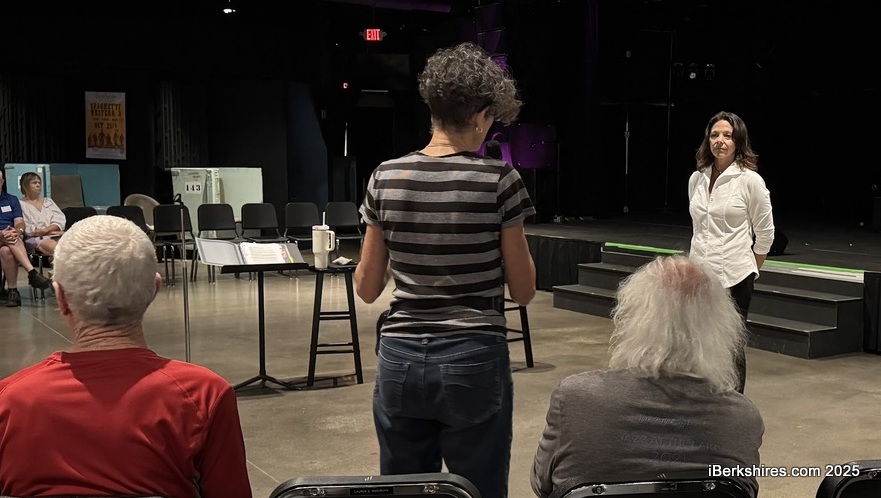
This sentiment was demonstrated by Berkshire Third District's Rep. Leigh Davis during her community conversation event at the Stationery Factory on Monday.
"I think with the next 3 1/2 years, there's going to be a lot of change, and there's going to be a lot of transition … we can come together as a community and know that we have each other and we can talk to each other and take these priorities and try to work on it, piece by piece, step by step," Davis said.
Residents' questions reflected their perceptions of an ominous future, with concerns surrounding the costs of health care and infrastructure, funding cuts, affordable housing, immigration, environmental and climate issues, and other pressing issues.
"We have a lot of challenges. We have a declining population. We have challenges with our schools. We have the loss of our mills and the loss of a lot of our economic development," Davis said."We do have challenges, but it doesn't mean that it has to be stagnant. It just means that we need to be creative and maybe have a little bit more shared services, look at a regional basis.
"So, I think that it's really challenging, and I haven't lost hope. I think that we have so much to offer the rest of the commonwealth, and we just need to keep reminding them that, and we need to think out of the box, and we need to be creative and be strong."
The Great Barrington Democrat provided participants with an inside look at what life is like on Beacon Hill and as a state representative.
"I have an aide that works in the State House, her name is Serena Keenan. She's wonderful …and she is kind of holding the constituent services together," the representative said.
"So part of this presentation will be talking a little bit about what she does, because I think people don't realize the amount of emails and correspondence that we get as legislators."
Keenan goes through about 70 emails a day, Davis said.
The Berkshire Third District is one of the largest districts in the House, covering 18 towns across South Berkshire and north into Dalton.
"When you hear about Western Mass and you hear about regional equity, that's something we have to take into account — that representation here has those additional challenges," Davis said.
Despite being the newcomer to Beacon Hill, Davis has already paved a way forward since her election in November.
"I was sworn in on Jan. 1, and straight away, they gave us a deadline for bills to be filed, and usually freshmen [or] first-year legislators don't file a lot of bills of anything," the former Select Board member said.
Her peers reassured her that it was OK to listen and learn. They emphasized that if she wasn't ready to file anything yet, that was OK, too.
But after a year of campaigning, Davis used insights from conversations about her community's concerns to begin writing legislation.
"I don't have a background in law … but we are very, very fortunate to have House counsel in the State House," Davis said.
Davis took the community's major concerns and started to turn out bills to address them.
"I ended up, I think, filing 24 bills in those 15 days, which is pretty substantial. And it was a lot of late nights. It was a lot of conversations with advocates. It was a lot of work with the House counsel," she said.
"Through that hard work, I was very grateful that the Boston Globe flagged me as a lawmaker to watch, as well as MassLive. And I think that they saw the momentum that was being really built up in this district."
Davis emphasized the importance of conversation to discover solutions.
For example, the five bills that Davis filed on the reforming of emergency medical services comes from direct conversations with EMS providers and through a regionalization process that the Third Berkshire District began, she said.
She explained the slow two-year legislative process that bills have to progress. If a bill is not advanced within that timeframe, it must be refiled, making the process almost like a race to get approved.
Davis has been assigned to four committees: federal funding, state administration, election laws, and climate action and sustainability.
"You think about the 18 towns. There's a lot of work, and there's a lot of connections you're making," she said.
These "mini town halls" are a way for the community to feel connected and together, she said, and to demonstrate to her constituents that they have a leader who is listening and working to find solutions to their concerns.
"I can't solve it alone, but I can solve it with the Legislature. I can solve it listening to you, and we can be creative," Davis said.
"This is what community is about. I mean, this is why we are here. We all are so lucky to be living in this region, the Berkshires."
State officials are still unraveling the impact the Trump administration's "Big Beautiful Bill" will have on the Massachusetts. However, officials are anticipating losing money quite rapidly in the next 3 1/2 years, Davis said.
"So, one of the biggest fears that I have [and] other colleagues have, is the 9C cuts, which would enable cuts [by the governor] to happen mid-budget year," she said. This could affect local aid and quasi-public agencies.
There is some cushion set in the budget to prepare for that so that the state is as strong as it can be, considering what is happening, she said.
The Legislature passed a fiscal 2026 budget of $61 billion, which includes an approximately $800 million cushion to prepare for inevitable federal funding cuts, Davis said.
"Our health care is killing our budgets in our cities and towns," Select Board Chair Robert Bishop said.
The town's group health insurance had an increase of 19 percent this year. It was previously reported that health insurance costs are going up substantially statewide.
However, Dalton is at the high end compared to other municipalities because of "several relatively large claims."
Like many areas in the state, infrastructure is another concern, but it is not one that is going unaddressed.
Select Board member John Boyle pointed out the more than $1 billion transportation and infrastructure bill signed by Gov. Maura Healey.
Of that, $300 million is Chapter 90 aid for "critical transportation and infrastructure funding to every city and town across the state," the Healey administration said in a press release.
A significant aspect of the bill is its change to the Chapter 90 funding formula, which will enable $100 million of the total investment to be allocated based exclusively on road miles, an added benefit for rural communities.
"You look at the importance of that change in funding formula, so that we get the money that we deserve. So, most of the 18 towns in the Third Berkshire District will see between 70 percent and 90 percent increase this year in their Chapter 90. So, that is significant," Davis said.
"There's also a significant increase in money for culverts and small bridges. Now, the Accelerated Bridge Program, that is one of the bills that I've put forward that's separate, but at least we know that the governor, in particular, is paying attention and that our advocacy is working."
One concern that several community members raised is the situation with immigration, which has "taken a turn."
Opinions vary based on where people are, but Davis said there is a lot of fear in communities that need to be addressed.
Those being taken by Immigration and Customs Enforcement are "folks that have kids in schools … that work in our shops … we know deeply that they are our neighbors," Davis said.
"Since the beginning of President Trump's term, there has been a 336 percent increase in immigration arrests, and due to ICE's goal of deporting 1 million immigrants per year, it works out to 3,000 people per day that are being affected right now."
From a state perspective, there are not many things lawmakers can do because of the federal powers that ICE has.
"Whatever we can do as a state, we're trying to do … when it comes to ICE coming into the community, there's not a lot that we can do as a community. I know that there's a bill right now trying to unmask ICE — that is, unfortunately, not anything we can do. It sounds great, and we all want that, but that's unfortunately nothing that we can control," she said.
"Thank goodness for the attorney general and the other AGs across the country that are time and time and time and again putting forth court cases and challenging what's happening."
Davis said that, based on communication with groups working with immigrants on the ground, there is an effort to ensure that these individuals have access to essential resources, such as food, education, legal aid, and other services.
"Check on your neighbors, help out your food pantries, talk to your schools, make sure that the people that are feeling vulnerable know that you're here for them," she said.
"So, it's a really, really, really tough situation right now, and we're already seeing the effect in terms of small businesses losing their employees. We're seeing small businesses shutter. We're seeing landscape companies not being able to do their jobs, and this is only the beginning."
Tags: leigh davis, town hall forum,