Clarksburg Receives $445K for Four Corners Hazard Mitigation Project
CLARKSBURG, Mass. — The town's a step closer to redesigning the area surrounding the town field to better prepare for flooding.
The Executive Office of Energy and Environmental Affairs is providing $445,020 for design and permitting of the Four Corners Project, an initiative to improve the field and prepare for better flood solutions in the face of climate change.
"I appreciate Berkshire Regional Planning for going after the money for us and having all the meetings," said Robert Norcross, a member of the MVP committee. "We're very grateful that we go in the next stage of engineering for our town field."
The Massachusetts Vulnerability Preparedness Action Grant was part of the $28.7 million in grants announced by Gov. Maura Healey this week to help 54 communities prepare for increasingly extreme weather — including heat waves, flooding, wildfires and storms.
Since its inception in 2017, MVP has funded over 500 projects ranging from stormwater system upgrades and cooling shelters to updated zoning and emergency response planning. According to the governor's office, the Executive Office of Energy and Environmental Affairs this year made a targeted effort to recruit rural and small towns into the program, with $11.1 million going specifically to those areas.
"Communities across Massachusetts are already feeling the impacts of rising heat, flooding and other extreme weather. These grants give them the ability to prepare before disaster strikes — protecting homes, public spaces and essential services," Healey said in a statement. "Preparation is the most affordable, effective way to protect people and avoid much higher costs down the road."
Also funded this cycle was the Pittsfield Westside Connectivity Project at $1,144,000, and a Berkshire Climate Career Lab at $50,000 for Becket, Great Barrington, North Adams and Pittsfield, both managed by BRPC; Resilient Housatonic: Community-Centered Climate Planning at Old Maid's Park at $80,860 in Great Barrington, and a Resilient Regional Public Safety Facility Master Plan Feasibility Study and Design for Richmond, Stockbridge and West Stockbridge at $348,140.
"The Massachusetts Vulnerability Preparedness program has been a game changer for the Berkshires, giving our towns the tools to plan for and reduce the risks of climate change," said state Rep. Leigh Davis of Great Barrington in a statement. "I’m thrilled to see two Third Berkshire projects supported — community-centered climate planning at Old Maid's Park in Great Barrington and planning for a new Regional Public Safety Facility in West Stockbridge.
"These investments not only help us prepare for flooding, heat, and storms, they also make our parks more accessible, our neighborhoods safer, and our communities stronger for generations to come. I’m grateful to the Healey-Driscoll Administration for prioritizing local climate resilience and supporting what matters most in our towns."
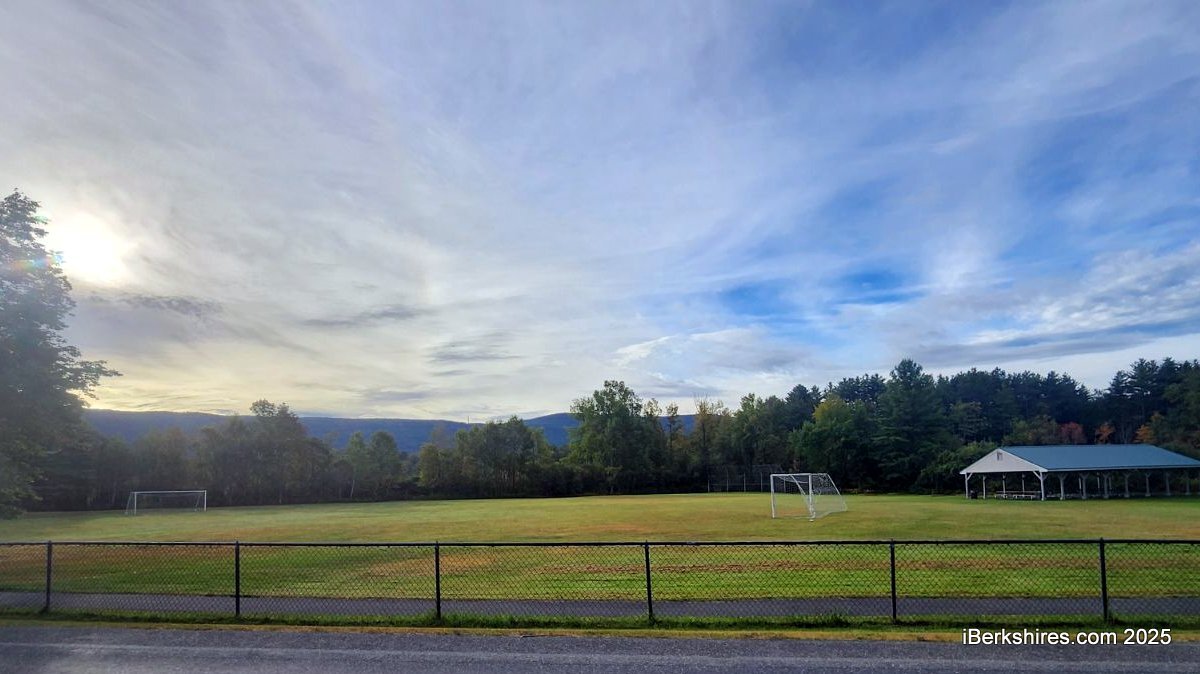
The concept for the Pfc. Peter A. Cook Veterans Memorial Field in Clarksburg was the result of nearly a year of planning by the Municipal Vulnerability Preparedness Committee, input from residents and facilitation by the Berkshire Regional Planning Commission. It was funded by a $215,000 grant; construction is estimated at $1.5 million.
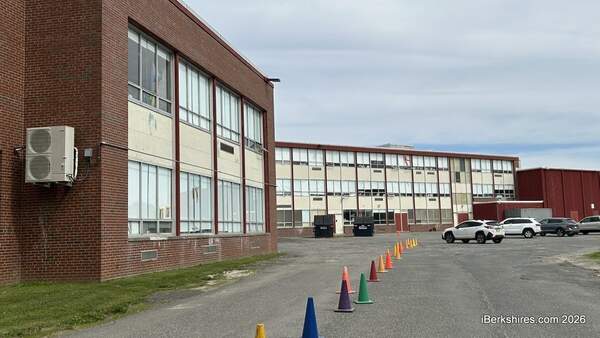
The project includes Clarksburg School, the Senior/Community Center, the Department of Public Works, a sewer pumping station, and the area around the intersections of West Cross, Cross and Middle Roads. Much of this was farmland and maintained with swales and ditches but is no longer used for agriculture and maintained.
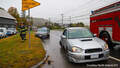
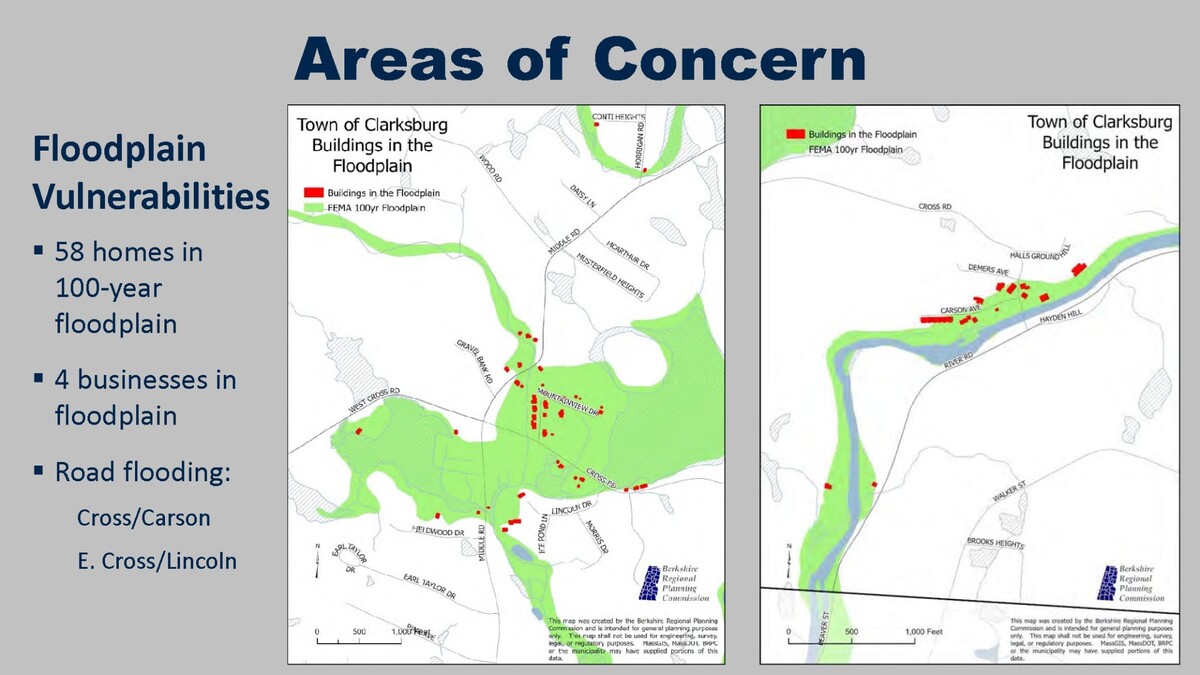
This part of the town was identified in the 2021 hazard mitigation plan and is the intersection of two of the town's three major byways. It includes 58 homes within the 100-year floodplain along with the school and the Community Center, the town's emergency shelter.
The design looks at integrating stormwater infrastructure and also reconfiguring the field to be more accessible and usable. Plans for the town field include recreational and play spaces, and accessibility within the field and to and from the school and Community Center.
With the preliminary design in place, Norcross said this next grant is for the engineering from the Senior Center to the school and the whole field.
"It's exciting," he said, adding the committee will be holding its next meeting in October.
Tags: flooding, floodplain, hazard mitigation, state grant,