Residents, Officials Say 'No' to Proposed Berkshire Gas Rate Hike
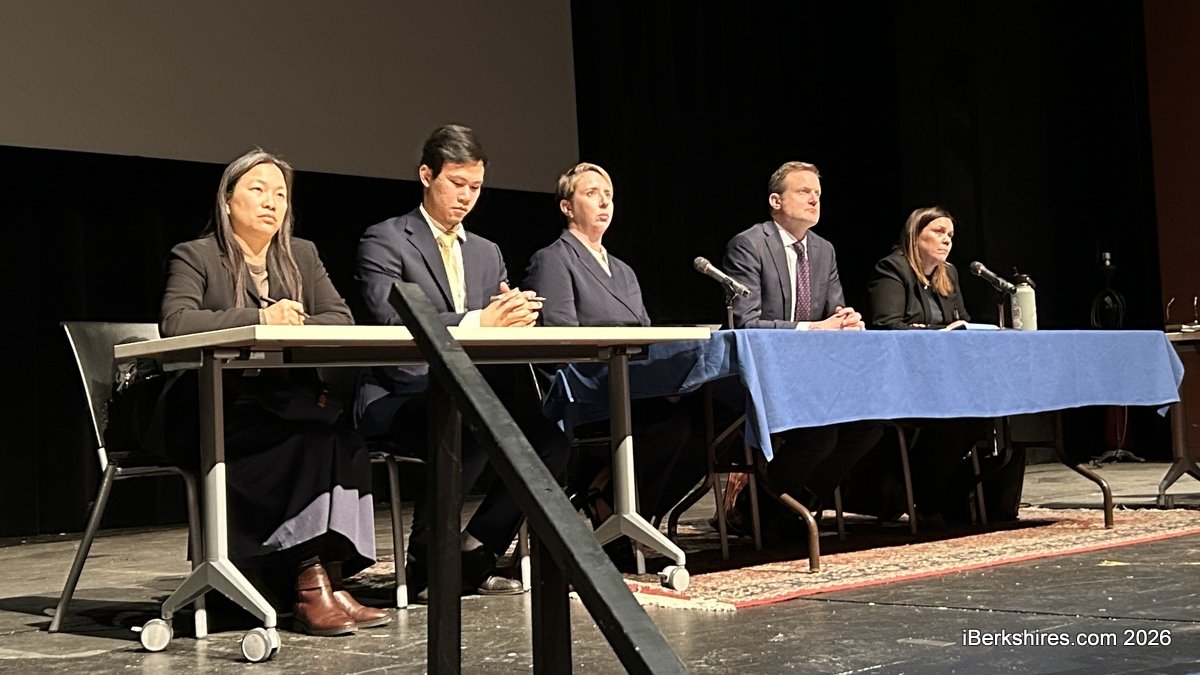
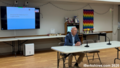
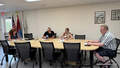
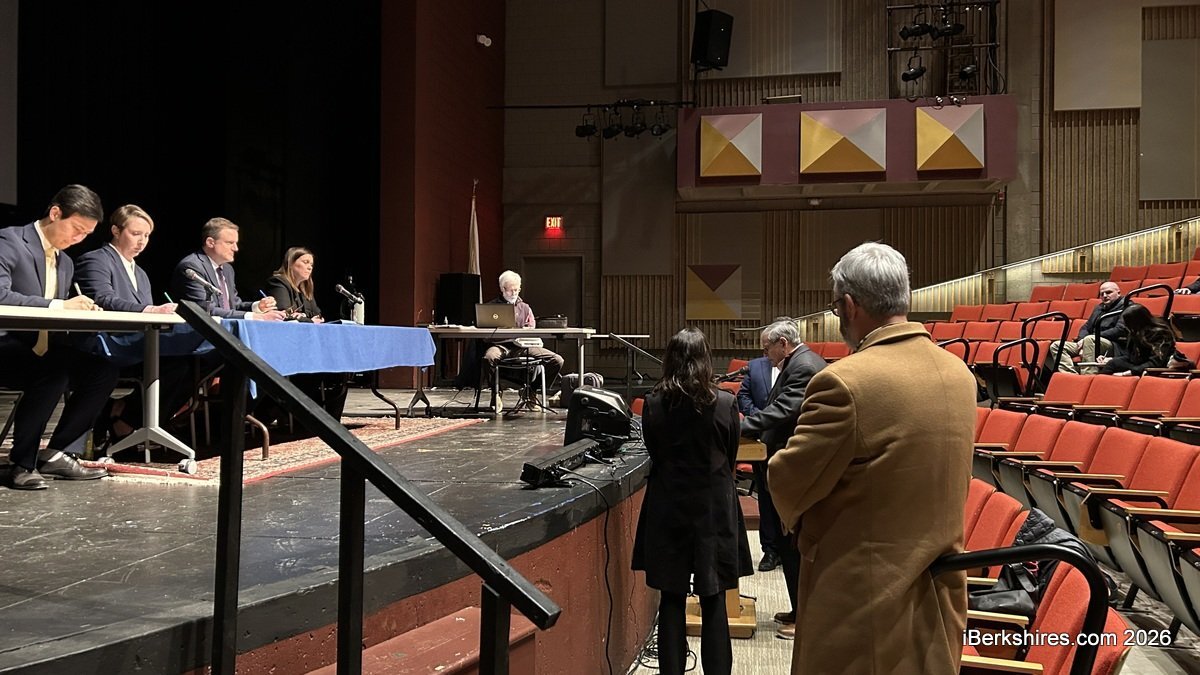
The hearing included representatives from state's rate division, the hearing officer and Department of Public Utilities Commissioners, at right, Chair Jeremy McDiarmid and Liz Anderson
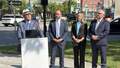
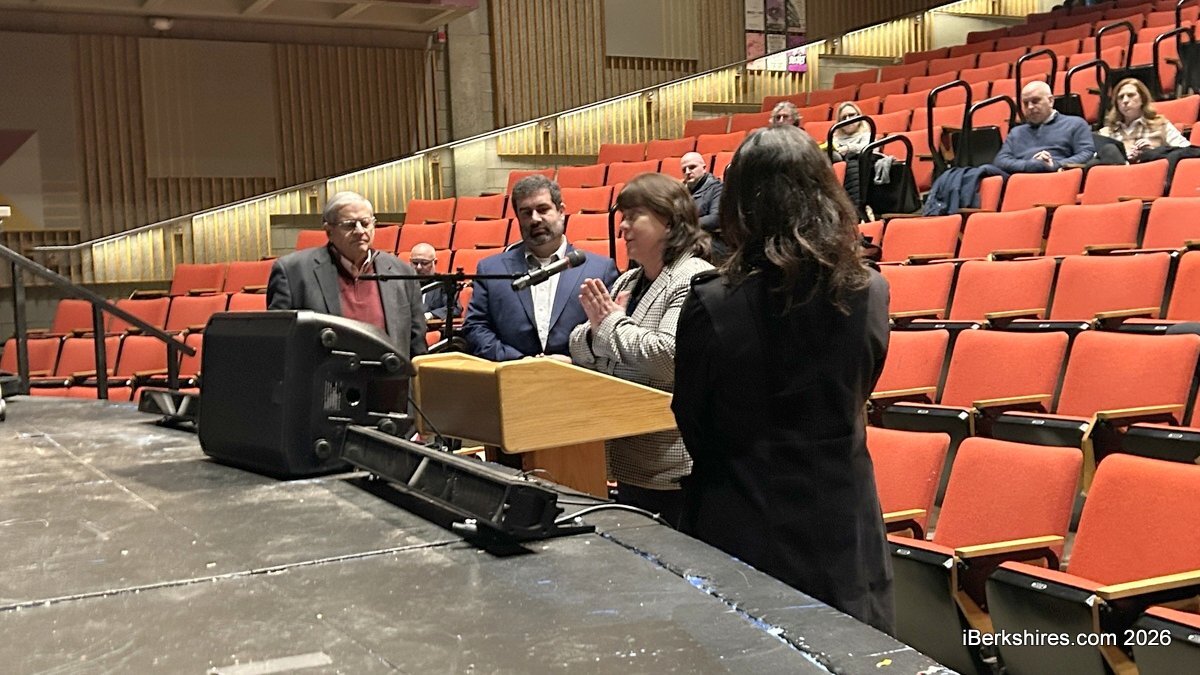
State Sen. Paul Mark and state Reps. Tricia Farley-Bouvier, John Barrett III and Leigh Davis stood before members of the state Department of Public Utilities in "strong opposition" to the rate hike.
The Berkshire delegation joins Gov. Maura Healey, local higher education institutions, and community members who find the increase, estimated to be about $54 a month for residential heating, unaffordable for a vital service.
"While there was a time that this was our hometown Berkshire Gas, in reality, it is not anymore. This is a multinational company. It's a multinational company whose CEO makes $3.23 million a year. That's $62,000 a week," Farley-Bouvier said.
"Now that is more than what most people in Berkshire County make in a year."
The proposed increase has been attributed to capital investments and rising operational costs, and Barrett said a significant driver of those costs is the Gas System Enhancement Program, which "has raised serious concerns for years."
GSEP costs passed down to ratepayers have increased by more than 300 percent without clear evidence of proportional improvements in safety or leak reductions, he added, and the Attorney General's Office is reviewing those concerns as they relate to Berkshire Gas's 2026 GSEP spending.
"These projections appear unusually high and heavily focused on costly pipeline replacements instead of lower-cost, risk-based alternatives. Yet, despite this unresolved investigation, Berkshire Gas has already embedded those disputed costs into proposed base rates, essentially asking rate payers to pay first while regulators ask questions later. That approach is backwards at best," he said.
"The company also cites more than $7 million in increased operating expenses over the past four years. However, there has been no clear showing that Berkshire Gas has taken meaningful steps to control costs or protect customers from rate shock. Ratepayers should not be treated as a guaranteed backstop to preserve utility profit margins."
The utility is asking to adjust distribution rates to generate $22.2 million, which it anticipates will result in a 21.6 percent rate increase on average. In filings with the DPU, Berkshire Gas is estimating up to about a $54 per month increase for residential heating and $12 for non-heating customers.
It also proposes a transfer of $5.7 million from GSEP to base distribution rates and the recovery of $6.6 million in GSEP investments.
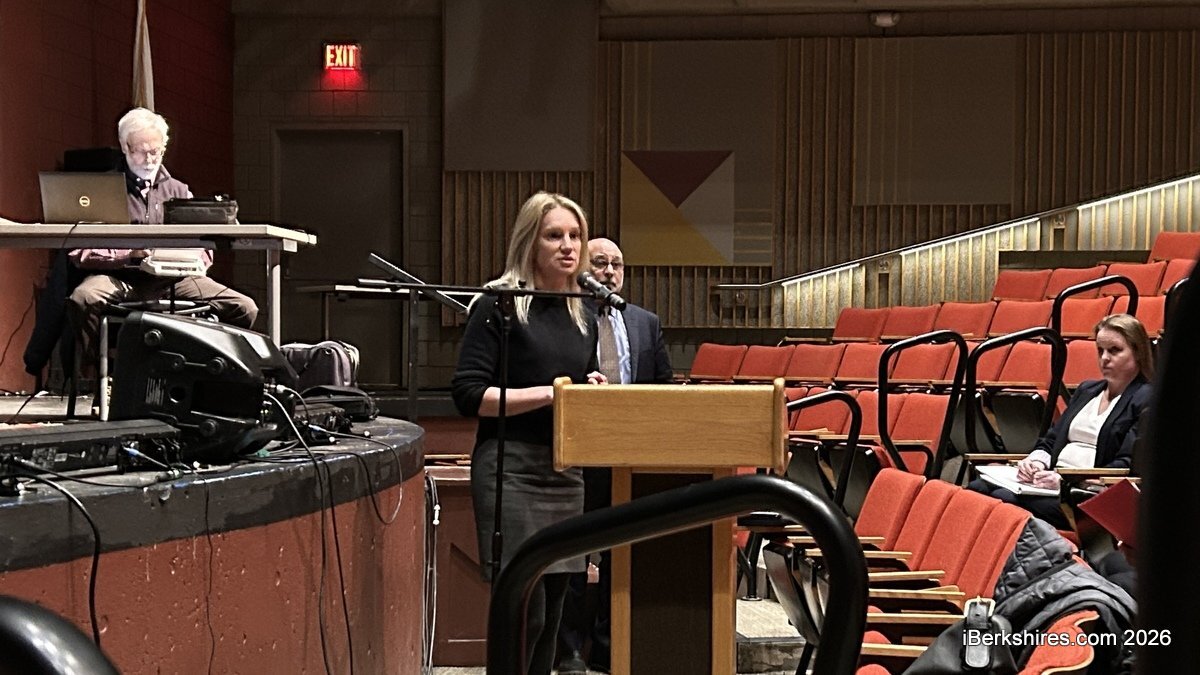
Berkshire Gas has asked to adopt performance based ratemaking to "create more stable, lower rates for customers going forward" and eliminate the need for another rate case through 2031. President and Chief Operating Officer Charlotte Ancel, addressing hearing attendees, said Berkshire Gas has the lowest rates in Massachusetts.
"In a perfect world, if we could have our way, we would never look to increase our rates. We have to balance though our objective and commitment to have cost effective service with also the need to provide all of you with safe and reliable service, and that is precisely what our proposed rate change is about," she said.
"We have proposed a five-year investment plan that is fully reflective of investments that are necessary to ensure that our system remains safe and reliable for all of you."
The DPU has suspended the proposed increase until October to investigate its propriety. Evidentiary hearings will be held in May, and written comments will be accepted through Feb. 27.
DPU Commissioner Liz Anderson said their first priority is affordability, recognizing the increase in energy prices throughout the country.
"I want to begin by acknowledging that the department is going to do everything we can to manage costs for customers. The department takes all rate matters seriously. We plan to thoroughly review all information provided about the company's rate increase, including your comments tonight," she explained.
"… Know that we are taking careful notes and listening intently over the next few months. The department staff will review the company's testimony and detailed cost data, cross-examine witnesses and hold evidentiary hearings, and review public comments. Your comments tonight inform questions that the department staff will ask the company to gather evidence. The department will scrutinize the information filed by the company. Only after the commission reviews all the evidence filed in this proceeding will we issue a decision."
DPU Commission Chair Jeremy McDiarmid said the department has also been focused on increasing the transparency of its work.
"The actions of our agency in this case will affect many people, and this is a responsibility we take quite seriously," he said. "Our decisions will be better when we hear from you, and we ensure that your comments will influence our decision."
The Attorney General Andrea Campbell intervened on this docket in November and was represented at the hearing alongside the Berkshire Gas counsel. Sierra Moll, energy consumer liaison at the AG's office, explained that this is an "extremely important" case because it will set the rates for about 40,000 customers.
A total of 17 people spoke in opposition to the rate increase, including representatives from other Berkshire communities and the Berkshire Environmental Action Team. Pittsfield's Ward 2 Councilor Cameron Cunningham was among those speakers, emphasizing how costly utilities are another deterrent for young families wanting to live in Massachusetts.
Residents spoke about issues with Berkshire Gas service and exorbitant bills, coupled with national price increases that make affording a home difficult.
Three North Adams city councilors expressed their concerns about the proposed rate hike, with Peter Breen, also chair of the council's Public Services Committee, raising concerns on how the federal Jones Act factors into rate hikes.
Lillian Zavastky said the region has the third-highest electric rates in the country and some of the highest heating costs; 9,000 Berkshire County households received fuel assistance in 2024.
Marie McCarron said affordability and equity must be central to this decision.
"Many of the households in the North Adams region already are making impossible choices between heat, rent, food, and medical care, and now, with this rate increase of this magnitude, will disproportionately harm low and moderate income customers, seniors who are on fixed incomes, and we have to think about our persons with disabilities," she said.
"So I'm urging the department to closely scrutinize what portion of this increase is tied to unavoidable safety or regulatory costs versus company profits and executive compensation. I also ask that the regulators consider whether customers are being asked to pay for long-term gas infrastructure at a time when Massachusetts is actively transitioning away from fossil fuels, and if any increase is approved, it must be paired with meaningful consumer protections, expanded programs, and strong limits on future increases."
BCC's Chief Financial Officer Christina Wynn reported that the college's natural gas costs have climbed "steadily and sharply." It is expected to increase 63 percent from fiscal year 2023, when the bill was about $82,000, to fiscal year 2027.
For a small community college, Wynn said that is not a minor fluctuation and represents a significant and compounding structural cost burden.
"Every dollar we must direct to utilities is $1 we cannot use for student-facing work. It comes at the expense of tutoring, advising, workforce development, training programs, academic support, and routine maintenance that keep our facilities safe and functional," she said.
"They're not optional enhancements. They're the core services that help our students persist, complete credentials, and move into our regional workforce. Public colleges operate within fixed revenue structures. Our budgets are built on state appropriations, tuition, and fees that are tightly constrained. When essential costs such as utilities increase at this pace, the pressure shows up in deferred maintenance, hiring freezes, delayed investments, and limits on program growth."
Matthew VanHeynigen, chief government relations officer for Massachusetts College of Liberal Arts, said it would mean a $115,000 annual increase for the college that would have to be added to its budget. This could mean that student fees are raised, or programs are cut to make up the difference, he reported.
Tags: berkshire gas, public hearing,