Pittsfield Seeks Input on CDBG Spending
PITTSFIELD, Mass. — The city is seeking input on where this year's Community Development Block Grant dollars should be allocated.
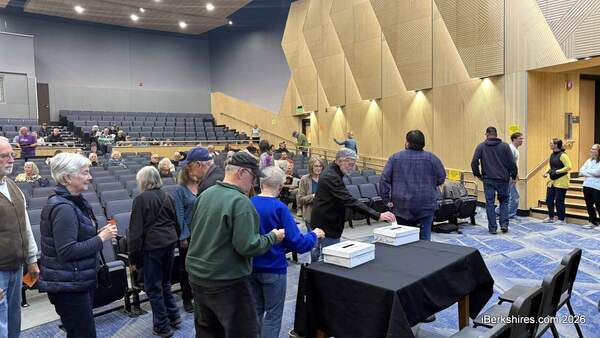
A public hearing was held on Tuesday at Berkshire Athenaeum. Nate Joyner, Pittsfield's community development and housing program manager, believes this was the city's 51st CDBG hearing.
Last year, Pittsfield received about $1.2 million from the federal government for projects involving public facilities, public services, housing rehabilitations and demolitions, and economic development. This year's allocation is expected to be around the same.
"It's a federal program intended to provide decent, safe, and sanitary housing, provide a suitable living environment, and expand economic opportunities for primarily low and moderate-income residents," he explained.
"There are some rules on how those funds can be spent, but a minimum of 70 percent of the funds need to directly benefit what they call low or moderate income people, and no more than 30 percent of the funds can be used to address slum or blight."
On Tuesday, snow and slush washed over the region, affecting the turnout at the hearing and canceling other events that day.
The Department of Community Development is preparing to draft its 2026 Annual Action Plan for the federal funds, with the program year beginning July 1. The U. S. Department of Housing and Urban Development provides CDBG funds annually under Title 1 of the Housing and Community Development Act of 1974, as amended.
A draft Annual Action Plan will be available on the city website beginning April 21, and a 30-day public comment period will follow. There will be a public hearing for the plan on May 5 at City Hall.
The city is also conducting an online survey through March 20 that is expected to take 10-15 minutes to complete.
Program eligibility guidelines define low income as ranging from $25,800 to $68,800 for one person, and between $36,850 and $98,250 for a household of four people.
For FY 2026, the HUD Community Development Block Grant (CDBG) program is poised to receive $3.3 billion in funding, maintaining the same level as FY 2025.
Joyner reviewed last year's impact with the funds.
In 2025, ten owner-occupied and renter-occupied units were rehabilitated, two new accessible ramps were placed on homes, and three condemned properties were demolished. On the public services and facilities side, Pittsfield saw sidewalk and curb ramps replaced in the Westside, an accessible bathroom at the Berkshire Athenaeum, neighborhood cleanups, and funding to 10 non-profits.
The CDBG funds also provided technical assistance grants to for-profit businesses and led to the creation of 10 new jobs, and assisted local "micro-enterprises," which have no more than five employees.
Of last year's more than $2 million budget, 52 percent of the CDBG funding went to housing rehab and demolitions, and 24 percent of the funds went to public facilities. The rest went to public services (13 percent) and economic development. (11 percent)
The Human Services Advisory Council reviews applicable CDBG funding proposals, the Pittsfield Economic Revitalization Corporation reviews economic development proposals, and housing and applications have another process.
Joyner explained that the city doesn't see many proposals for other projects, but the department reviews them when they come in.
Tags: CDBG,