Pittsfield Might Resume Mosquito Spraying if West Nile Virus Risk Elevates
PITTSFIELD, Mass.— The city hasn't sprayed for mosquitoes in years, but that could change if there is continued West Nile Virus activity in samples.
"We definitely have had the controversy of spraying and no spraying, and one of the biggest things that we always want to communicate is that we're not spraying for nuisance, we're spraying due to elevated levels," Director of Public Health Andy Cambi said.
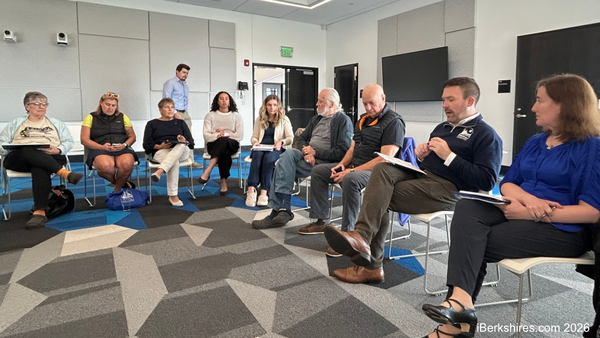
The Board of Health on Wednesday heard from Chris Horton, superintendent of the Berkshire County Mosquito Control Project, about this year's control plan. The vote on a plan was continued, but Horton proposed an adult control intervention for sustained WNV activity in the same area.
Mosquito spraying was discontinued in 2021 and has been a contentious issue, with the City Council taking votes against it and residents polarized — some believing that the spray does more harm than good, and others arguing that it is necessary.
BCMCP uses the integrated mosquito management process to "take advantage of all the vulnerabilities in the mosquito life cycle from egg to adult mosquito," Horton explained.
Mosquitos from around the city are trapped and sent to the Massachusetts Department of Public Health for testing. In 2025, seven samples in the Culex species tested positive for WNV.
Two of the positive samples were taken from Route 8, and two were taken near Garland Avenue. There were no human infections in Pittsfield last year, and the city saw no Eastern Equine Encephalitis activity.
Pittsfield was at moderate risk for infection by the end of the 2025 mosquito season.
"So we were at a risk level where it would be determined that if it went on long enough, somebody would eventually contract it," Horton added.
BCMCP is on the verge of starting its surveillance program for mosquitoes, trapping and collecting samples as soon as they are active, and wants to review and update its community outreach and public education programs.
Larval control activities start at the beginning of the season when the risk is low. Known mosquito breeding habitats are mapped, and BCMCP uses biological larvicides to remove the larvae before they hatch.
Two products are used for catch basins: one with a 30-day duration and another with a 90-day duration.
Horton said Pittsfield was at a kind of tipping point last year, and as positives started coming up, he recommended that adult control be done in the area.
"If we got into an area where we were getting sustained positives, we would want to do an adult control intervention. That means truck-based adult mosquito control with approved products," he said.
"We have two products in the city. They're both very limited in toxicity. The EPA has four categories of toxicity for pesticides, and this is the least toxic. We use specific equipment, and we use a specific dose that takes mosquitoes out of the environment and causes very little disruption to other species in the environment."
He recognized that spraying is always controversial because some are opposed to the use of pesticides for the general public.
"And we understand that, and we have a protocol in our mosquito plan which determines what the criteria are, you know, to do an adult control," he said.
Spraying would be done in August and September.
Chair Roberta Elliott recognized that the city has been "kind of fortunate" not to have had mosquito spraying the past few years.
Cambi pointed out that Pittsfield has ramped up its emergency notification system. Earlier this year, the city announced a new Mass Notification software that replaces Code Red, and the health director said it will be used to alert people about elevated risk for infection and mosquito control measures.
There is a statewide option for households that want to be excluded from wide area pesticide applications. The board will see a written plan at a later date, and it will be almost the same as last year's.
Tags: mosquito, mosquito spraying,