What Rockwell Placed Around the Table
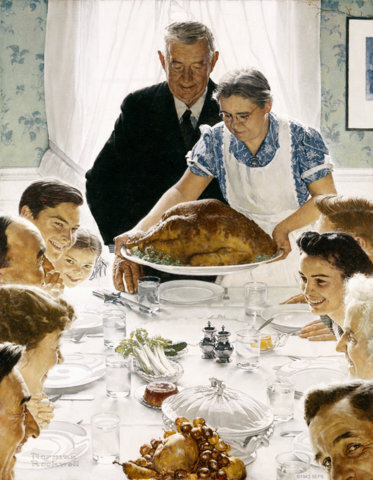
Freedom From Want illustration© SEPS licensed by Curtis Licensing Indianapolis, IN. All rights reserved.
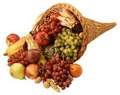
A grandmother carrying a perfectly roasted Thanksgiving turkey. A grandfather looking on with quiet pride. Family gathered around a table dressed in a crisp white cloth, simple china, and sparkling crystal. Faces turned toward one another with warmth, anticipation, and love.
For generations, Norman Rockwell's "Freedom from Want" has come to define Thanksgiving in America. Yet what has always struck me is that no one in the painting is looking at the turkey.
They are looking at one another.
That may be the painting's greatest message.
Norman Rockwell understood that abundance is measured by far more than what is placed on a table. It is measured by the people gathered around it, by the comfort of belonging, and by the quiet assurance that no one has been forgotten.
As Thanksgiving approaches, I find myself thinking not only about that painting, but about the vision that inspired it.
"Freedom from Want" was one of four paintings inspired by President Franklin D. Roosevelt's 1941 vision of the freedoms every person should enjoy.
"Freedom of Speech" reminds us that every voice has value and that democracy is strongest when we have the courage to speak honestly and the grace to listen respectfully.
"Freedom of Worship" reminds us that every person has the right to follow the dictates of their own conscience while respecting the beliefs of others.
"Freedom from Fear" envisions communities where families feel safe, children can dream about tomorrow, and older adults can grow old with dignity, knowing that peace, compassion, and mutual respect are stronger than division and violence.
And "Freedom from Want" reflected Roosevelt's belief that the strength of a nation is measured not by the wealth of those with the most, but by whether those with the least have enough to live with dignity. As he so eloquently observed, "The test of our progress is not whether we add more to the abundance of those who have much; it is whether we provide enough for those who have too little."
It is a reminder that the true blessings of a community are measured not by excess, but by whether every neighbor has the opportunity to share in hope, security, and life's basic necessities.
Together, these four freedoms describe something much larger than a holiday. They describe the kind of nation and the kind of community we strive to build. Norman Rockwell's legacy lives on throughout Berkshire County. His home and studio in Stockbridge remind us that some of America's most enduring images found their lasting home here. It seems fitting that an artist who celebrated kindness, dignity, and the quiet strength of everyday people chose to spend the final chapter of his life in a community that continues to embrace those same values. His paintings still invite us to see the best in one another and remind us that the true measure of a community is found not in its prosperity alone, but in its compassion.
Those values remain alive today. We see them every time a volunteer quietly gives their time, every time a local business invests in its community, and every time neighbors, nonprofit organizations, financial institutions, faith communities, and local governments come together to help someone through a difficult season. These acts rarely make headlines, yet they are the threads that hold a community together.
Perhaps that is why "Freedom from Want" continues to resonate after all these years. The painting is not really about Thanksgiving dinner. It is about belonging. It reminds us that the richest communities are not those with the largest tables, but those where everyone knows there is room for them.
As we gather with family and friends this Thanksgiving, let us give thanks for the blessings we have received. But let us also remember that gratitude carries with it a responsibility. We honor "Freedom of Speech" by listening to one another. We honor "Freedom of Worship" by respecting one another. We strengthen "Freedom from Fear" by caring for one another. And we fulfill "Freedom from Want" by making certain that no neighbor is forgotten.
Perhaps Norman Rockwell's greatest lesson was not what he placed in the center of the table.
It was what he placed around it.
Deborah Leonczyk is executive director Berkshire Community Action Council.
Tags: BCAC, thanksgiving,