Chestnut Tree Trauma Center Opens on North Street
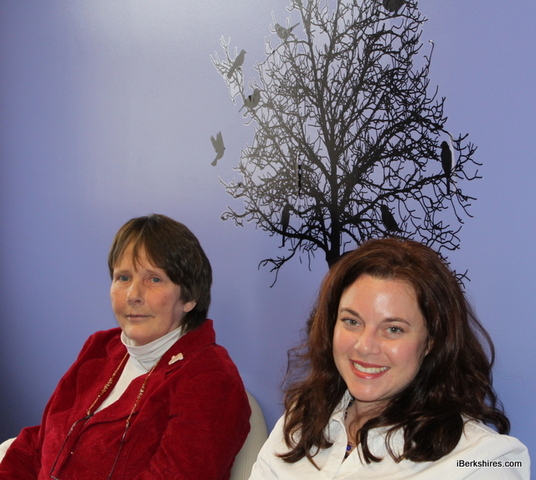 Kathleen Ochs and Wendy Zunitch have recently opened the Chestnut Tree Center on North Street to help children and families with emotional and mental trauma. |
Note: This facility is no longer in operation.
PITTSFIELD, Mass. — If ever there is an emergency in Wendy Zunitch's house, the family knows they are to meet up at the chestnut tree at the end of the street. That's the "safe" spot.
"On the corner of our street is a huge chestnut tree that everyone knows," she said. "And when we have foster kids who come into the house, that is the first thing that we tell the: meet at the chestnut tree. It's one of the safe places in our life."
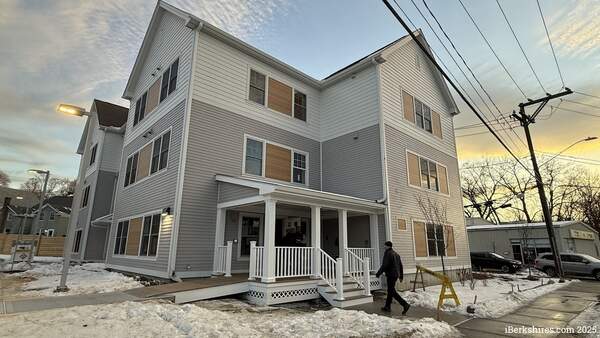
It was with this idea of safety in mind that Zunitch founded the Chestnut Tree Trauma and Attachment Center located at 150 North St. Zunitch, who is a mental health clinician, said her inspiration for opening the nonprofit center was a direct result of her work with severely mentally ill adults.
"I see some of the most acutely mentally ill people in the community," she said. "And I would say that at least 95 percent of them have a documented history of sexual abuse or abuse of some kind. And there are many that go undocumented, who haven't been diagnosed. They are not treating these people so much as they are containing them."
Treating trauma and attachment disorders in children, particularly children who have been abused and/or neglected, is a priority for the center's clinical director Kathleen Ochs, who has been treating patients for the last 40 years. She said that often in cases of trauma, it is not just the child who needs therapy.
"I'll be seeing a child as an identified client and two mornings later I'll be seeing the mother of that child, or the primary caregiver," she said. "It is often a whole family approach. With attachment work it is very important to get the whole family involved."
Attachment disorders, according to Zunitch, arise when the basic needs of a child, even at a very young age, go consistently unmet; that neglect can be accompanied by abuse.
"Many times a child will seek out comfort but then be abused and this creates an even greater need," she said. "Eventually many of these children will just stop crying out and become withdrawn and inward."
It is not always the withdrawn or depressed child who is suffering from trauma or attachment disorders. Ochs said a trauma diagnosis is often difficult to get at because other judgments have already been made on the child's behalf.
"Oftentimes these kids are called ADHD or another word that I hear is manipulative," she said. "When, in fact, to me it's just trying to survive a situation. They're not being a bad kid, they're doing what they have learned to do in order to get their needs met. They're being hypervigilant.
In addition to meeting the needs of their clients, both Zunitch and Ochs hope that the Chestnut Tree center will also fill a "very special niche" in the mental health community.
"We're still building our referral list,” Zunitch said. “This community has an enormous amount of clinical resources. We're hoping to work closely with the Elizabeth Freeman Center and with the Department of Children and Families and other organizations that are reaching out for help."
For more information on the center or to make a donation and/or volunteer visit www.chestnuttreetac.org.