When milkmen delivered glass bottles door to door, and milk came unhomogenized, the cream would rise to the top of the bottles. On cold mornings it might freeze, expand and pop off the cardboard tops. The last surviving dairy farm in the Berkshires has done away with the cardboard, but they will deliver in glass bottles, and will make cream line, unhomogenized milk for those who like to skim their own cream from the top of the bottle. They also make skim milk that tastes like milk, instead of white water, said farm manager Dave Klausmeyer.
Once, there were more than 25 dairy farms in Berkshire County. High Lawn’s owners have committed to revitalizing the last one, using the milk as their chief source of revenue, Klausmeyer said. He hopes that by increasing the volume of milk they produce approximately 20 percent, the High Lawn dairy herd may bring the farm to break even point.
High Lawn dates back to 1900, and it has remained essentially a family farm. There are 48 structures on the property. Twenty-two are houses; most of the farm workers live on the farm itself. They now pasteurize and bottle their own milk on the farm, and deliver it to over 1,100 customers — nearly 1,200. Their four delivery men work six days a week and, aside from Sundays, they get one day off a year: Christmas. Klausmeyer pointed out their delivery schedules, one augmented by a note concerning Kripalu’s regular order.
Fred Munch, an electrician from Pittsfield, came into the barn to rewire an electrical outlet for a computer. “No one ever comes to my house,†he told Klausmeyer, “without saying this is the best milk they’ve ever tasted.†Klausmeyer said compliments like that keep him going.
High Lawn is known for its herd of 100 percent registered Jerseys, and has been for many years: Mrs. Wilde was recognized worldwide as a master breeder. Jerseys are smaller, very healthy, and practical animals, Klausmeyer said. Their milk has 20 percent more calcium and 17 percent more protein than the standard Holstein milk. And at High Lawn, they do not use hormones to stimulate milk production. Recent studies suggest these hormones in milk may have a harmful effect, especially on the development of young girls.
Jerseys are coming into favor in the market. Producers who blend milk from several dairies are beginning to favor Jersey milk in the blend, and farmers are breeding their Holsteins to jersey bulls. In California, the fastest growing farm industry is dairy, Klausmeyer says. High Lawn has begun to think about raising cows for others, as well as themselves.
The farm keeps cattle of all ages. The day old calf was born in the dry cow barn, where pregnant mothers wait for their time, after they have temporarily left the milking parlor. Because a calf is vulnerable in a stall with a larger cow, the young calves are taken to a separate barn and fed on their mothers’ milk for several days. They share a pen at six months, and move outside at nine months. The calves take their names from their sire and dam — Sable Noble, Star Secret, Star Tristram, Tymor Terrific — like race horses.
High Lawn keeps five bulls, mellow enough to let Klausmeyer rub them behind their ears. He tries to breed the cows artificially, he explained, from a selection of 25-30 bulls; the High Lawn bulls are there in case the artificial insemination does not take.
The farm supports approximately 350 head (approximately; because, for example, it had increased by one newborn calf just the day before). One hundred sixty-five cows need milking twice a day. And the farm has an unusually large number of heifers on hand right now, Klausmeyer says, because they are expanding the herd. In 1998, they had 105 milking head; by February/March 2001, Klausmeyer hopes to have reached the farm’s goal of 185 milkers, and to have completely filled the last wing of the dairy barn.
Milk comes out of the cow at approximately 100 degrees Fahrenheit. It is piped through a heat exchanger that chills it, and then to refrigerated tanks. The exchanger uses cold water that emerges warmed to about 68 degrees Fahrenheit; in the summer, it becomes drinking water for the cows. From the storage tanks, milk is piped to the milking parlor, smelling of the steam used to clean the bottles. Besides cream line, whole, lowfat and skim, High Lawn offers chocolate milk, blue cheese and eggnog. The last was so popular over these holidays, people called in to reserve their supply. And local chefs use High Lawn cream, Klausmeyer says, light cream for baking and in sauces, and heavy cream whipped.
Anyone who arrives early enough may watch the milking from an observation deck above the milking parlor, in what was once the upper heifer barn. One man supervises two rows of eight cows at a time. The rest of the herd waits in a holding pen. The dairy man washes each teat with a cleaning agent spray and dries them, with individual paper towels for each cow, before hooking them up. Each machine automatically disengages when the cow stops producing, and the cows wait to be let out into another holding pen, and then into their stanchions in the barn.
Breakfast is waiting when they come in from milking, along with a yellow tomcat whom the cows wash thoroughly as he walks along the feed bunker. The bunker holds a mixture of chopped corn (silage), chopped grass and grain pellets, carefully measured and regularly measured and adjusted. Electric carts distribute feed in the dairy barns. Another machine loads and mixes the grain, silage and grass and also distributes feed to the outdoor pens. Each cow also has a water bowl: when they lower their noses into the bowls, they press a loop which releases a stream of water, something like the little water cooler attached to a dentist’s chair.
High Lawn is a mix of sensitive modern machines and elbow grease. Heifers and calves old enough to grow thick coats live in wide pens with barns they can shelter in if they choose. In the smaller calf barns and dry cow barn, most of the work is done by hand. And all the old-fashioned milking equipment is still kept, clean and ordered, in the dry cow, as an emergency standby, in case the power and the backup generator fail. In the dairy barn, a constantly moving conveyor belt cleans the aisles behind the stalls. High Lawn stockpiles the manure for fertilizer.
Of the 1,300 acres stretching to the base of Rattlesnake Mountain, 670 acres support crop land: corn, rotated with alfalfa to refresh the soil. High Lawn has some income outside its diary business, but it does not rely on them. The constant rain last summer made haying difficult — hay has to dry in the fields before bailing — so the farm been selling a bumper crop of inedible mulch hay to construction firms. Next year, they will also begin timber management in the High Lawn woods.
If you would like to contribute information on this article, contact us at info@iberkshires.com.
Your Comments
iBerkshires.com welcomes critical, respectful dialogue. Name-calling, personal attacks, libel, slander or foul language is not allowed. All comments are reviewed before posting and will be deleted or edited as necessary.
No Comments
Berkshire Food Project Closed for Power Issues
NORTH ADAMS, Mass. — The Berkshire Food Project is closed Monday because of a power outage early in the morning.
"We are unable to get proper electricity and heat to the building," according to Executive Director Matthew Alcombright. "We hope that this can be resolved and be open tomorrow."
The project does have some sandwiches and frozen meals that will be distributed at the entry.
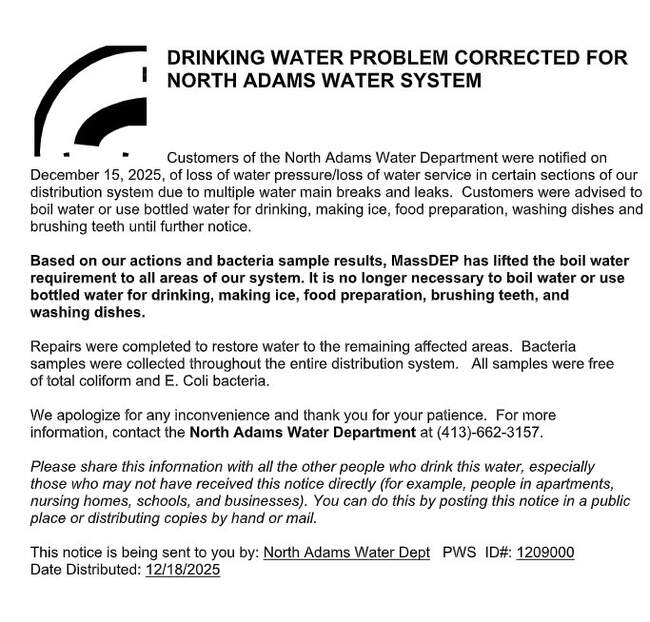
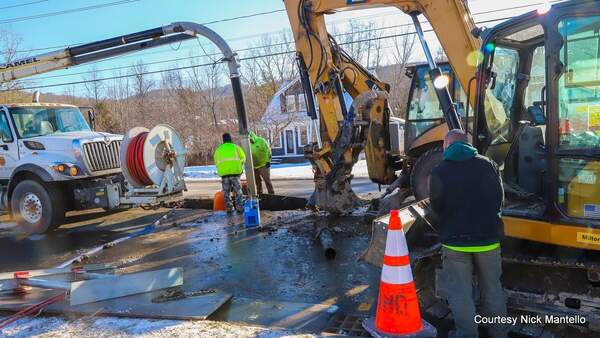
The city has lifted a boil water order — with several exceptions — that was issued late Monday morning following several water line breaks over the weekend. click for more
The bridge had been closed to all vehicle traffic since March 2023 after being deemed structurally deficient by the state Department of Transportation. click for more