Williamstown Zoning Board Approves Cable Mills Special Permits

Attorney Don Dubendorf points out a feature of the planned 'modern mill' building at Cable Mills.
Phase 1 of the Water Street project — the renovation of the existing mill building — was completed in the spring and is nearly fully occupied, the developer told the ZBA at its Thursday meeting.
Phase 2 involves new construction: seven duplexes and six condos in what the developer is calling the "modern mill" on the east side of the property.
Unlike in Phase 1, where a historic preservation restriction requires that all units in the historic mill be rentals for a minimum of five years, 180 Water LLC will be able to sell the Phase 2 units as soon as they are built.
Developer David Traggorth said that as of Thursday, the 61 units in Phase 1 were "well over 80 percent" occupied.
"It's a real mix of people," Traggorth said. "We have families with kids, we have retired folks, we have young professionals — folks in their 40s in the middle of their careers. It was a surprise in that way. I thought it might be a little more predictable in who we would find."
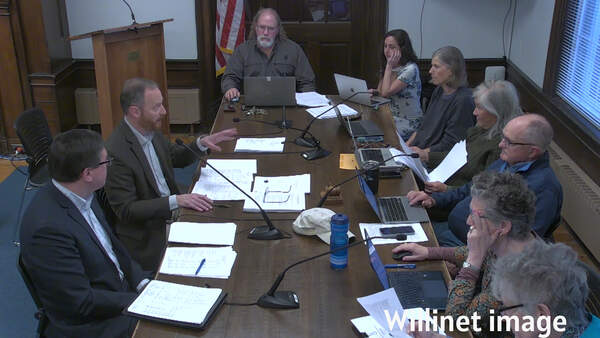
Much of the discussion with the ZBA concerned parking. The developer asked the town to allow an increase in the minimum parking associated with Phase 2 of the project. The board approved it with the assurance that the additional spaces will not add to the overall impervious surfaces on the site.
"In each [duplex], three of the parking spaces are covered by the roof of the occupied building," Traggorth's attorney, Donald Dubendorf, told the ZBA. "So only one space per duplex adds impervious surface."
And in the modern mill building, Dubendorf said plans call for four or five parking spaces to be covered by the footprint of the building.
Overall, the revised plans call for less impervious coverage area than previously approved, the developer told the board.
Traggorth and Dubendorf also asked the ZBA to approve a minor modification to the Cable Mills river walk, a feature that was key to the town's $1.5 million contribution of Community Preservation Act funding toward the project.
"The interesting thing about the river is that it moves," Dubendorf told the board. "It doesn't want to seem to want to stay in one place. So we're going to realign the river walk from its as-built location."
The toughest questions for the developer came not from the board but from the floor of the meeting, where abuttor Elaine Hantman used the meeting to air concerns she had about the execution of Phase 1 of the project.
Hantman identified herself as the owner of neighboring rental properties, and she told the ZBA she did not feel the Cable Mills developer had honored agreements it made during the renovation.
Hantman complained that vegetative screening she discussed with Traggorth has never been planted, creating a situation in which her tenants' windows look directly into the Cable Mills apartments and vice versa. She also raised concerns about the developer's failure to remove a dead tree as promised and the condition of a curb cut.
Traggorth apologized, explained the reason for the delay in removing the tree and committed to finding a screening solution that works.
"I don't think it's apologizing for promises made," he said. "I think it's been delays, and I apologize for that. We're going to make good on our promises.
"We've made good on the biggest promise to you as an abuttor and the town in the sense of getting the project running."
Traggorth told the board that he would be OK adding the three concerns raised by Hantman as conditions on the special permit he sought on Thursday. The board approved the special permits with those conditions by a vote of 5-0.
The Cable Mills developer will be back at Town Hall this Thursday for a hearing before the Conservation Commission on an amended order of conditions for Phase 2 of the project.
In other business on Thursday, the ZBA approved the modification of a special permit for the Greylock Canine Club on New Ashford Road (Route 7).
Charlene Lambert, who operates the dog boarding facility in South Williamstown, wants to add a 1,200-square foot building that will allow her to double the operation from a capacity of 10 dogs to a capacity of 20.
The board, which previously had granted a special permit for her to operate the business at that site, approved the expansion without any objection from neighbors to the property.
Tags: Cable Mills, housing, ZBA,