McCann Tech Teachers Adapt Instruction to Shop-less Environment
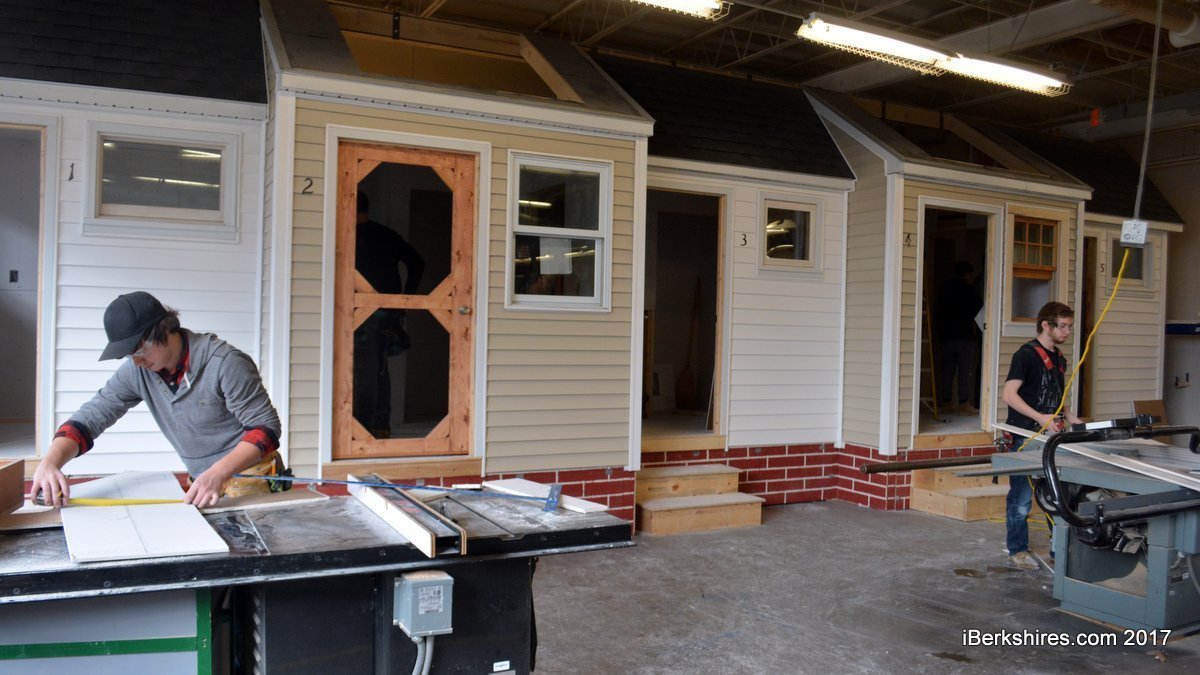
The vocational school is doing what is possible for remote learning but it's hard to replace hands-on learning students get in many of the shops, such as carpentry.
He misses his students. He misses his lab. He even misses the occasional fire.
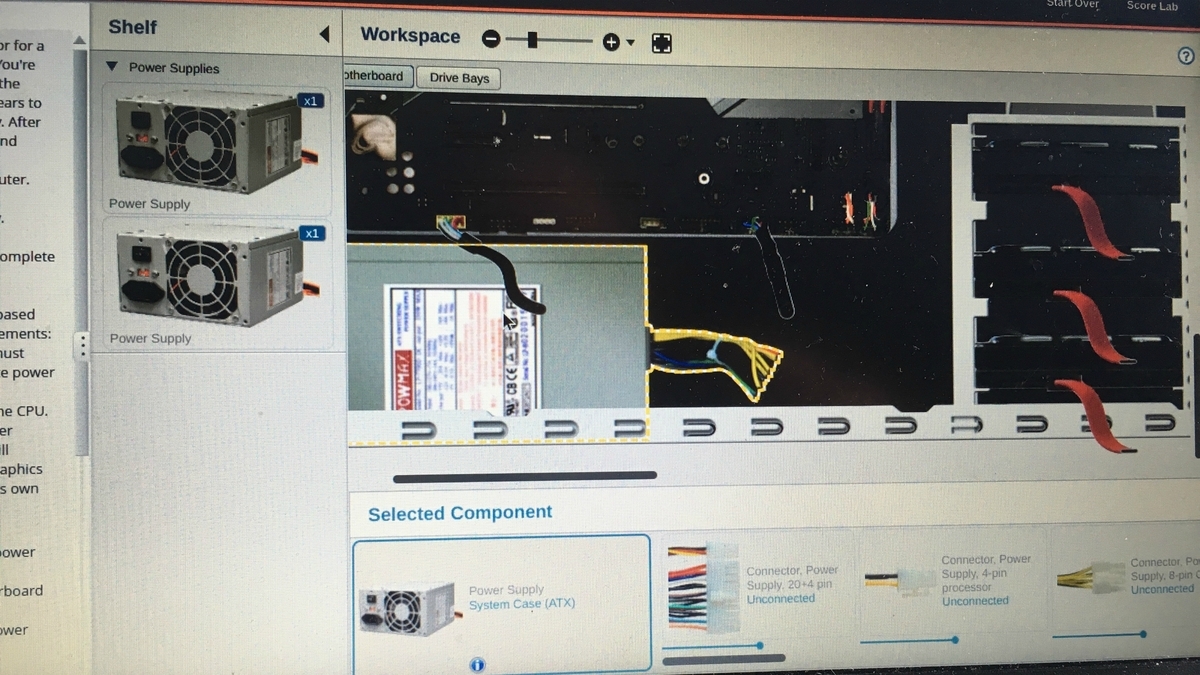
"We have a whole wall of computers dedicated to the kids," the information technology teacher said recently. "They take them apart, put them together. To re-emphasize it, they will go into TestOut and attempt to replicate it doing simulators."
Since the COVID-19 pandemic forced the closure of school buildings throughout the commonwealth, the simulators are all the students have.
"It gives you two-dimensional pictures of three-dimensional objects, and [normally] you have to make the connection to what you just did," Burdick said. "The part that's missing in the simulator is the actual interaction with the physical computer.
"In the simulated lab, it's impossible to put a connector in backwards. You're going to miss that magical smoking experience."
In other words, you miss out on the experience of really messing up. And even when you do place the wrong part or hit the wrong switch on a simulator, the worst you'll get is a gentle beep from your real life device. You do not get the kind of trial and error experience that is the best way to drive home a lesson.
"In my trade, we call it letting the magic smoke out," Burdick said. "Once you let the magic smoke out, you can never put it back in. And that's something the kids never forget. It's an educational experience. I try not to consider it a failure. It's an educational experience.
"And it's not something you can do remotely."
When the commonwealth's schools shifted to a remote learning model in April, it forced teachers throughout Massachusetts to rethink how they delivered lessons to their students. The challenge is particularly acute for technical schools, where hands-on instruction is fundamental and cannot be replicated in students' homes.
"We're doing the best we can," McCann Tech Principal Justin Kratz said. "Our instructors certainly are being creative and thoughtful in their activities.
"The long and the short of it is that what our shops consist of is not really possible to replicate without being hands-on. If you're not in the carpentry shop, if you're not fixing lawnmowers and working on cars … It's really frustrating for everybody. But we're doing the best we can with it."
Some programs, like computer-aided design, seem like they would naturally lend themselves to online instruction.
But even leaving aside the disparity in students' access to technology or quality broadband at home — issues that teachers from kindergarten through college are confronting — McCann Tech's CAD classes do not easily translate to remote learning.
"Your average home computer can't run the software our CAD computers run on," Kratz said. "To a certain extent, it can be on the cloud, but when you're talking about these animation softwares … even if you can afford a site license — and some of these software suites we have are insanely expensive — your home computer doesn't have the memory or RAM to run it.
"To run a 3-D architectural drafting program is not something you can do from your average home computer. There are versions that are sort of 'light' versions that our CAD instructors are trying to use to the fullest extent they can. But it doesn't replicate what we can do in the shop with our computers and our software."
Kratz said the Massachusetts Association of Vocational Administrators has worked to support teachers by helping them share best practices and tips. The goal, statewide, he said, has been to keep students' minds sharp and not necessarily forge ahead with new content during the closure.
The good news, if there is any, is that a lot of McCann Tech's seniors were out of the shop and into their cooperative work programs when the pandemic forced the school to close its doors. Therefore, Kratz is confident that members of the class of 2020 already met their competency requirements in their respective trades.
McCann Tech is fortunate in that its program is a little less expansive than some in bigger schools in eastern Massachusetts, Kratz said. Freshmen tech school students begin with an "exploratory" program designed to expose students to all of a school's majors.
At McCann, there are nine technical programs offered in the high school. Other schools in the commonwealth can offer 15 or 20. At the Hodges Cross Road school, the exploratory ends halfway through freshman year, allowing students to get into the shop that much sooner; at some schools, the exploratory can even go into sophomore year, Kratz said.
"We get them in the shop a lot earlier and have them a lot longer," he said. "When a kid graduates McCann Tech, they really take a deep dive into competencies in their shop and typically go above and beyond what the competencies are for their program in the state."
Advanced manufacturing teacher Scott Botto said that even for underclassmen, the lost months of lab work — while unfortunate — will not leave students behind the eight ball come September.
"The only saving grace on the whole thing is that it happened kind of in the middle of the third quarter," Botto said. "We got a lot of stuff done the first three quarters. We'll definitely need to go back [in the fall] and put some stuff into action to get the memory going on what they're doing. But, to be honest, we're going to be OK. We push hard during the year. There's no down time for the kids.
"They've got a lot of the curriculum by the third quarter that we wanted them to have. Now, I'm filling in by rehashing a lot of the stuff. … I honestly think we'll look really good when we come back."
Still, the experience is not the same, Botto said.
Instead of writing code to operate a machine and then seeing those commands put into action, students now are doing the work of writing the code without the reward of seeing the finished product.
"They still do all the same work," Botto said. "It's just that they can't make the product, and they can't prove out their theories because they don't have the machine in front of them. With that said, we do have simulations we use where kids can program the simulator and make it work."
There are no simulators for the real world skill of framing a house.
"At first, I found it very challenging because my job is to teach the kids with hands-on teaching, hands-on learning," carpentry teacher Pat Ryan said. "Now, that has been taken away from me. … It's very difficult to have these kids work on skills-based items at home without having the tools, without having access to hand-on stuff itself.
"The program is designed for building model houses. You can't get that from online learning."
But you can reinforce the concepts that have been learned in the lab, both in video conferences and by watching videos. Ryan said he has spent a lot of time looking at carpentry videos online to screen them before recommending them to the class.
"They're going to find a gazillion videos online, and what's good, what's not good?" he said. "I'm not saying I'm always right, because there are many ways to do things. … It's a lot of work on my end. I'm going weeks ahead to find videos that I think are ‘good enough' to get the point across that I want to get across."
Some of his students are going a step ahead themselves, applying their skills to take on projects at home like building Adirondack chairs or putting up window trim. Ryan offers what guidance he can by looking at photos of the students' work, but he much rather would be able to look over their shoulders to watch their progress.
Either way, that kind of hands-on work is optional during remote learning. It would not surprise Botto to hear about kids going above and beyond.
"I've actually had very good participation with my kids," he said of the switch to distance learning. "I have good classes. The kids seem to want to get the work done. They come to a tech school for a reason. It's maybe different than a history or English or math situation.
"But that's McCann. That's who we are. I'm pretty fortunate, and I know that."
Tags: COVID-19, McCann, remote learning,
More Coronavirus Updates