Governor Envisions Four-Phase Reopening to 'New Normal'
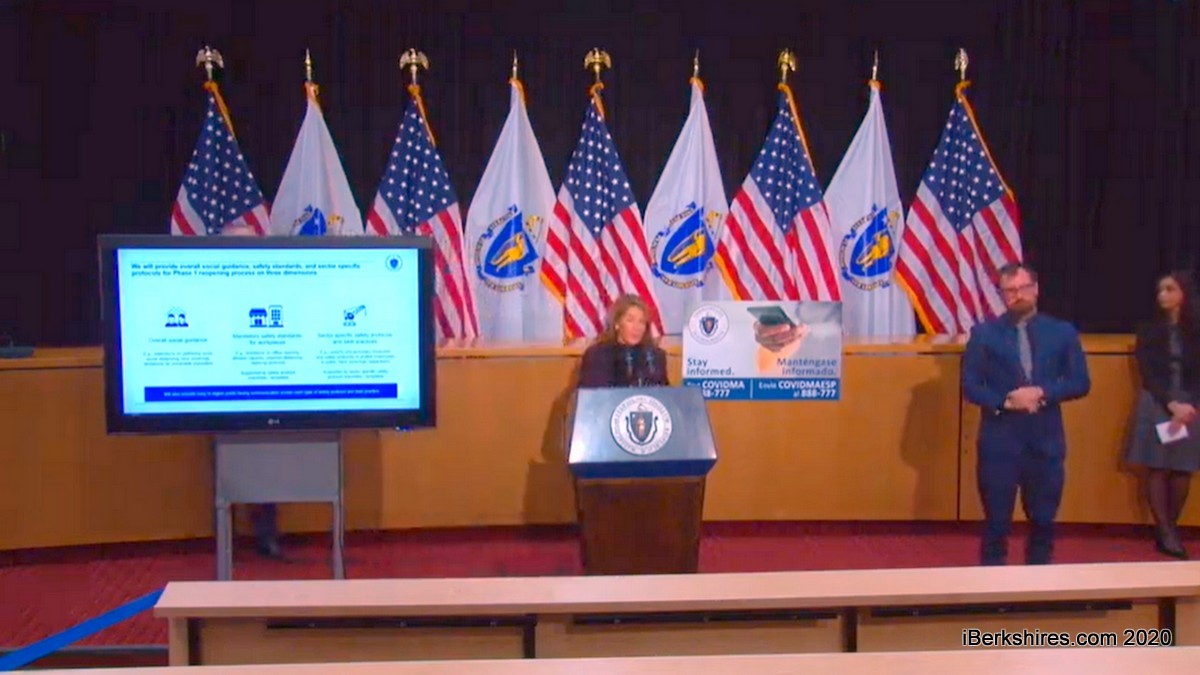
Lt. Gov. Karyn Polito, head of the state's reopening advisory board, explains some of the restrictions that will be placed on businesses.
"The goal is to begin this process around May 18, but it will be gradual as the facts on the ground will obviously determine whether we actually hit that goal," Gov. Charlie Baker said at Monday's COVID-19 update. "But keep in mind, this is a disease, we're still learning about across the globe."
All non-essential businesses were closed as of March 23 and gatherings limited to no more than 10 people as the novel coronavirus began spreading through the state. Groceries, pharmacies and certain other "essential" commercial, governmental and charitable organizations were allowed to continue within public health guidelines.
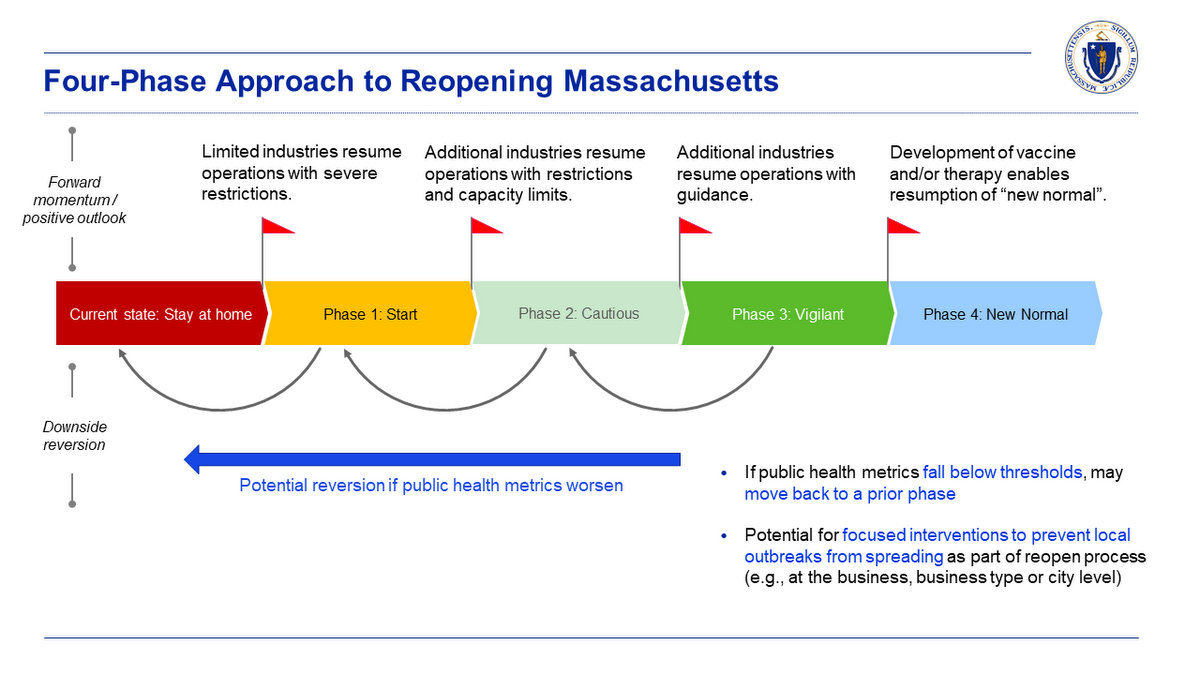
The four phases of "start, cautious, vigilant and new normal" are expected to begin on May 18 as the governor's reopening advisory board releases its recommendations and guidelines for safety standards for employees and patrons.
"We all know life will be different. But as the medical and life science communities make progress in developing treatments or vaccines, we can really begin to put this virus into the rearview mirror. But none of that is going to happen overnight," the governor said. "We'll continue to follow the data and the public health metrics to determine when phase one site reopening begins. And then when it's safe to move on to concurrent phases after that."
Lt. Gov. Karyn Polito has been leading the advisory board that has heard from 44 industry associations and community coalitions representing more than 2 million workers. The board since its establishment two weeks ago has also received written testimony from more than 2,200 individuals and organizations.
"COVID-19 is placing a double burden on our economy and created uncertainty in losses for every region of our commonwealth," Polito said. "Together we are developing the framework and phases that the governor described to put us back on track as quickly and as safely as possible. This is a true team effort."
Baker noted that some businesses are already operating as essential business along public health guidelines.
"There are going to be businesses that are able to operate based on their ability to abide by the global standards as well as by industry specific standards for their operations," he said.
The first phase, Start, will allow the reopening of businesses that "are more naturally" set up with minimal personal interaction between employees and patrons.
Phase 2, Cautious, will plan to have more industries with more face to face actions resume operations.
Phase 3, Vigilant, will be a loosening of restrictions if the data continues to trend down.
And Phase 4 will be what the governor is calling the "new normal," an awareness of the possibility of spread that will likely last well into the fall and be based on a vaccine or therapy for the novel coronavirus.
Polito said the restrictions will concern the ability to social distance, access to hand sanitizer and hand washing facilities, use of face coverings, employee training and general sanitizing procedures and hygiene protocols. There will be more specific industry guidelines that will have to be implemented.
"As we move toward a new normal, we all have a lot of work to do," she said. "We are thankful to everyone that has done their part, and has played a role in this fight against COVID-19, and I am confident that when we reopen, we will do so in a safe manner for all the people in this commonwealth."
Baker said there was not a set period between the phases but rather they will be determined based on continued testing and key markers — such as the rate of hospitalizations and positive cases.
"Considering the highly contagious nature of COVID-19, our decisions and timing is influenced by the public health data," he said, adding that Massachusetts, like other states, needs the latitude to make revise phases if a spike should occur.
But reopening will require the participation of all residents in containing the spread of COVID-19, the governor said.
In response to a question about a popular Cape Cod ice cream shop that closed when customers who didn't abide by the ordering guidelines began to harass the teenage employees, Baker said reopening "is probably going to be somewhat uncomfortable" because the new normal will be so different.
The purpose of the advisory board is to develop a standard operating procedure and that will require signage and social awareness for people to understand.
"I do believe most people will get there," he said. "I do, because they did in an incredibly short period of time under incredibly difficult circumstances from the time this all started in March. ...
"I honestly hope that for the most part, people do what I would describe as the right thing for their neighbor, for their friend, for their colleague and I think they will. And I hope that the socialization of that ultimately becomes sort of an important enforcement mechanism."
Tags: COVID-19, reopening,
More Coronavirus Updates