Williamstown Finance Committee Drills Down on Mount Greylock Budget
WILLIAMSTOWN, Mass. — Members of the town's Finance Committee told Mount Greylock Regional School District officials that the district should be cautious about using non-recurring revenue to fund operational expenses.
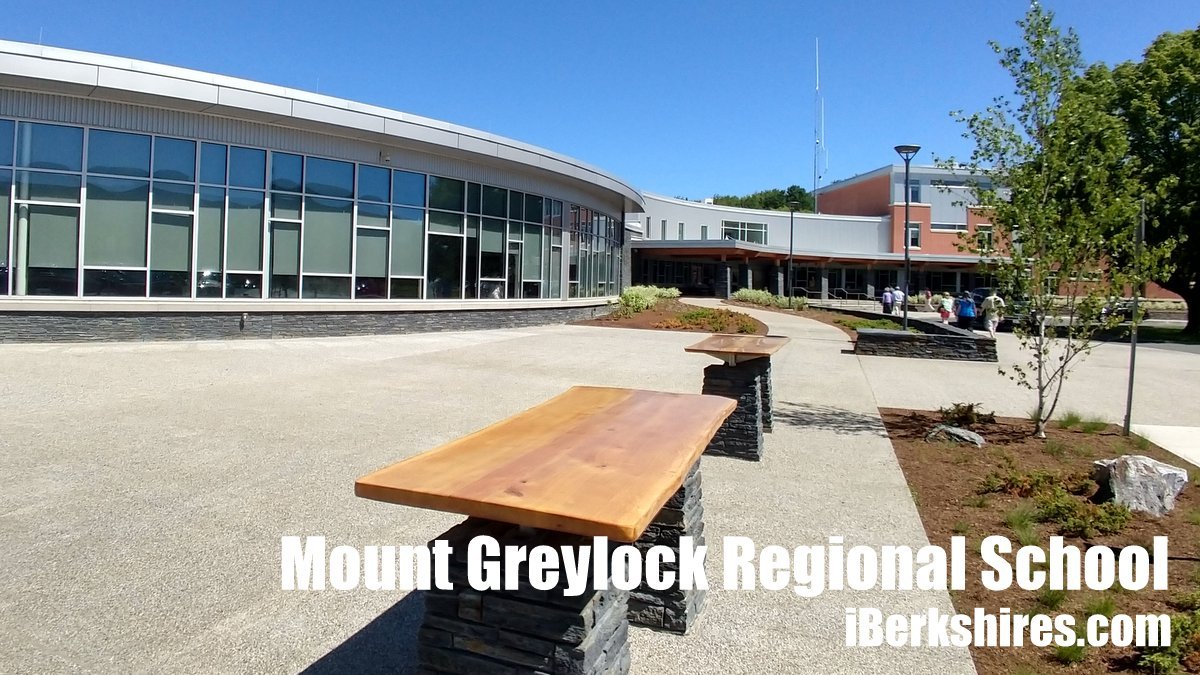
Mount Greylock Superintendent Jason McCandless and Business Administrator Joe Bergeron on Wednesday presented the regional district's $25.6 million fiscal 2022 spending plan to the town body for review.
Although the budget includes an approximate 4.6 percent increase in the operating budget for the PreK-12 district, the district is seeking increases of just 1.9 percent and 2.0 percent in the assessments to member towns Williamstown and Lanesborough, respectively.
The rest of the increase is being covered by grants, including pandemic-relief grants, and drawdowns on the district's three reserve accounts: School Choice, tuition and excess and deficiency.
Finance Committee member Melissa Cragg spent several minutes questioning Bergeron about the long-term implications for local property taxpayers of the programmatic changes in the FY22 budget.
"Right now, for the year we're ending, we're ending up with a run rate of roughly $22.4 million," Cragg said, excluding elements like the capital budget. "And I'm doing this whole system wide, including Lanesborough. In the new budget, if you back out the $180,000 you were talking about, Joe, we're moving to a run rate of $23.9 million. That's a 6.7 percent increase."
Cragg noted that some of the increased expenditure will be for a non-recurring expense, the district's implementation of regular education summer programming in July and August of this year. But then she asked Bergeron to clarify how much of the new spending is attributable to that work.
"For regular education programming, about $90,000," Bergeron said.
He then explained that the cost is slightly higher because some expenses in summer school, like a nurse, are shared between the one-time regular education program and the special education summer program the district runs every year.
"So far, only $100,000 of the $1.5 million increase is attributable to a non-recurring program," Cragg said.
Bergeron went on to explain that it is difficult for McCandless and himself to compare the FY22 budget with previous years and/or project out to future years since they both arrived in the district office in the summer and fall of 2020.
"We know the places we have changed the actual people who are in those seats and their associated costs between FY21 as planned, FY21 actual and as we move into FY22," Bergeron said. "I believe there are a number of areas where the district has been able to fund or do things over the years that have ended up coming out of those [reserve] accounts or grants that might mean we're presenting a budget tonight that fully loads those costs. So the expansion of costs is not actually as great as you might perceive it as being."
Bergeron said that if the new administrative team has time to settle in and go through a couple of budget cycles, it will be able to provide more satisfying answers to the committee.
"I think I just got an accounting answer to something that's deeper than an accounting question, and I say that with all respect, Joe," Cragg replied.
She said she was not necessarily challenging the need for changes to the district's programming, but she wanted to make sure that the costs were understood
"You articulate a wonderful future, and I want to support it, and I think I probably do support it as an individual," Cragg said. "But we owe it to our constituents to ask these questions."
Cragg asked fellow Finance Committee member Dan Caplinger, a veteran of the Mount Greylock School Committee and one of its predecessors, the Williamstown Elementary School Committee, to help rephrase her question.
"I think the overarching comment you're making, Melissa, has to do with, to the extent that the School Committee and administration are proposing a budget that has permanent expense increases that aren't matched by permanent income increases, that this committee would want the district to be mindful of the fact that their reserves, while ample at this point, are finite," Caplinger said. "And, at some point, they need to learn to live within their means or prepare us well in advance to say, 'Look, we believe these programs are essential, and we're going to come to the towns with a bigger request than we might otherwise do."
In its budget discussion with the School Committee the week before, the district's administration characterized the FY22 budget as a runway to help ease the member towns into higher assessments down the road.
McCandless told the Finance Committee on Wednesday that the district is committed to being a partner with the member towns.
"We believe that we have provided a respectful, responsible and, as importantly, what we envision as an appropriate 'flight plan' to provide a sustainable financial plan to all of you as you do the work to make sure the town's greater financial plans work," McCandless said. "We understand all of the priorities, the needs and the wants that you have to balance as you work to best represent every single resident of the town, each of whom has their own needs and desires.
"And we understand that we are a part of that organism, but we are certainly not the lone part of that organism."
Caplinger said he believes the Mount Greylock administration understands that it cannot rely on reserve funds and non-recurring grants indefinitely.
"I have confidence the new administration and the School Committee are well aware of that financial pressure," Caplinger said. "So I would anticipate them taking that into account in future budgets."
Tags: fiscal 2022, MGRSD_budget,