Williamstown Diversity Committee Losing Five Persons of Color
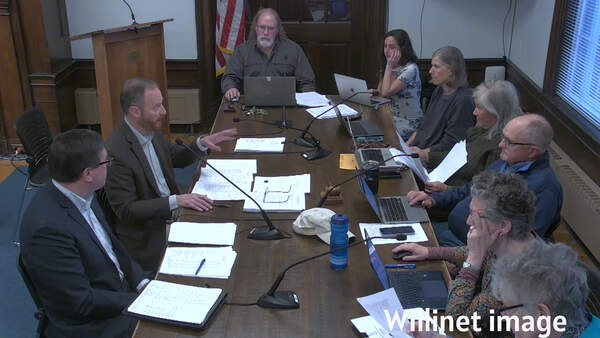
WILLIAMSTOWN, Mass. — Toward the end of the latest meeting of the town's diversity committee, Kerri Nicoll noted a sobering statistic.
"I feel the need to call particular attention to what we're seeing, which is the first majority person of color committee in our town where, if I'm counting right, five out of six of those people of color will not be continuing the work," Nicoll said. "I hope this forces our town to reckon with its past, its present, what we're doing.
"I know it's calling me to reckon with my work in this committee, and I hope to God it's calling leadership in this town to reckon with what has happened and where we need to go. I don't want to hear excuses from people about why this is happening. I think it is clear, and we've got to stop hiding from it."
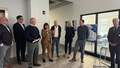
Chair Mohammed Memfis began Monday's meeting of the Diversity, Inclusion and Racial Equity Committee by saying that Aruna D'Souza, Gina Coleman and, "obviously myself," would be rotating off the board at the end of its first year.
Memfis is a Williams College senior who is graduating this spring. D'Souza announced earlier this month that she would leave the committee because of changes in her professional life. Coleman had not previously stated publicly that she did not intend to continue on the panel.
A fourth person of color, Bilal Ansari, announced his resignation during the May 10 Select Board meeting after he felt he was treated with disrespect during that session, and he confirmed his departure during the ensuing DIRE Committee meeting.
Also in that meeting, a fifth person of color, Drea Finley, said they would not be continuing on the body.
All DIRE Committee appointments were made for one year when the committee was created last summer by the Select Board. But the board left open the possibility that the initial roster could continue in their positions if they chose.
Finley and Ansari Monday talked about their reasons for choosing to depart.
Ansari indicated that he was thinking about stepping down from the DIRE Committee before the incident during the May 10 Select Board meeting. He said Monday that he has come to conclude that working for change as a Black person in the framework of town government is a waste of time.
Ansari cited the recent search committee to find an interim chief of police, from which D'Souza resigned over concerns about process, as an example of silencing voices of people of color.
"What Town Manager Charlie [Blanchard] did with the blessing of the Select Board, everyone of color who asks me, 'Should I volunteer?' I'll tell them, 'Hell no, don't waste your time,'" Ansari said. "They can arbitrarily ignore the voices and opinions of people who spend hours talking and thinking about …
"This is Aruna. We know who Aruna is. Aruna is police abolitionist in chief, yet she sacrificed her time and energy and heart and pushed forward. For what? For what? The utmost disrespect. For somebody we all know. And for that to happen -- everyone who comes along looking like her, we're like, 'For what? Why?' Charlie just did that and the Select Board just did that."
Andrew Art concurred with Ansari about the process followed by the interim town manager and emphasized that D'Souza, who did not participate in Monday's DIRE Committee meeting, resigned over the process of the interim chief selection, not the ultimate appointment of Lt. Mike Ziemba to the role.
"It's about 400 years of enough free labor," Ansari said. "You've had enough of my free labor. You ain't getting no more. Look at me as a human being. Look at Black and brown people as if our voice matters, as if what we have to say matters. You can keep your damn signs. Show up."
Finley said they will not do the work of the DIRE Committee without D'Souza, Coleman or Ansari and said the last year has made apparent that people of color are treated differently in Williamstown when they speak up on issues of equity and inclusion.
"I too have witnessed too much harm at my own personal expense in this town," Finley said. "Aruna is right. There is no question about that, and what she had to go through never should have happened.
"As a Black body, I sat on that screen time and time again thinking to myself, my God. And I will say this, I sat there thinking to myself because I've watched this in this town for over a year: If she was a white woman, would she be treated the same way? By God, I bet the answer might be now. Because I've watched white folks in this town go above and beyond and be able to move and groove in ways that us Black folks are not able to, time and time again."
One person of color on the initial DIRE Committee slate plans to remain on the panel but in a different role. Jeffrey Johnson this month was elected to the Select Board and has said he plans to fill the Select Board seat on DIRE currently occupied by Jane Patton.
Johnson, who is multiracial, disagreed with Ansari's characterization of town service as a "waste of time."
"Bilal, I love you, but don't you dare tell people of color not to come out and serve and help me," Johnson said. "I'll let you speak, my man. This person right here was found in this town and brought forth. I have more energy than anyone. I'm just getting going.
"I'm not leaving DIRE. These are conversations that will continue to happen."
Ansari did not rebut Johnson, but later in the meeting, Finley did.
"I don't know that folks often can understand the emotional toll [of racial justice work]," Finley said. "It is debilitating, and I'll disagree with Jeff when he said, 'Don't you dare tell folks not to serve.' You have every right to tell folks that, and I'll say it, too."
Tags: DIRE,