Nightwood Returns To The Mount

Print Story | Email Story
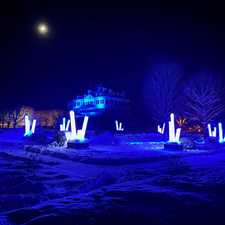
LENOX, Mass. — The Mount, Edith Wharton's home, presents its second year of NightWood, an outdoor sound and light experience inspired by The Mount's architecture and setting. 
 
"Last year's run was a phenomenal success; we were sold-out," said Susan Wissler, The Mount's executive director. "Because of COVID restrictions and limits on gatherings, many people were not able to experience NightWood last year. This year we have greater capacity and are starting earlier. We hope to accommodate everyone who wants to experience the magic and wonder of NightWood." 
 
This year's NightWood combines music, lighting, and theatrical elements to create seven scenes. 
 
NightWood runs from Nov. 4 through Dec. 31, Thursday through Sunday evening starting at 5:00 pm. 
 
The special Opening Night Celebration on Nov. 4 includes bistro fare and craft cocktails. 
 
Tickets for Opening Night are $100/pp. General tickets are $20 for adults, $10 for kids 6 - 18, and free for children 0 - 5. Admission is limited and timed. Reservations are required and can be made at EdithWharton.org or by calling 413-551-5100.
 
The Mount is once again collaborating with designer Chris Bocchario of Clerestory Light to create this year's show. Bocchario has expanded the experience with two new scenes: 
 
The Eternal City: a journey deep into the woods that reveals a hidden metropolis teeming with life and energy and The Conference of Trees: a dense stand of trees in mid-conversation, with the voices of the trees imagined in light and rich earthy sounds.
 
"There is something evocative about being in the woods at night: a connection to our ancient past, to old traditions and long-forgotten experiences," said Bocchario. "It releases a host of emotions which differ from person to person. We wanted to conjure those emotions using a combination of light, sound, and sculpture to evoke an atmosphere that stimulates memory and awakens imagination."

Tags: The Mount,   
If you would like to contribute information on this article, contact us at info@iberkshires.com.

Lee Wants Bioremediation in Housatonic River Vernal Pool Study

LEE, Mass. — The town has asked the U.S. Environmental Protection Agency and General Electric to include PCB bioremediation in its vernal pool study on the Housatonic River. 

Lee officials are urging the EPA to require GE to add a bioremediation treatment arm to the vernal-pool study or provide the public with a clear explanation for why such testing is being excluded.

"This is exactly the kind of question EPA and GE should be asking before final remedy decisions are locked in," Select Board Chair Bob Jones said in a statement released to the press. "The town is not asking to slow the cleanup. We are asking EPA and GE to make the cleanup smarter, less destructive, and more protective over the long term."

An open house was held in Pittsfield earlier this summer for the Vernal Pool Pilot Study on Reach 5A of the Housatonic River, a five-mile stretch between the river's confluence and Lenox border.

EPA has required GE to conduct a Vernal Pool Pilot Study as part of the Housatonic River Rest of River remediation, comparing excavation and restoration with activated-carbon-based treatments, including a product called SediMite and powdered activated carbon, the town said. 

Ten vernal pools will be cleaned of polychlorinated biphenyls in total, five with excavation and five with active carbon, and seven additional vernal pools will be monitored as controls. Construction will be complete around October, but the pools will be left to their natural processes and monitored with surveys and sampling for three years. 

The Lee PCB Advisory Committee wrote a letter calling for the 21st-century approach it said could reduce long-term toxicity, avoid unnecessary destruction of sensitive habitats, and improve the effectiveness of the cleanup.

It states that Lee supports the study's purpose and agrees that EPA and GE must understand how cleanup activities affect sensitive vernal-pool ecosystems.

"The current pilot includes 10 treatment pools and seven control pools, while local officials understand that roughly 100 vernal pools may occur in the broader remediation corridor," the Aug. 27 letter reads. 

"That makes the pilot study consequential: the methods tested now could shape how many sensitive wetlands are excavated, reconstructed, treated, or left with PCBs managed in place."

View Full Story

More South Berkshire Stories