Williams College Museum of Art Summer Program Series 'Immersions'
 |
WILLIAMSTOWN, Mass. — The Williams College Museum of Art (WCMA) invites visitors to immerse themselves in a summer program series titled Immersions.
Each program is inspired by the themes, histories, and practices that weave through the museum's summer exhibitions, such as healing, folklore, the five senses, and migration.
Programs will be held at 5:30 p.m. and will be followed by receptions on the WCMA patio at 6:30 p.m. The galleries will remain open until 8 p.m.
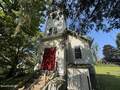
The series opens on Thursday, July 7, at 5:30 p.m. with Brooklyn-based medieval music ensemble Alkemie making their Berkshires debut with a performance of "Verdant Medicine: Hildegard's Resonant Apothecary," inspired by the life and writings of the twelfth century mystic, medic, and musician Hildegard von Bingen. This performance will take place in the Thompson Memorial Chapel, directly across Main Street from the museum.
According to a press release, this multi-dimensional program situates Hildegard's music within her understanding of medieval pharmacognosy (i.e. plant medicine), sharing her vision of an earth-bound transcendence that connects humans to the divine through spiritual "greening" and the five senses. "Intersensory Program Cards," hand-made for the performance, pair Hildegard's music, texts, and associated images with materials that audiences can literally smell, taste, touch, and hear.
The series continues on Thursday, July 21, at 5:30 p.m. when Williamstown Theatre Festival friends and alumni present an evening of performative readings exploring subtleties of labor inspired by works in the galleries and beyond. This program will be held in the WCMA Rotunda.
The series concludes on Thursday, Aug 4, at 5:30 p.m. with the Kriyol Dance! Collective performing a new, original work titled "Rasin San Bout" ("Endless Roots" in Haitian Creole), which explores ideas of immigration, migration politics, and acculturation as critical factors influencing the health of Caribbean immigrant communities, in particular Haitian immigrants. This program will be held in the WCMA Rotunda.
According to a press release, "Rasin San Bout" poses this question in relation to the health of Caribbean immigrant communities, in particular Haitian immigrants whose status as "immigrant" remains endemic in global and U.S. political news, and whose sheer numbers make up what may be the bulk of the immigrant population in KDC's rapidly gentrifying hometown of Flatbush, Brooklyn. Throughout this performance, themes of immigration, migration politics, displacement, mobility, acculturation, cultural identity, and solidarity emerge to shape an immersive dance journey.
The programs and receptions are all free and open to the public. WCMA is open Tuesday through Sunday, 10 a.m. to 5 p.m., and Thursdays until 8 p.m. in July and August. Admission is free. Please note that masks and proof of vaccination against COVID-19 are required for visitors age 5 and up.
For more information, visit artmuseum.williams.edu.
Tags: Williams College Museum of Art,