Pittsfield Council Narrowly Opposes Mosquito Spraying
PITTSFIELD, Mass. — The city will not resume mosquito spraying.
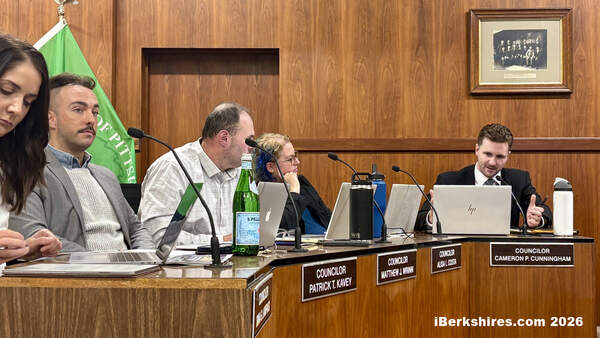
The City Council 5-6 shot down a request to repeal the 2021 decision that discontinued the adulticide spraying portion of the Berkshire County Mosquito Control Project.
The body was divided with Ward 2 Councilor Charles Kronick, Ward 6 Councilor Dina Lampiasi, Ward 7 Councilor Anthony Maffucio and Councilors at Large Peter White, Karen Kalinowsy and Earl Persip III, Councilor voting against the restoration of spraying.
Voter for the spraying was Ward 1 Councilor Kenneth Warren, Ward 3 Councilor Kevin Sherman, Ward 4 Councilor James Conant, Ward 5 Councilor Patrick Kavey and President Peter Marchetti.
Earlier this month, the Board of Health agreed to urge the council to bring back spraying due to the presence of West Nile virus in mosquito samples.
Three mosquitos have tested positive for the virus but there has been no reported human case.
"It's obvious to me that we do have a health issue and we need to revisit this vote and repeal the action from April of 2021," said Conant, who submitted the petition request.
The Berkshire County Mosquito Control Project uses a truck spray applicator with a 300-foot range for the application. The mosquito-killing pesticide is said to have a minimal impact on humans and wildlife, which some councilors rebutted.
White pointed out that previous councils have made it clear that they are not comfortable with spraying.
"You're only coming to us tonight because there's been the three, that we should take seriously, West Nile virus findings. However, we could have West Nile virus findings all over the county," he said.
"However, over 20 communities in Berkshire County have decided that the Berkshire Mosquito Control Project is not worth the cost on their cherry sheet. That's another concern to me that so many of our neighbors who are more rural and probably could have more mosquitoes based on what their geography is have chosen not to be a part of this program."
White pointed out that the city is not required to continue with mosquito control, as the council approves its funding. Currently, the project is still treating the city with pre-emptive larval control and catch basin operations.
Persip said he voted to stop the spraying and he will not vote to resume it.
"We have a way bigger tick problem and tick disease than mosquitos," he said. "If you get the numbers of how many people go to the hospital for tick-borne illnesses versus mosquito-borne illnesses it would really jump out at you."
There were also arguments that the truck spraying is not very effective and councilors had a problem with the fact that a BCMCP board member worked for the pesticide supplier. Superintendent Chris Horton reported that the board member had retired from the company but remains and that his expertise qualifies him.
Horton said the city's mosquito control plan uses products that have been approved federally, at the state level, and locally by the Board of Health. Research done by Louisiana State University found that the application procedures do not kill bees, he added.
"They've been determined to be not a risk to the population by all of these entities and the City Council overrode the decision of the Board of Health and experts in the field all the way up to the [U.S. Centers for Disease Control,]" he said.
"I think it's a little ridiculous to think that the work and knowledge of this body of evidence and these people who are leaders in public health worldwide when they come to these conclusions that this is the recommended course of action. I don't understand why the City Council or individuals would take another course based on a short walk into the field."
Sherman said his vote to resume spraying was based on the amount of constituent feedback that he received.
"I've received a lot. Not one saying no. All of them saying yes," he said. "Tremendous points have been made here tonight and I respect everybody's opinions. I'm going to stick by my original gut and vote with Councilor Conant to repeal it because of the amount of people, because that's what we've heard a lot in this chamber over the last two years, is the people, the people, and the people have been saying that."
Conant said his constituents in Ward 4 are overwhelmingly in favor of the repeal, which is why he brought it forward.
"I respect all my councilors up here. We all know how challenging this position can be at times. A lot of viewpoints up here I listen to," he said.
"I am a licensed educated pesticide applicator with 40 years of experience. Most of the viewpoints expressed up here this evening are very inaccurate."
During open microphone, one resident spoke in favor of spraying and one spoke against it.
The council did vote to refer the matter to the Board of Health and the Conservation Commission to develop guidelines and protocols for the application.
Tags: mosquito spraying,