image description
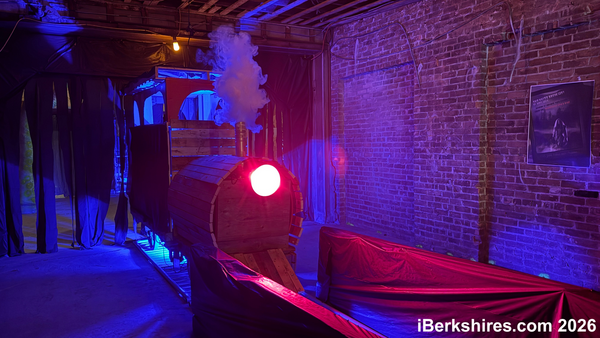
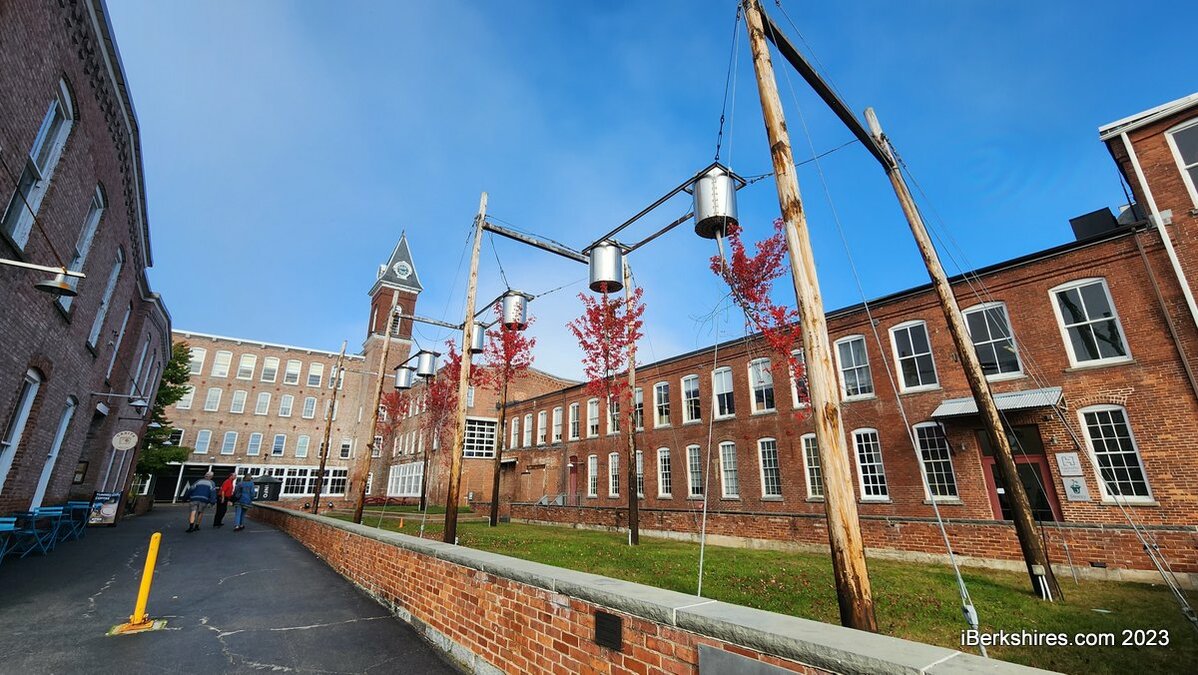
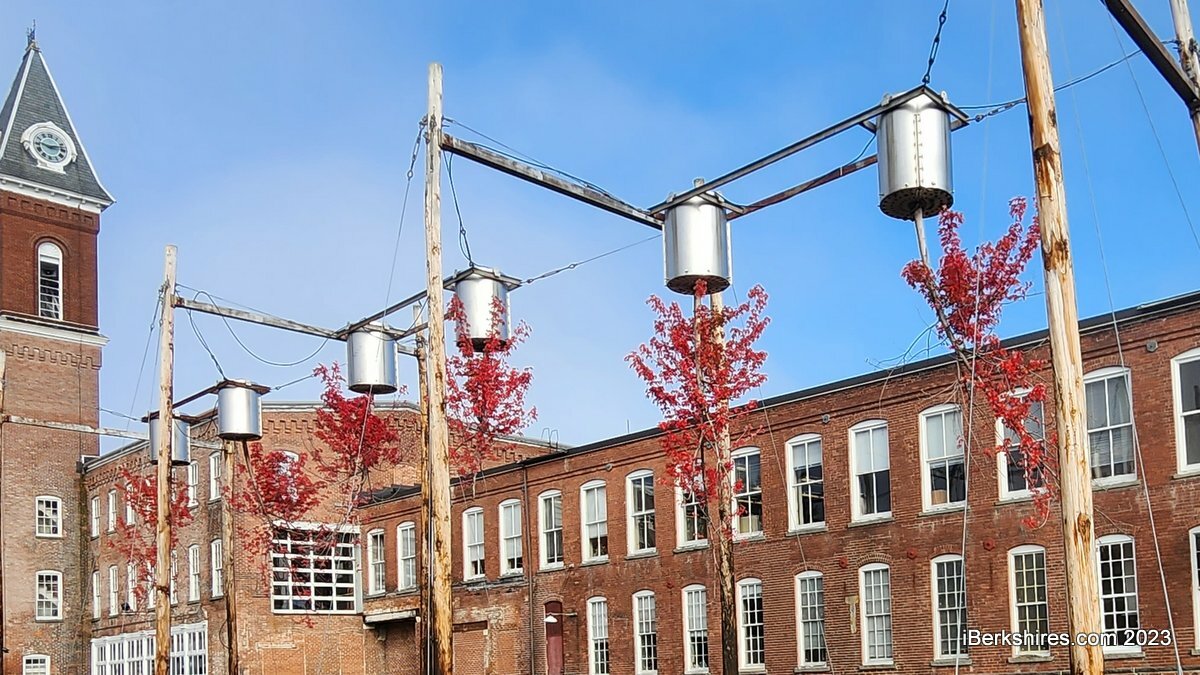
'Tree Logic,' which has lined the entrance to Mass MoCA for 25 years, will be coming down for good next week.
image description
Prior trees from the installation have been transplanted in Williamstown and North Adams. The last trees will be planted at the museum.

Mass MoCA's Iconic Upside-Down Trees Being Retired
Print Story | Email Story

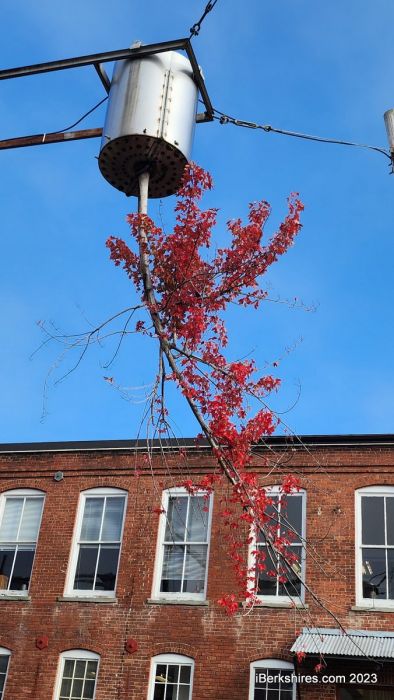
Scientists weren't sure the trees could survive being inverted; once they outgrew their tubs, they were planted earthside and thrived. 
NORTH ADAMS, Mass. — The trees will no longer grow upside-down in the Steeple City. 
 
Natalie Jeremijenko's meditation on resiliency, "Tree Logic," will be retired after 25 years of turning heads at the entrance to Massachusetts Museum of Contemporary Art. 
 
The museum announced on its Facebook page this week that the trees will be removed. They will be on view until Monday. 
 
The trees themselves haven't been there that long. Every so often, a new group of saplings is installed and their elders retired to grow naturally on Stone Hill at the Clark Art Institute, which funded the installation, and Colegrove Park, where museum visitors have been known to check on their condition. This last set will remain on the campus, at the end of the Speedway. 
 
"This work, like Mass MoCA itself, defies logic and gravity while signaling that creativity comes in all forms. Jeremijenko conceived of Tree Logic as a work about change and persistence, as trees themselves are dynamic natural systems constantly in flux. In this work, the trees grow while upside down, yet they still instinctively reach for the sunlight," the museum wrote. "MASS MoCA is a non-collecting museum. The artworks on view range from new commissions organized with artists to loans from artists, galleries, estates, and collectors. So at some point, like the trees themselves, things must change."
 
Although a popular image here, the trees did evince a range of emotions, with some viewers disturbed at the distortion of nature. 
 
Jeremijenko, also an engineer, had spoken with botanists when designing the installation. According to the museum's audio tour, the scientists were divided on how gravity would affect the trees once they were inverted. The trees grew and their branches curved toward the sun; once taken down and put right side up, they gracefully returned to their natural state.  
 
"The branches correct themselves and bear little sign of their early beginnings, speaking to the resiliency of nature, cities and towns, and museums," posted Mass MoCA. 

Tags: mass moca,   trees,   
If you would like to contribute information on this article, contact us at info@iberkshires.com.

Greylock School Project Garnering Interest From Bidders

By Tammy Daniels iBerkshires Staff
NORTH ADAMS, Mass. — A recent walkthrough of the Greylock School site turned out more interest than expected, which school officials and project managers hope will translate into multiple bids. 
 
The project includes the demolition of the 60-year-old elementary school and the construction of a new two-story school directly to its north. 
 
"We don't always expect a lot of them to show when a building is going to be demolished. There's not a lot for them to see," said Tim Alix of Collier's International, the owner's project manager, told the School Building Committee on Tuesday. "But just putting eyes on the site, seeing where the utilities are coming in so they can they've seen them all that information on the documents, but to see it in 3-D and they can start making their plans.
 
"We're hopeful that that means that we are going to be receiving a number of bids in each category. So that's encouraging."
 
The subcontracting bids are due Tuesday and the general contractors' on Jan. 14. Alix said there will be plenty of time to review the subcontractor documents before releasing that information so the general contractors can compile their bids. All bidders went through a prequalification process this past fall to be accepted by the Massachusetts School Building Authority, which is covering more than two-thirds of the cost of the project.
 
Jesse Saylor of TSKP Studio, the school's designer, said there have also been a lot of questions from potential bidders. 
 
"We have received a number of bidders' questions, which are called bid RFIs, and that's normal," he said. "I think it shows participation, you know, bidders who are working on the job, are looking at the documents, and they're finding things that they want to make sure they understand."
 
View Full Story

More North Adams Stories