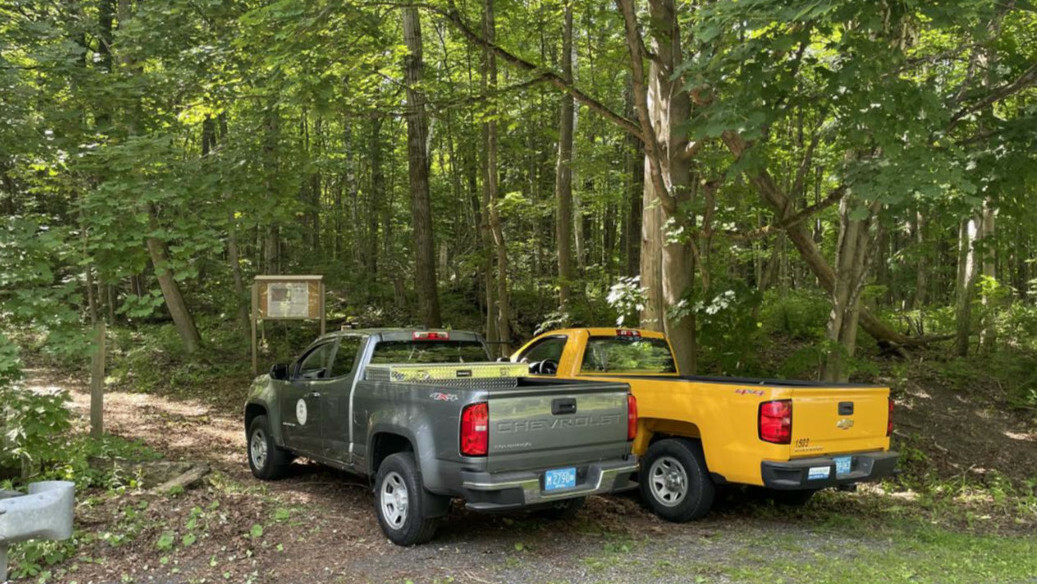
Pittsfield Residents Discuss Vision for Former Saw Mill Property
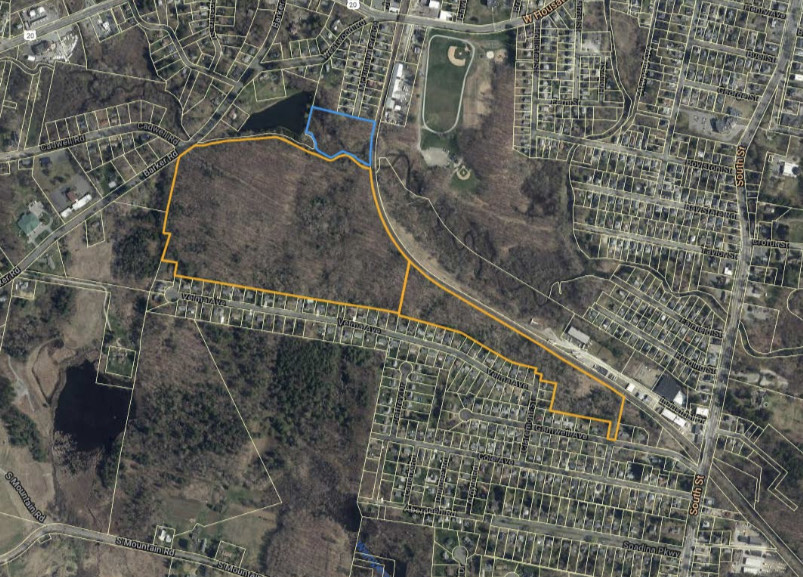
The property, outlined in orange, is just south of Clapp Park and north of Velma Avenue.
The goal of the project is to permanently protect these lands as part of the continued development of a greenway of protected land between Clapp Park and Pittsfield Municipal Airport. It had been part of a family farm for 175 years and, more recently, a solar field had been proposed for the area.
"We're just trying to create a cost efficient property that's high quality, high value, that contributes to increasing your property values," Parks, Open Space, and Natural Resource Program Manager James McGrath said. "That's a property we can all love and enjoy for many many years but we need everyone's help to make that happen."
The city has been working with and will continue to work with Berkshire Natural Resources Council to manage the property, enforce stewardship values enunciated in the conservation restriction, and act as a "backstop" to the city.
The conservation restriction is a legally enforceable agreement with the BNRC that sets the groundwork for how this property is managed. It will be the city's responsibility to comply with all the terms of this agreement.
The restriction requires that the land be used solely for passive recreation, which include activities like bird watching, hiking, fishing, and other activities that have a mundane impact, conservation agent Robert Van Der Kar said.
Activities such as hunting, biking and utilizing off-road vehicles would be prohibited on the property.
The city is working to improve the property by removing invasive species including barberry and honeysuckle, among others.
Opportunities to improve the fish habitat may be possible in the future. The property has "great structure," "very diverse wetlands" and a "fantastic lower perennial stream," Kar said.
"We'd like people to go out and use the riparian areas of the river … I can see it being a great fishery, so hopefully people will use it for fishing," he said.
The Mass Natural Heritage Endangered Species Program mapped the property and showed that there are rare species including a wood turtle habitat.
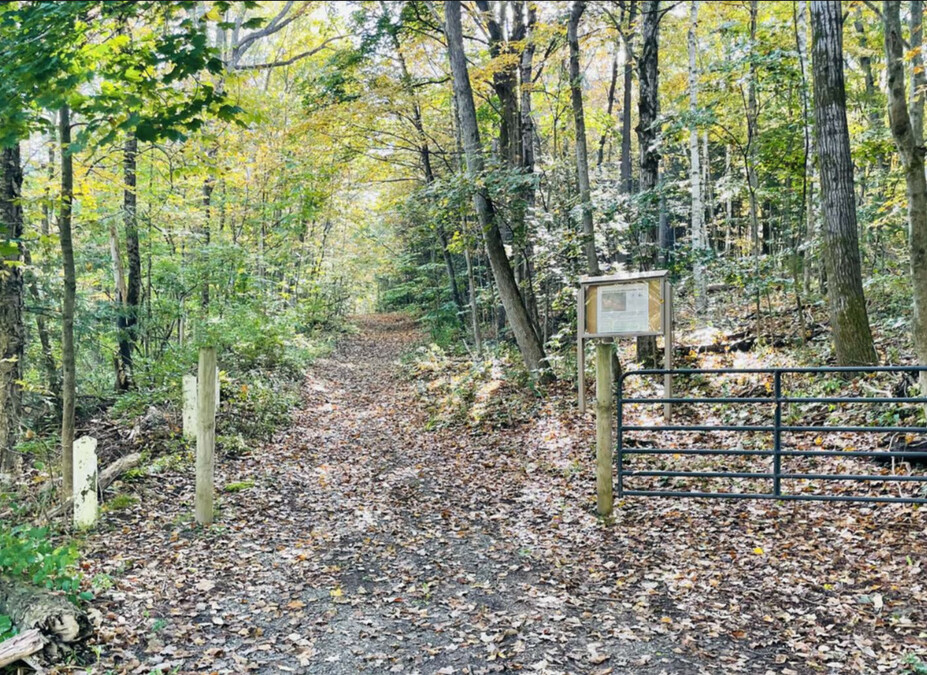
The property currently has a network of trails that is informal and not marked so one of the short-term goals is to develop a small trail network that is easy to follow, McGrath said.
BNRC conducted a baseline documentation to cite all of the property line encroachments such as too much lawn in some areas, leaf or hard debris dumping, and structures.
"We are now a neighbor to you if you have an abutting property along Velma or Gamwell. You're neighbors to us. We want to have that cooperative relationship. We want you to know who we are, and we want to know who you are," McGrath said.
"You're going to be our primary eyes and ears on this property. We can't be out there every day. When there are issues we want you to know where to call."
BNRC understands how to address encroachments and has a history of doing so, BNRC Stewardship Director Doug Brown said.
"We're not asking that the city turn this around in a year and make that change. We've suggested an approach that really is based on that relationship and resolving things at an appropriate timescale for each of those," Brown said.
"So, we'll be filled in, we'll keep an eye on it, but we're not out there banging on the door asking for this to change immediately. We want things to happen in an organic way that's based out of relationships and conversations."
The city is going to collaborate with the community to create a brief master plan document that sets that property objectives, assigns who completes these objectives, and establishes a timeframe. This document will be drafted and then brought before the community.
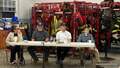
Community members expressed concerns surrounding the property's accessibility, safety, privacy, and parking during a public meeting on Monday.
The property only has one official access with two parking spaces but residents have been known to enter the trails through unofficial accesses in the surrounding area. City officials can not encourage the use of these access points due to safety concerns, including an active train track.
Residents raised concerns regarding these lack of access points especially in cases where emergency personnel need to quickly get to certain areas of the property.
"I don't think one access is going to do it. I think you got to get the fire, EMT people involved [in the master plan,] so they know where to go in [emergency situations]," one resident said.
When asked if there will be a buffer zone between the residents and the conservation property, McGrath said the trail network is interior.
"People don't want to be hiking on a trail and looking in people's back yards. You don't want them there, they don't want to be hiking there. We're not going to build a trail there," McGrath said.
McGrath also attempted to alleviate neighbors' concerns regarding homeless people using the property.
He said he has been working for the park system for 20 years and has been dealing with unsheltered folks for many of those years so understands what their needs are and how to assist them.
McGrath asked that residents reach out to the Parks Department if they see unsheltered folks through the back yards of Velma or any of the other abutting streets. "But it's not something that I can see happening because unsheltered folks want to get to services downtown," he said.
The Conservation Commission is also going to work on renaming the property.
Reach out to Kar with any questions or concerns regarding the conservation property at 413-499-9359 or rvanderkar@cityofpittsfield.org.
Background:
The city has been working toward purchasing this property since 2007 when it received funding but could not come to agreement with the ownership group, Saw Mill School Nominee Realty Trust. Instead the funds were utilized to purchase Barkerville property on Barker Road.
The 50 acres of conservation land along the southwest branch of the Housatonic River was purchased last year for $400,000.
The cost was covered using grant and city funding. The city was awarded a $280,000 Local Acquisitions for Natural Diversity grant from the state's Executive Office of Energy and Environmental Affairs.
The remaining amount was covered using $20,000 of the city's capital funds, $50,000 from the Conservation Commission, and $50,000, from Pittsfield's Community Preservation Act.
The land consists of three parcels totaling 52.3 acres with 1/4 mile of frontage on the Housatonic River. They are bound by Barker Road and Velma Avenue to the south and to the east by railroad tracks and Industrial Drive.
There is also a small portion on the north side of the river at the end of McKinley terrace.
Within the acreage are areas of core habitat mapped by the state's Natural Heritage and Endangered Species Program.
Tags: BNRC, conserved land, public parks,