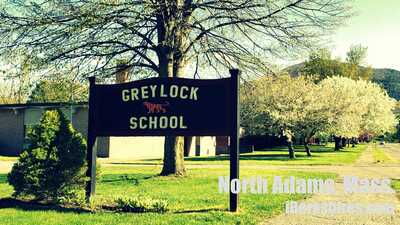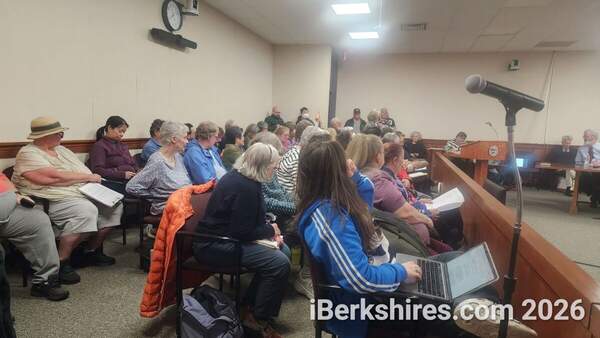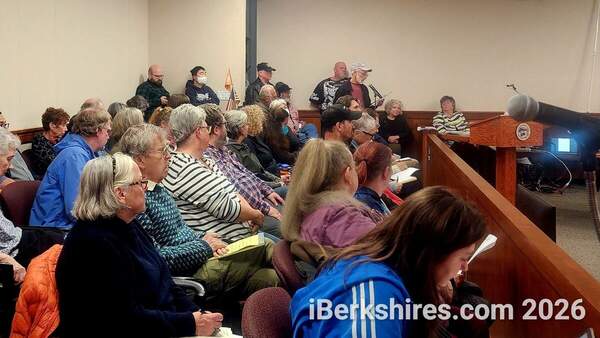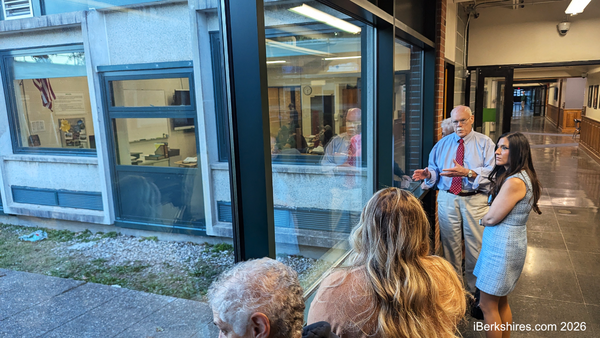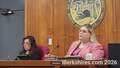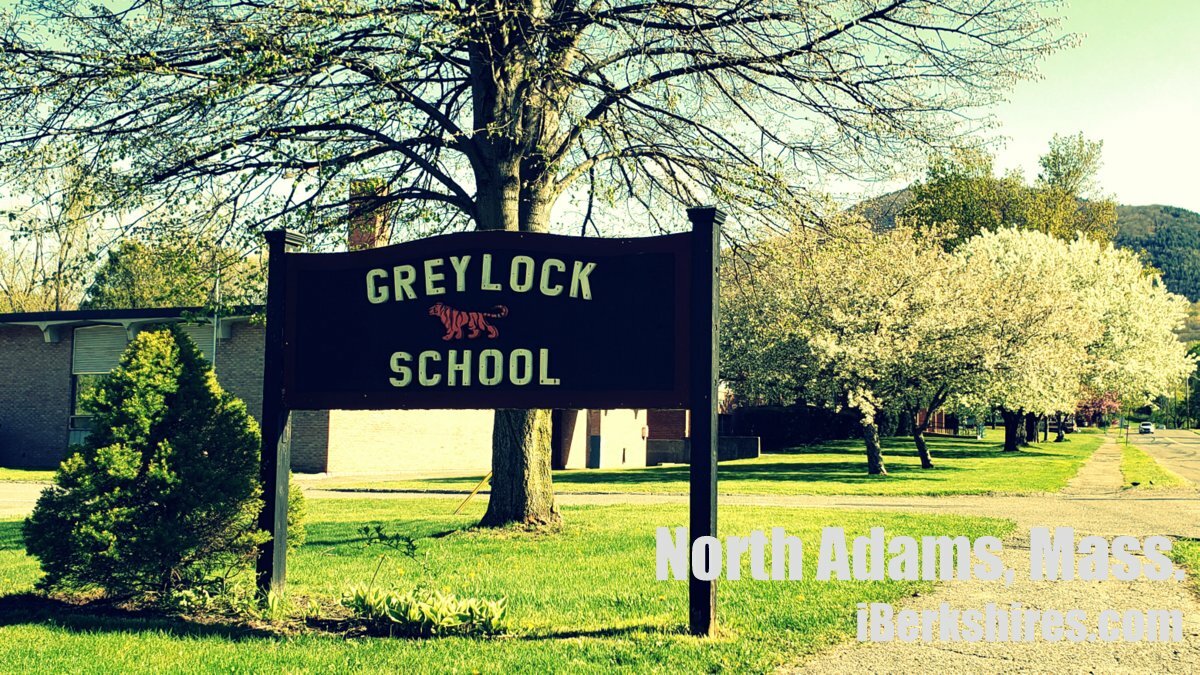
NORTH ADAMS, Mass. — The schools' Facilities and Finance subcommittee is recommending that Greylock School close at the end of this school year.
School officials say a number of factors are being considered in accelerating the closing — declining enrollment, the building's physical condition and, not least of all, a looming $2.4 million budget deficit.
The city is currently pursuing a school building project to replace Greylock with a new $61 million structure at same location to open in fall 2027. At that time, Brayton Elementary will close.
The subcommittee began discussions last week as administrators laid out a preliminary proposal to close Greylock School to offset costs.
The first proposal was to shift Greylock pupils to Brayton for an estimated cost savings of about $750,000. The subcommittee asked for a proposal to implement the new grade span configuration and how that would affect staffing and budgeting.
At Monday's meeting, the savings was estimated at about $1 million that in addition to the extra $200,000 coming in state Chapter 70 aid, would cut the deficit in half.
The total savings would come to $1,267,840, cutting the deficit to $967,027, or a 4.8 percent increase, for fiscal 2025. This will be the baseline for further reductions.
The grade-span configuration, approved by the School Committee last year as part of the building project, would turn Greylock into an early education center and shift all children in Grades 3 to 6 to Colegrove Park Elementary School.
"So we started the conversation by saying we were going to close Greylock and move everybody to Brayton, and then as we explored at our last meeting, why move them twice?" said Mayor Jennifer Macksey. "And I agree, why move them twice. By starting the grade-span school, it seems its better for the students."
Member Richard Alcombright agreed, saying he believed kids are extremely resilient in these situations.
"I think it's important that they know they're going to stay in their cohorts. ... in some way, shape or form, Greylock will follow them," he said. "Maybe not in the same classrooms but in the same buildings and same other types of activities."
The North Adams Public Schools has seen an enrollment decline of several hundred, from 1,439 in 2018 to 1,153 this year. Should the School Committee accept the recommendation, the enrollment at each school is expected to be 397 at Brayton (assuming a full prekindergarten) and 372 at Colegrove Park. The schools' capacity is 449 for Brayton and 420 for Colegrove.
Superintendent Barbara Malkas said the consolidation is not expected to increase classroom sizes as the state average is 24 students and the largest for North Adams is about 20.
In response to questions from Alcombright, she said the special education programs would be located with their appropriate grade span. Organizing the schools this way will also make it easier for certain special programs since they would not have to shift between schools.
The reorganization would result in the elimination of about 22 positions, although the administration is recommending adding a STEM (science, technology, engineering and math) specialist for each school. The current principal at Brayton still has a year left on her contract and the idea is to shift her to seventh grade at Drury High.
"We need to marshal our resources in relation to our shrinking enrollment and what have you," said committee member Tara Jacobs. "But ideally, also use the savings as an opportunity to play with the STEM positions and on any of the ways that we can find to enrich programming that we're offering while consolidating our resources together."
Some of the posts may be vacated by retirements or by teachers who decide they don't want to change schools, said Malkas, who added she has spoken with some union leaders.
The administration also has to assess the loss of important positions from the ending of Elementary and Secondary School Emergency Relief Funds this year such as nurse leader, adjustment counselors and behavior techs.
"This exercise is not done for us, we have quite a bit of work to do in exactly really honing that number, what is our actual gap closure in this scenario," Malkas said. "And then there's the personnel side of things."
Alcombright made the motion to recommend the closing the Greylock at the end of the school and was seconded by Macksey. The School Committee will hear the presentation at its meeting on Tuesday.
"This doesn't mean there will not ever be a neighborhood school in Greylock," said Malkas. "We have this building project. There is the potential to have a beautiful state-of-the-art early education facility in the Greylock community that will serve generations to come, well beyond my tenure."
If you would like to contribute information on this article, contact us at info@iberkshires.com.
Your Comments
iBerkshires.com welcomes critical, respectful dialogue. Name-calling, personal attacks, libel, slander or foul language is not allowed. All comments are reviewed before posting and will be deleted or edited as necessary.
No Comments
Why the Massachusetts Art Community Is Worth Continued Investment
By James BirgeGuest Column
How do we quantify the value of art on society and culture? Even eye-popping figures, like the $100 million estimate for the jewels stolen from the Louvre, or the record auction last fall that saw a piece by Gustav Klimt sell for more than $236 million can't fully account for the value of the history, stories, and emotions behind the creations themselves. But beyond that, there is a measurable financial, cultural and social benefit of the arts that is often taken for granted.
Despite the obvious impact, these figures are under threat. A recent survey by MassCreative compiled recent federal cuts to the National Endowment for the Arts, the National Endowment for the Humanities and the Institute of Museum and Library Services and identified 63 grants canceled and $4.2 million in grant funding rescinded across New England so far this year.
The dollars, of course, are important. But they also only scratch the surface on what they bring to the community. Today, we risk losing part of the culture and identity many now take for granted.
While others choose to look past these less tangible, but just as vital benefits, we're doing the opposite. Massachusetts College of Liberal Arts is all in to ensure the next generation retains their access to works of art, while also being empowered to create themselves.
Last fall, MCLA officially broke ground on the new Campagna Kleefeld Center for Creativity in the Arts, which will serve as a new hub for the campus and the local community for arts programming. When complete in fall of 2027, our students will benefit, but so will all of Berkshire County and artists in the surrounding area.
This exciting new facility is just one of the many forthcomings our region can enjoy in the coming years. Just a few miles away, anticipation builds for the Fall 2027 anticipated opening for the Williams College Museum of Art. Years in the making, the museum likewise grows from an enduring commitment to the arts, both in curriculum and in practice. Exciting times are also underway for the Clark Art Institute with the construction of a new facility to house a collection of 331 works of art, including paintings, sculptures, drawings and other works. Their wing is scheduled for completion in 2028. And listeners will no doubt enjoy the sounds and melodies from Mass MoCA Records, the latest endeavor to foster creativity and artistic pursuits through music launched in October as well. Of course, many are also awaiting the reopening of the Berkshire Museum anticipated this summer, after a tremendous renovation process to rejuvenate the experience for visitors.
So much time, energy, and yes, dollars, have already been invested in taking these facilities from ideas and sketches and making them reality. But they represent much more than new buildings. They represent new opportunities to cultivate and accelerate the thriving arts community in Massachusetts and the northern Berkshires.
Art, regardless of the medium, is a reflection of who we are, where we've been, and what we aspire to be. It can be inspired by hopes or fears and chronicle collective triumphs as well as tribulations. The goal of art is not only to document history, but to inspire those positioned to change it and to feel something new or even to provoke us to revisit our own assumptions or misconceptions.
As unfathomable of a number as $30 billion can seem, boiling down the impact to any number inherently discounts the unknowable downstream effects our graduates will bring to the community and the broader world after they leave our institutions. Likewise, rescinding $4.2 million now removes a huge chunk of that growth potential.
Justification for making these investments today when simply boiled down to dollars and cents still places us on solid ground strictly from a financial perspective that forgoes all of the intangible, but no less valuable, benefits as well.
The arts are still worth our support. And our community will be richer for it.
James Birge, PhD, is president of Massachusetts College of Liberal Arts in North Adams.
Our Friday Front Porch is a weekly feature spotlighting attractive homes for sale in Berkshire County. This week, we are showcasing 74 Washington Ave.
click for more
On Monday, developer Benjamin Crespi of 196 Marine LLC, was back before the Planning Board with a dramatically different proposal: 49 two-bedroom tourists cabins with a restaurant and recreational amenities.
click for more
The City Council on Tuesday approved an appropriation of $256,635 from the Land Sales Account for easements and takings related to the Ashland Street project. click for more