image description
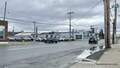
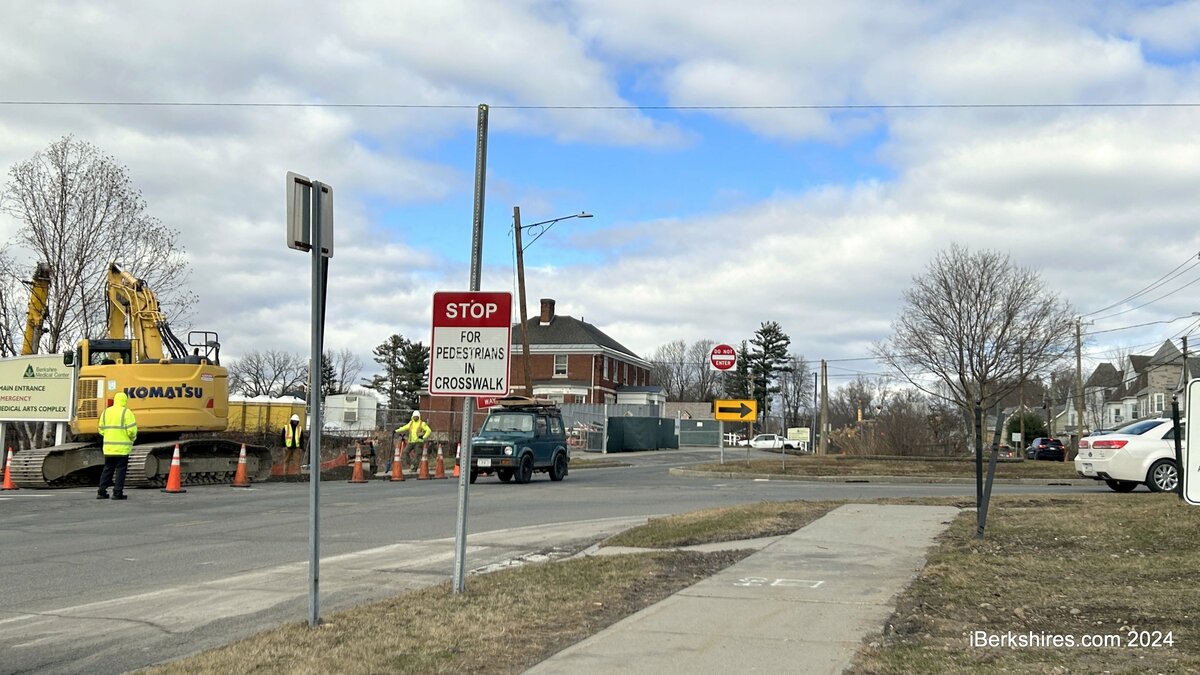
Equipment is being staged outside the Berkshire Medical Center entrance for the construction of a roundabout. Traffic delays and detours will occur over the next six to seven weeks.

MassDOT Project Will Affect Traffic Near BMC

By Brittany PolitoiBerkshires Staff
Print Story | Email Story

PITTSFIELD, Mass. — Prepare for traffic impacts around Berkshire Medical Center through May for a state Department of Transportation project to improve situations and intersections on North Street and First Street.

Because of this, traffic will be reduced to one lane of travel on First Street (U.S. Route 7) and North Street between Burbank Street and Abbott Street from 7 a.m. to 4 p.m., Monday through Friday through at least May 6.

BMC and Medical Arts Complex parking areas remain open and detours may be in place at certain times. The city will provide additional updates on changes to traffic patterns in the area as construction progresses.

The project has been a few years in the making, with a public hearing dating back to 2021. It aims to increase safety for all modes of transportation and improve intersection operation.

It consists of intersection widening and signalization improvements at First and Tyler streets, the conversion of North Street between Tyler and Stoddard Avenue to serve one-way southbound traffic only, intersection improvements at Charles Street and North Street, intersection improvements at Springside Avenue and North Street, and the construction of a roundabout at the intersection of First Street, North Street, Stoddard Avenue, and the Berkshire Medical Center entrance.

Work also includes the construction of 5-foot bike lanes and 5-foot sidewalks with ADA-compliant curb ramps.  


Last year, the City Council approved multiple orders for the state project: five orders of takings for intersection and signal improvements at First Street and North Street. 

The total amount identified for permanent and temporary takings is $397,200, with $200,000 allocated by the council and the additional monies coming from carryover Chapter 90 funding. The state Transportation Improvement Plan is paying for the project and the city is responsible for 20 percent of the design cost and rights-of-way takings.

MassDOT estimated last year that the project contract would cost around $9 million.

Also last year, nearly 100 residents rallied against the traffic-calming measure with a citizens' petition that reads "To the City Council of Pittsfield: No more roundabouts."

MassDOT defines roundabouts as being safer than a traditional traffic signal or all-way stop-controlled intersections because they have fewer conflict points between turning vehicles, through traffic, and people crossing.

The agency says tight roundabout circles and curbed median islands promote slower driving speeds that give drivers more time to react to people in crosswalks or other vehicles and that slower vehicle speeds also result in less severe crashes if they do occur.


Tags: intersection,   MassDOT,   road project,   roundabout,   
If you would like to contribute information on this article, contact us at info@iberkshires.com.

Youth For The Future: Adwita Arunkumar

By Breanna SteeleiBerkshires Staff

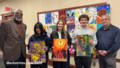
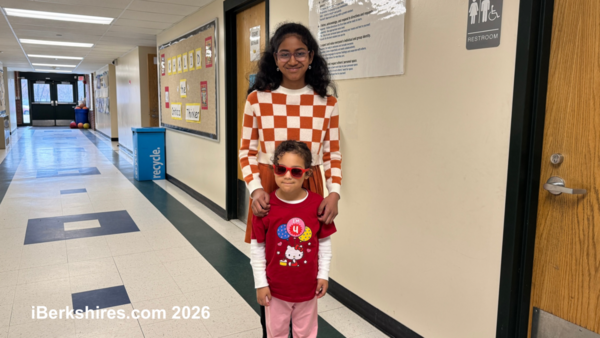
PITTSFIELD, Mass. — Williams Elementary School fourth-grader Adwita Arunkumar has been selected as our April Youth for the Future for her mentoring of a younger child.

Youth for the Future is a 12-month series that honors young individuals that have made an impact on their community. This year's sponsor is Patriot Car Wash. Nominate a youth here

Adwita has cortical visual impairment; she has been working with her teacher, Lynn Shortis, and her, paraprofessional Nadine Henner.

"My journey with CVI means that I learned in a different way. I work hard every day with Miss Henner and Miss Lynn, to show how smart I am," she said.

"Adwita is a remarkable student. She's a remarkable child. She has, as she shared, cortical visual impairment, which is a brain-based visual processing disorder, which means the information coming in through the eyes is interfered with somewhere along the pathways, and we never quite know what's being interpreted and how and how it's being seen," said Shortis.

"So she has a lot of accommodations and specialized instruction to help her learn."

Recently Adwita has chosen to mentor 4-year-old Cayden Ziemba, who is also visually impaired.

"I decided to be a mentor to Cayden so that she can learn some new things. I teach her how to walk with the cane, with the diagonal and tap technique, I am teaching her Braille," she said. "I enjoy spending time with Cayden, playing games and being a good role model."

Shortis said the mentoring opportunity came up when Cayden was entering preschool at Williams, and they introduced her to Adwita. 

"Adwita works really, really hard academically. She's very smart, but there are a lot of challenges in that, because of the way that it's so visual and she's a natural. She's just, it's automatic," Shortis said. "It's kind of like a switch is turned on and she becomes this extremely confident and proud person in this teacher role."

Adwita also has been helping Cayden on how to use her cane on the bus and became a mentor in a unexpected ways.

"Immediately at the start of this year, she would meet Cayden at the bus. She has taught Cayden how to use her cane to go down the bus stairs. Again, Adwita learned that skill, so it wasn't something I had to say to her, this is what you need to have Cayden do. She just automatically picked that up and transferred that information," said Shortis. "Cayden is now going down the bus step steps independently with her cane. And then she really works hard with Adwita in traveling through the hallways, Adwita leads her to her class every morning, helps her put her things away and get ready for her morning."

Adwita said she hopes Cayden can feel excited about school and that other students can feel good about themselves as well.

"I want them to know that Braille is cool to learn. You can feel the bumpiness with your fingers. I want people to know how you can still learn if your brain works differently sometimes. I need to have a lot of patience working with a 3-year-old. I need to be creative and energized," she said.

She hopes to one day take her mentoring skills to the head of the class as a teacher.

"I want to become a teacher and teach other students when I grow up. I might want to teach math, because I am great at it," she said. "I also want to teach others about CVI. CVI doesn't stop me from being able to do anything I want to. I want students to not feel stressed out and know that they can do anything they want by working hard and persevering."

Her one-to-one paraprofessional said she likes seeing the bond that has grown between the two girls, and can picture Adwita being a teacher one day.

"I do see her in the future being a teacher because of her patience, understanding and just natural-born instinctive skills on how to work with young children," Henner said.

Shortis also said their bond is quite special and their relationship has helped to bring out the confidence in each other.

"The beauty of it, there's just something about it their bond is, I don't even really have a word to describe the bond that the two of them have. I think they share something in common, that they're both visually impaired, and regardless of the fact that their visual impairment differs and the you know the cause of it differs," she said.

"They can relate. And they both have the cane. They're both learning some Braille. But there's something else that's there that just the two of them connected immediately, and you see it. You just you see it in their overall relationship."

 
View Full Story

More Pittsfield Stories