Bidwell House: Exploring the History of New England Redware

Print Story | Email Story

MONTEREY, Mass.  Justin Thomas will speak about the museum's red earthenware collection.

These objects will be used to tell stories about red earthenware (and some stoneware) production all over New England, spanning the seventeenth through the early twentieth century. The notion of wares made by the rural country potter during the post-American Revolution period through about 1870 will be also discussed in comparison to the urbanized industries that existed in New England before and after the Revolutionary War.

The impact of the Industrial Revolution on this production will also be emphasized, as well as 275 years' worth of archaeology in New England. This talk will also relate stories about transportation and trade utilizing river ways and the Atlantic Ocean that allowed some of the area's potters to ship their wares to other parts of the region, Canada and to the south of New England.

Justin Thomas is a collector, researcher and writer about American utilitarian pottery production from the seventeenth through the early twentieth century. He has studied at archaeology departments, museums and private collections across the country, publishing numerous research articles about American potteries in regional and national publications. He has been a contributor for the New England Antiques Journal, Maine Antiques Digest, Antiques and the Arts Weekly, Antiques & Auction News, and Untapped New York. He has also authored seven books, as part of his ongoing pottery book series, published by Historic Beverly in Massachusetts. Justin has worked with museums, historical societies and archaeology departments all over the East Coast including the National Museum of American History, the Rochester Museum & Science Center, the New York State Museum, Old Sturbridge Village, Historic New England and Strawbery Banke, among many others. In 2021 he organized a special redware conference hosted by Historic Beverly. He currently resides in Newburyport.

This lecture will be held at the Tyringham Union Church at 128 Main Rd in Tyringham. This will be an in-person lecture, with the option to also watch a livestream via Zoom. All Zoom participants will receive a link to access the lecture 1-2 days in advance. Tickets for Zoom attendance must be purchased in advance but in-person tickets can be purchased at the door. Attendees can register here: https://www.bidwellhousemuseum.org/event/exploring-the-history-of-new-england-redware/

This program is supported in part by grants from the Otis and Sheffield Cultural Councils,  local agencies which are supported by the Mass Cultural Council, a state agency.
If you would like to contribute information on this article, contact us at info@iberkshires.com.

Becket Looks to Wind Power for Energy Savings

By Breanna SteeleiBerkshires Staff

The single turbine is a low maintenance and has a 50-year life. The town went with wind power after finding a solar installation would be too difficult. 

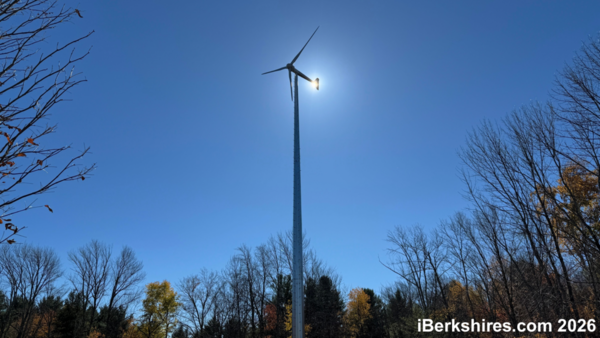
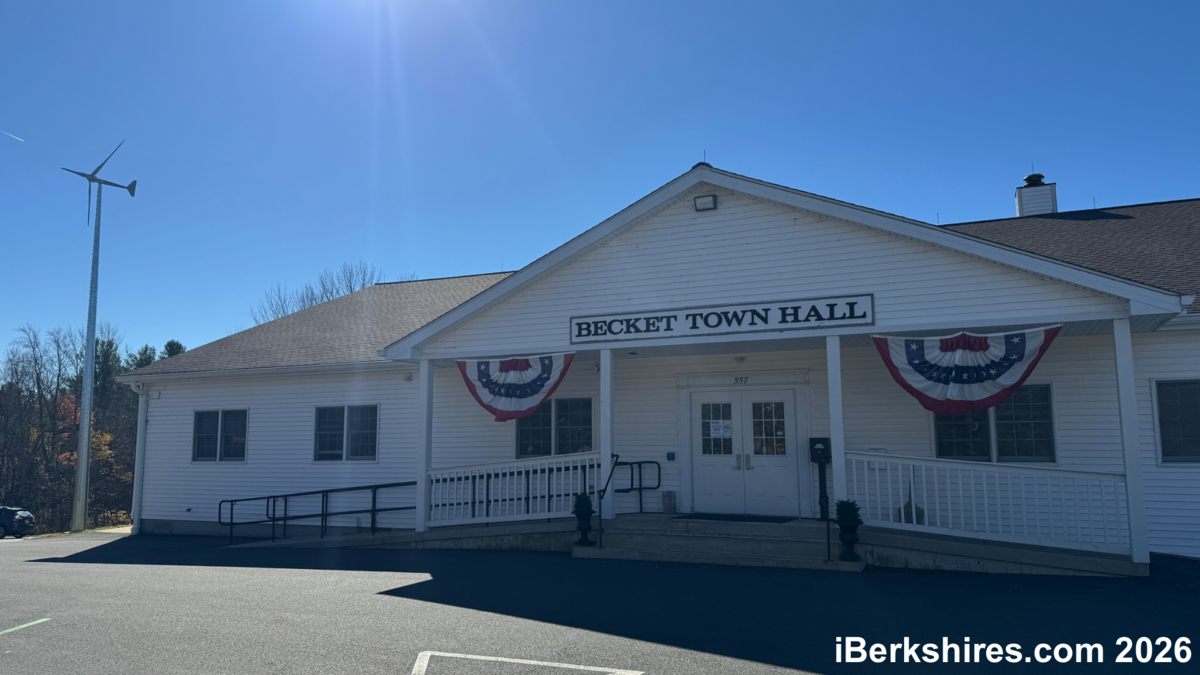
BECKET, Mass. — The town unveiled a wind turbine Monday that will reduce electricity costs and show the benefits of renewable energy produced by wind.

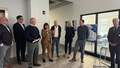
Residents, town and state officials gathered outside the Town Hall for the ribbon cutting on a project first conceived nearly a dozen years ago.

The wind turbine stands 100-feet tall next to Town Hall and is from Oklahoma manufacturer Bergey Wind Power. It has a 50-year life and is a direct-drive permanent-magnet design, meaning it has no gearbox, making it low maintenance.

According to Garth Klimchuk, chair of the Becket Energy Committee, the town started discussions about a wind turbine in 2014. The turbine is expected to generate about 36,000 kilowatt-hours. Klimchuk said Town Hall uses about 24,000 kilowatt-hours, with excess power expected to go to the Highway Department. This is expected to save $9,000 annually from the electricity cost.

"This turbine is just going to be such a good thing for the town. It is really incredible. Zero-cost electricity. Zero cost to the town. Carbon free. Just a huge, huge milestone for us," he said.

The town received a grant from the state Department of Energy Resources totaling $139,500. The remaining funding for the project will come from a direct-pay investment tax credit under the federal Inflation Reduction Act. If the town does not receive the funding, voters at the annual town allocated $100,000 just in case, but Klimchuk said the town will only need about $60,000 to $70,000 if necessary.

"It's going to help the community. Hopefully, it'll lower our tax bills. And as we look at everything going around around the world right now, energy volatility has been with us for a long time. It's going to stay with us for a long time," said state Sen. Paul Mark. "So any move we can make as a community, whether as Becket specifically, as Berkshire County as a whole, but anything we can do to bring some of the reliability into our own hands, to produce a bit on our own, and just guarantee that in a renewable, safe way moving into the future, I think is going to pay off dividends."

The town has spent more than a decade reducing municipal energy consumption in a variety of ways including HVAC upgrades and LED street light conversions, bringing it to a Level 2 Green Community status.

While solar had been considered, interconnection constraints and limited grant opportunities made it harder to achieve. But the high elevation of Town Hall and a Small Wind Site evaluation done in 2023 and 2024 found the site was perfect for a turbine with favorably high winds.

State Rep. Leigh Davis praised the project as an example of a small town addressing a larger energy challenge through persistence and collaboration. She stressed that the single turbine represents a practical step toward reducing reliance on fossil fuels and said Becket's effort could serve as a model for communities across the commonwealth. 

"You hear about all these kind of big wind farms and solar farms and all these ways that we're gonna you know create green energy, but at the same time what we're not being sensitive to the landscape, and what I appreciate about this is that this is it's a single turbine, but it represents so much more," she said. "You're right. It's really adding to the ability for this town to contribute to green energy and to bringing our reliance on gasoline fuels back down to solving big problems."

Mark Rabinsky, deputy director of DOER's Green Communities Division, said the state supports municipalities with technical assistance and grants, and that reducing municipal energy costs can leave more resources for other local priorities. He presented the turbine as an example of state support working alongside local knowledge and decision-making. 

"I think that this is a really a great example of what green communities can do," he said. "I'm obviously a really big fan of the green communities program, but I think that connection between the state, what we're doing at the state, and that local level, and relying on the local knowledge here with Becket is a true testament to what we're doing."

Select Board Chair William Elovirta thanked everyone for being here and shared his memories of first coming tp Becket in 1946 before utility electricity arrived. His family and neighbors used small 32-volt generating plants and batteries. He recalled utility workers installing poles and wires by hand around 1947.  

View Full Story

More South Berkshire Stories