Overtime, Wages Caused $165K Deficit in Dalton Fire District

The Board of Water Commissioners say the deficit was caused by failing to budget for overtime and higher wages when the ambulance service began hiring paramedics.
When the Board of Water Commissioners suspended Fire Chief Christian Tobin earlier this month following allegations of sexual harassment, grant overspending, and "employee concerns," Tobin shot back with claims of "unlawful departmental practices" that included misuse of credit cards and illegal wage and hour practices.
In emails to the district, Tobin claimed that in fiscal year 2023 there was a deficit of about $183,084.
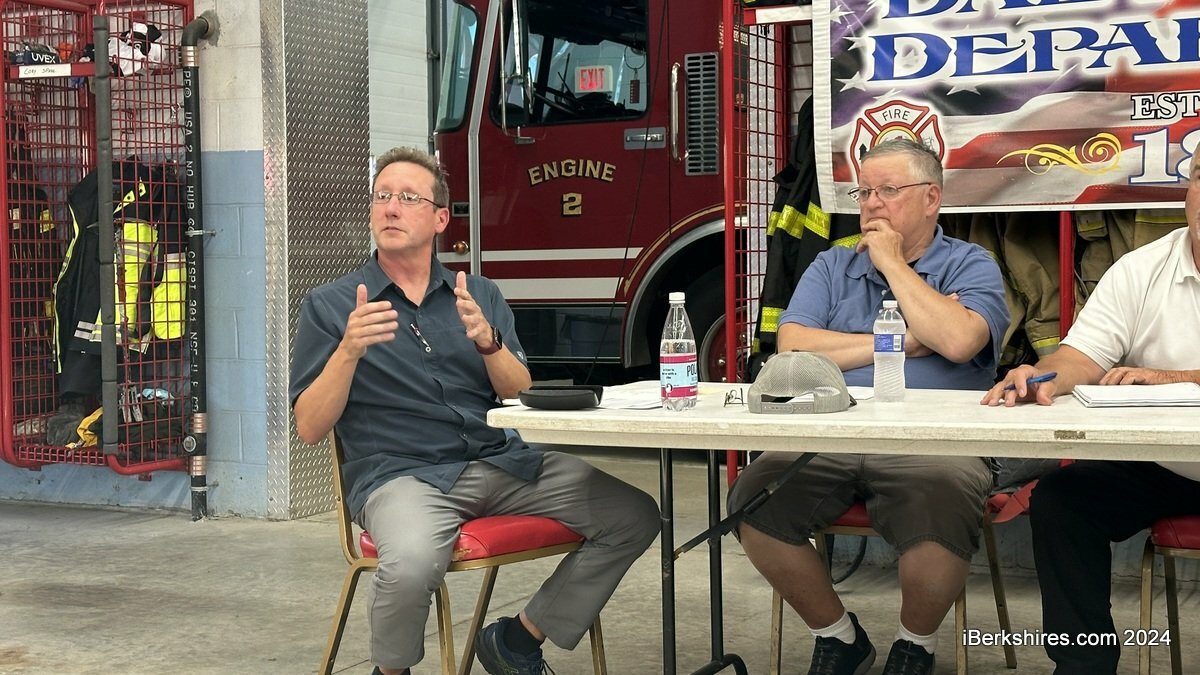
The commissioners responded to some of these claims during its meeting on Tuesday by reviewing its fiscal 2023 financials with its consultant, Scanlon & Associates, which assists the district in preparing its tax recapitulation sheet and certifying free cash.
Thomas Scanlon, managing partner of the auditing firm, found that the district had a deficit of about $165,000 from overspending in the fire and ambulance budgets in FY22 and FY23.
Scanlon said he did not see anything that stood out when reviewing the receipts that would warrant a forensic audit. The receipts aligned with what was being reported.
"There's concern that you shouldn't overdrive your budget as a sign of bad accounting, for the lack of a better term, but that necessarily doesn't trigger a forensic audit," he said.
The district overspent by about $44,000 in 2022 and roughly $121,000 in 2023 largely because of payroll and overtime for emergency medical technicians that were not budgeted, Scanlon said.
The district took over the ambulance service in 2021 and has been trying to determine the cost of operating it.
"An ambulance is never going to make money, nor do I think an ambulance will ever break even. I think there will always be a deficit in an ambulance system," board Chair James Driscoll said.
Hopefully, the fire budget doesn't exceed the anticipated cost so it can be rolled over to cover the overspending of the ambulance budget, he said, "it's a hard thing for us to try to get a handle on, but we've been working on it for three years, and I think we're getting better at getting estimated cost of what we're going to need for calls."
The district is now tracking calls, including mutual aid, and what time they come in, to better understand when it needs to staff personnel.
"So, again, we've tried real hard to keep this as low as we can, and in a two-year cycle, we have accumulated some debt of $165,000 in overtime, and hopefully in FY24 we'll be able to put a better cost on that, or better hold on that," Driscoll said.
When the district took over the ambulance service, it only offered Basic Life Support. If a call required Advanced Life Support (ALS), EMTs waited for County Ambulance and its paramedics, who then transported the patient to the hospital. Dalton would only receive a $250 fee for that work, board member Michael Kubicki said in a follow up.
Halfway through 2022, the district decided to have staff trained in Advanced Life Support. ALS is a different pay scale so the district had to pay at or above County Ambulance to be more appealing to the limited number of paramedics available, Kubicki said.
The district did not budget for this pay scale increase or overtime, causing the deficit of $44,000 in FY22.
Fiscal 2023 was the district's first full year offering ALS, which is why the deficit was greater in FY2023 because overtime was not budgeted for that year either, said Kubicki and District Clerk and Treasurer Melanie Roucoulet.
In addition, in FY23, the district did not take in as much money as anticipated from the ambulance service. So far, in FY24, the district has taken in more money than expected, Roucoulet said.
Scanlon recommended that the district switch to Vadar Systems accounting software rather than QuickBooks, which should help with budgeting in the future.
Roucoulet said Vadar will save time, help streamline the process, eliminate human error, and provide better visibility into their spending compared to QuickBooks.
Right now, she has to print a profit and loss from QuickBooks and enter all the information on a separate spreadsheet, which is not only more work but increases the risk of human error, she said.
Vadar allows her to enter each line item of her budget. As soon as she receives an invoice, she can apply it to the correct line item and see what is remaining in the budget in real time.
Tags: ambulance service, fire district,