Clark Art Lecture on Cross-Cultural Visualizations of Territory
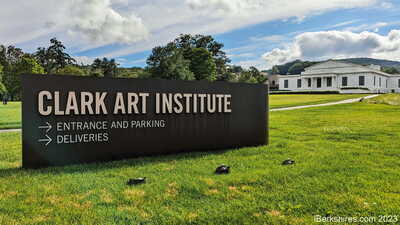 |
WILLIAMSTOWN, Mass. — On Tuesday, Oct. 22, the Clark Art Institute's Research and Academic Program presents "Here, Low, In This River Bend," a lecture by Adrian Anagnost (Tulane University / Clark Fellow), who charts a cross-cultural history of visualizing territoriality in the lower Mississippi River Valley and the Gulf of Mexico.
This free event takes place at 5 pm in the Manton Research Center auditorium.
According to a press release:
Among Indigenous inhabitants, the area that would become New Orleans was known as Bvlbancha—the land of many tongues, or many waters. This region was located at the threshold of land and water and, by the eighteenth century, at the borders of empires—where multiple approaches to territorialization overlapped. For this lecture, Anagnost brings together Indigenous Plaquemine material culture with environmental history, European cartography and artistic practices, and embodied approaches to land management.
Adrian Anagnost is associate professor of art history and core faculty of the Stone Center for Latin American Studies at Tulane University. Anagnost's research and teaching is centered on the persistence of colonial spatiality for modern urbanism and contemporary art across the Americas. Author of Spatial Orders, Social Forms: Art in the City in Modern Brazil (Yale University Press, 2022), which examines the politicized intersections of art, architecture, urbanism, and landscape in Brazil during the 1920s–1960s, Anagnost was also the co-leader of a 2021–22 Mellon Sawyer Seminar on comparative commemorations, exploring art, memory work, and activism surrounding the continued spatial legacies of slavery and displacement in sites including Bvlbancha/New Orleans,Tenochtitlan/Mexico City, Mi'kma'ki/Nova Scotia, and Cibuquiera/St Croix. At the Clark, Anagnost will be completing a book on landscape, colonialism and ecology at the Gulf of Mexico and pursuing research on contemporary art's preoccupation with Amazônia.
Free. Accessible seats available; for information, call 413 458 0524. A reception at 5 pm in the Manton Research Center reading room precedes the event.
Tags: Clark Art,