North Adams Property Owners to See Tax Rates Fall, Bills Rise
NORTH ADAMS, Mass. — The City Council on Tuesday voted to maintain the split tax shift, resulting in a drop in the residential and commercial tax rates.
However, higher property values also mean about a $222 higher tax bill.
The vote was unanimous with Councilor Deanna Morrow absent.
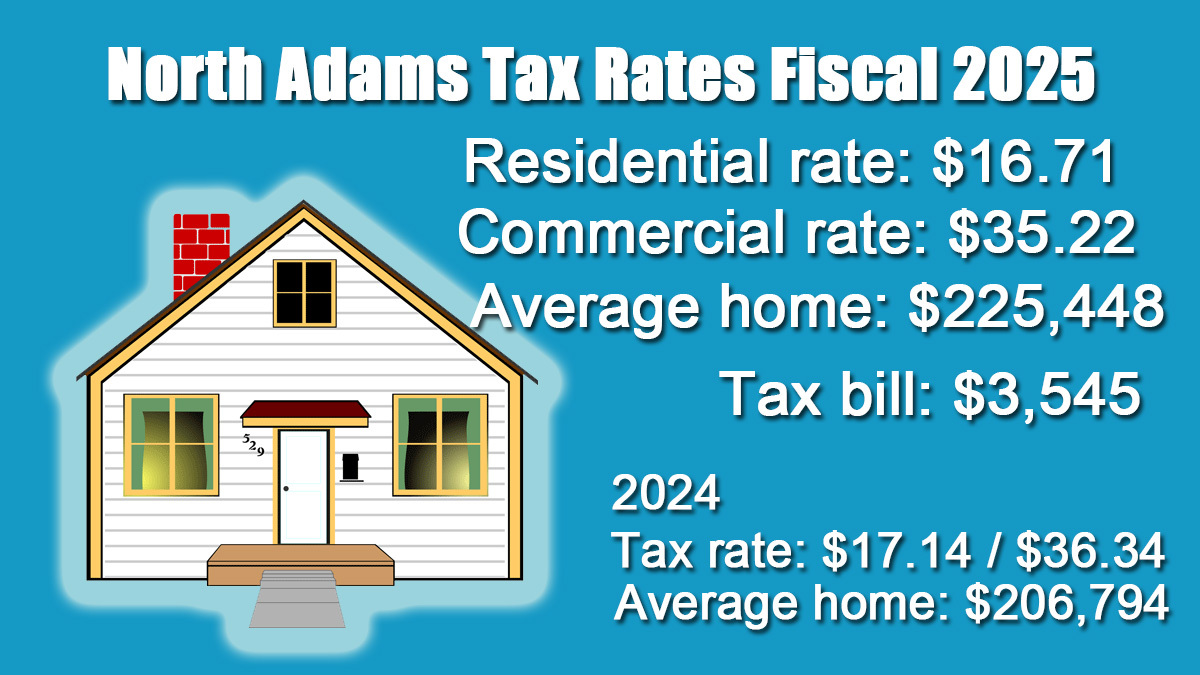
Mayor Jennifer Macksey recommended keeping a 1.715 shift to the commercial side, the same as last year. This sets the residential rate at $16.71 per $1,000 property valuation, down 43 cents, and the commercial/industrial to $35.22, down $1.12.
This is the lowest property tax rate since 2015, when it was $16.69.
"My job as the assessor is to assess based on full and fair cash value in an open market, willing buyer, willing seller, arms-length sales," said City Assessor Jessica Lincourt. "So every year, I have to do a sales analysis of everything that comes in."
All that documentation also has to be reviewed by the state Department of Revenue.
The average single-family home saw its value rise by $18,654 over the past year to $225,448 for a tax bill of $3,676. Residential values are up 66 percent from fiscal 2020.
Overall, the total property value of the city is $1.093 billion, up $86 million over last year.
The largest increase is in residential, up $72.4 million; commercial and personal property are up about $7.3 million and $7.1 million, respectively, while industrial properties dropped in value by nearly $1 million.
Lincourt said residential homes overall are up about 9 percent, in line with other communities.
"Our assessed values have been increasing steadily since fiscal year 2020," she said. "When we do that the tax rate does drop so it has been dropping since fiscal year 2020."
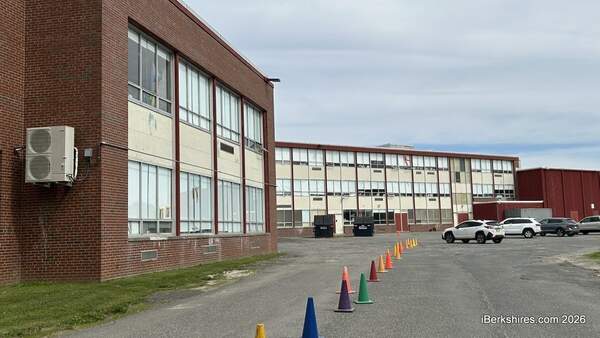
The primary reasons for the growth in the residential category include Johnson School that is now at 100 percent taxable value (up from 75 percent last year), significant improvements at Mohawk Forest at $1.1 million, the condominiums at GreylockWorks at 50 percent completion, and new homes and improvements to other homes.
Lincourt noted that Norad Mill has shifted from industrial to commercial because of the businesses inside it. New commercial values also include the storage facility at Hodges Cross Road that added $963,000, and the new building at Porches that's 45 percent complete. Also the event spaces and commercial condos at GreylockWorks, the new truck facility for Holland Co. on Curran Highway, an East Main Street structure that had significant renovations, and the separation of the Burger King property from the former Kmart plaza.
The 2,641 residential/open space properties are valued at $867 million and the 256 commercial properties at $130 million. Residential accounts for 65 percent of the tax base.
New growth accounted for about $15 million, largely in personal property and residential.
The total tax levy is $22,445,105. A single tax rate for fiscal 2025 would be $20.53.
"This has nothing to do with the school vote. School is not part of this budget," Lincourt said. "You voted on the school in October. We did our budget in the spring."
Reviewing frequently asked questions, she said short-term rentals are residential and by law cannot be assessed as commercial and that hotels do pay commercial taxes.
Walmart is the largest commercial taxpayer at $363,134.72, not counting personal property.
Also assessed businesses within the Massachusetts Museum of Contemporary Art paid $43,643 in real estate and personal taxes. And if you want an abatement, be prepared to open your doors so she can compare her assessment.
Lincourt said there's no way to take into account outside economic factors affecting housing prices or other costs to homeowners.
"It's not easy to get up here and tell people in a community like ours, you know, your taxes are going to go up again," she said. "I know how much your groceries cost. I know how much your gas bill is.
"Unfortunately, I may not take those factors into account. I just have to look at the data and go with that."
Preliminary tax bills have gone out based on last year's tax rate plus 2.5 percent. The "real" tax bills will go out in December.
The council also approved revised classification and compensation plans for the public works and police departments based on new contracts with those unions.
The mayor said the total cost will be about $400,000, including the Fire Department contract, and she will request a transfer out of stabilization.
The benefits will largely be seen in steps for police and fire from $3 to $6; for highway, $2 for each of two years and $1 in the third year.
"We still have a lot of work to do as far as salaries go," said the mayor. "We did a comp study [for police] similar to what we did with highway and the Fire Department, and it came back that we needed to be more competitive across the board ... we still are lagging, but we are lagging the most in the Highway Department, so this is a first step to getting out in front of that."
Highway foreman John Hinkell thanked the mayor for giving the Department of Public Works union step up on negotiations.
"We're the lowest paid DPW in the county, and we're on the bottom 10 percent in the whole state," he said.
Councilors expressed their appreciation to the public employees for their work and passed the C&C plans to second reading and to be published.
Tags: fiscal 2024, property taxes, tax classification,