Governor Thanks Firefighters, Asks Public to Contain Fire Risk
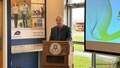
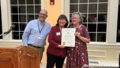
MIDDLETON, Mass. — Governor Maura Healey visited the Middleton Fire Department to thank firefighters and first responders who have been working to contain brush fires in the area and across the state over the past few weeks.
More than 450 fires have burned over 1,500 acres since Oct. 1 in Massachusetts, including two ongoing fires in Middleton, and air quality continues to be affected in many communities.
Multiple fires remain active and have proved difficult to contain due to extremely low rainfall in the region over the last two months.
The Executive Office of Energy and Environmental Affairs (EEA) has declared drought conditions affecting nearly the entire state. The National Weather Service under guidance from the Department of Conservation and Recreation (DCR) has issued a red flag warning for all of Massachusetts due to this critical fire weather pattern. Groundwater levels in many regions are declining, which means that the lakes and ponds that firefighters use to fight many of these fires are providing less water to work with, underscoring the need to conserve.
"Massachusetts is experiencing a historic drought, which is resulting in brush fires across the state. I'm grateful to the firefighters and first responders who have been working hard, day in and day out, to keep their communities safe. We appreciate the immense effort and sacrifice they are putting in, and the risks they are facing," said Governor Healey. "Drought conditions and wildfire risks are ongoing. There are steps everyone can take to minimize risk, protect their communities, conserve water and support our firefighters. Residents, businesses and facilities should minimize their water use as much as possible, and there should be no outdoor fires at this time. Our firefighters are working hard and making considerable sacrifices to battle these fires on our behalf. Let's do all we can to avoid making their jobs any harder."
The Healey-Driscoll Administration has been providing emergency services, coordination assistance, and resources through the Massachusetts Emergency Management Agency (MEMA), Department of Conservation and Recreation (DCR), Department of Fire Services (DFS), the State Police, the National Guard, Department of Environmental Protection (MassDEP), Department of Public Health (DPH), and the Department of Transportation (MassDOT).
The Department of Fire Services is supporting local fire departments with rehab units for firefighter health and safety; Incident Support Units that offer communications, conferencing, and mapping capabilities in the field; drones and pilots to provide incident commanders with traditional and thermal imagery from the air and assist in resource deployment; and off-road vehicles to move personnel in remote areas. DFS has also provided local fire chiefs with Fire Code citations to support local outdoor fire bans and associated public education messaging. The Statewide Fire Mobilization Plan is coordinating delivery of firefighters and apparatus from across the state so that local departments and mutual aid aren't overwhelmed by large-scale, long-term incidents.
MEMA is working daily with DFS, DCR, MA National Guard, and the Executive Office of Public Safety on state agency coordination, to ensure support of communities battling wildfires, including water drop missions. MEMA's dispatchers have processed 16 mobilization requests of the State Fire and EMS Mobilization Plan, to augment mutual aid in impacted areas when requested. MEMA's Mobile Emergency Operations Center has been deployed as the unified command post in Middleton since Oct. 28 and the agency's Local Coordinators have provided on-scene support in multiple communities and continue to assist with logistics and other coordination needs as they arise in cities and towns across the state.
DCR's Bureau of Forest Fire Control is assisting local fire departments across the state with response, tactical, strategic planning managing and monitoring of all active wildfires. DCR wildland firefighters and fire control staff are providing fire detection support and mapping from DCR Fire Towers and supporting on the ground firefighting. DCR is also collaborating with neighboring state fire managers and Region 9 U.S. Forest Service staff on fire advisory, available resources and situational awareness. DCR has requested assistance in fighting the state's ongoing wildfires through the Northeast Compact, and as a result, firefighters from New Hampshire and Maine have responded to provide assistance. DCR has also issued a temporary ban of all open flame and charcoal fires within state park properties.
About 45 percent of Massachusetts homes are in or near areas at severe wildfire risk, meaning that any significant fire will put people and property in danger. Because any outdoor fire will spread quickly and become very difficult to control, local and state officials are asking residents to follow these fire prevention tips:
- Remember that burning yard waste is prohibited statewide from May 1 to Jan. 15 and prohibited year-round in some communities.
- Refrain from any outdoor cooking and heating activity, including those that involve fire pits, solo stoves, chimineas, etc. Many cities and towns have implemented temporary restrictions on any outdoor fires.
- Use extra caution with lawn tractors, leaf blowers, all-terrain vehicles, and other power equipment. Sparks, hot engines, and spilled gasoline can ignite dead leaves, dry grass, and other combustibles.
- Dispose of ashes from fireplaces and wood stoves in a metal can, douse them with water, and cover them with a tight-fitting lid. These ashes can remain hot enough to ignite combustibles long after the fire goes out: never dump them outdoors or in the trash.
- Fully extinguish all smoking materials in a heavy ashtray with water or sand. Never discard cigarette butts, matches, or other materials over a porch railing, out a car window, or into dry vegetation.
Tags: fire safety,