

Aggie Commissioner Stresses Food Access During Berkshires Tour
.jpg)
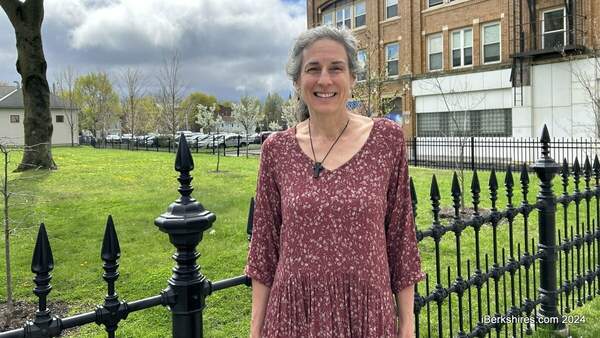
Sarah and James Schultz of Red Shirt Farm. They have continued their community-supported agriculture program in addition to the new farm store.
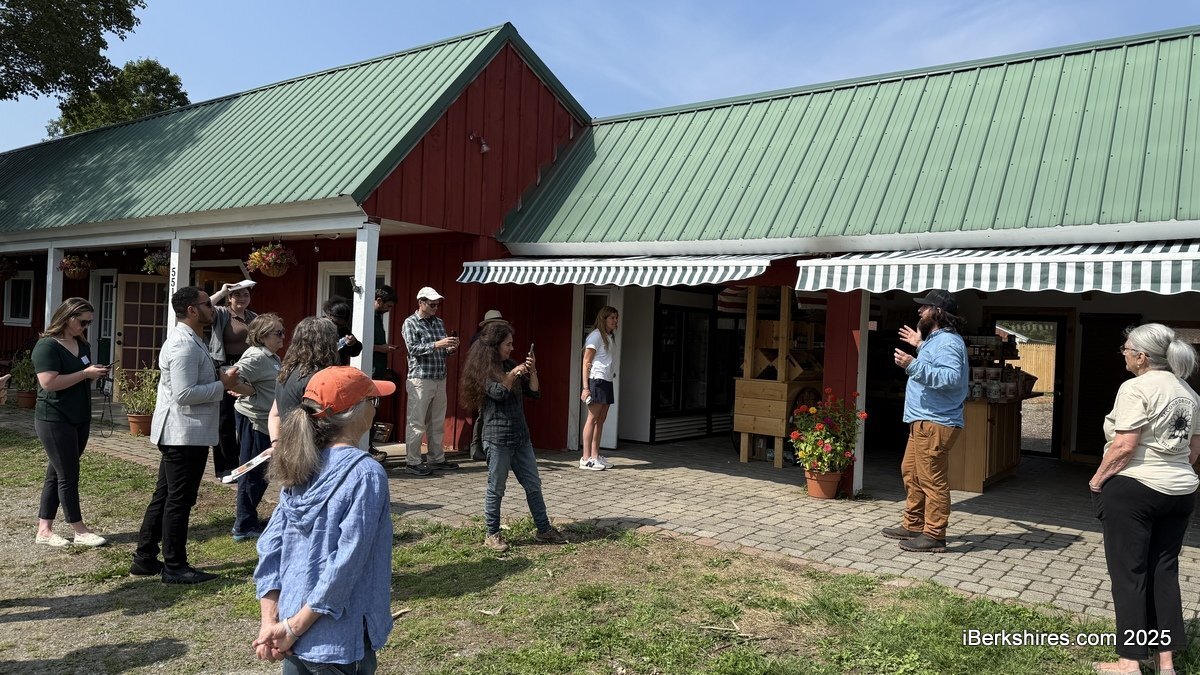
This was evident on Friday, during state Agricultural Commissioner Ashley Randle's tour of four of the county's agricultural enterprises: Second Drop Farm and Red Shirt Farm Store in Lanesborough, Multicultural Bridge's Solidarity Farm in Great Barrington, and Sheffield Farmers Market.
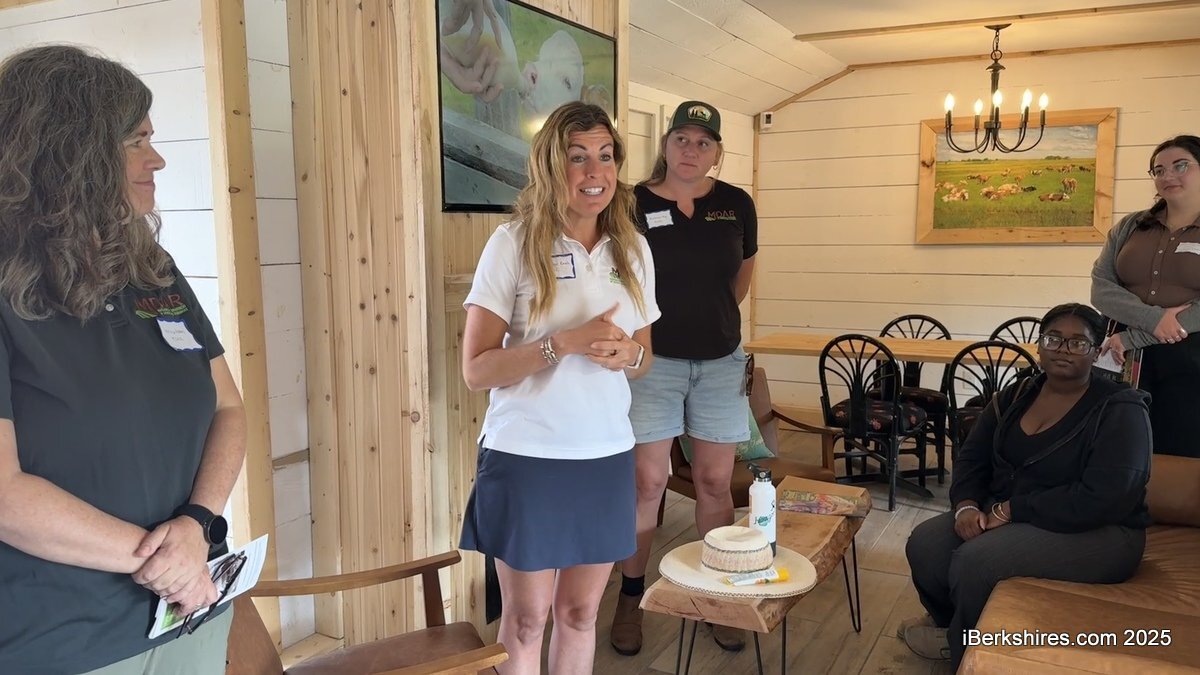
"The theme has been community and also food access. So, I think when we saw the first farm store at Second Drop Farm and now at Red Shirt Farm, food access has really resonated, especially at a time when we see one in three individuals across the state that are food insecure," Randle said.
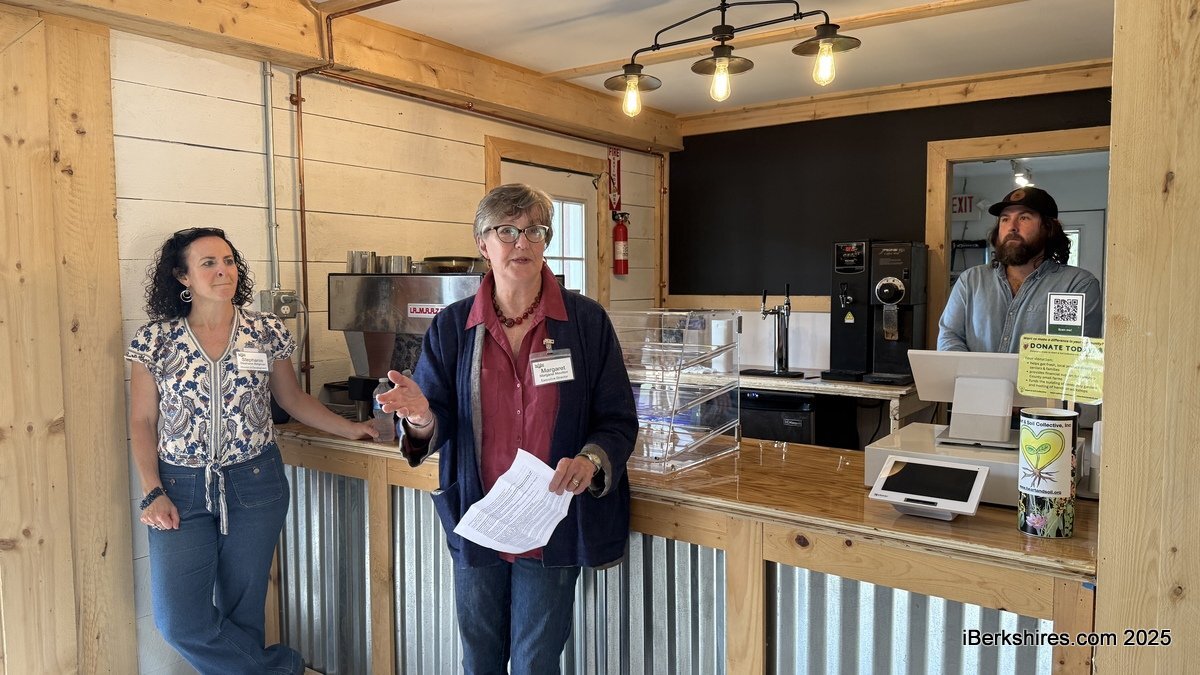
Red Shirt opened its farm store and community commercial kitchen on Route 7 in May to supplement the 10-acre organic produce and heritage breeds venture. Second Drop uses sustainable practices in its "you pick" berries and flower fields and collaborates with 15 other farms in its farm shop.
One of the barriers contributing to food insecurity in the Berkshires include transportation availability of local nutritious food because of the distribution channel or food access points, the commissioner said.
"So with Red Shirt Farm, it's been great to see what they're providing for the community, at the same time supporting other local businesses and the economic impact that it has in communities across the Berkshires …
"Farms are small businesses and part of the fabric of the community to be able to support one another and complement one another in what they're producing and what's available to residents in the community."
The tours for state Department of Agricultural Resources officials were organized by the Great Barrington-based nonprofit Berkshire Grown, which supports local farms by creating community partnerships, advocating for policies that support agriculture, and creating education surrounding agriculture, Berkshire Grown Executive Director Margaret Moulton said.
Berkshire Grown is one of nine buy-local groups that work to promote and inform the public about agriculture in Massachusetts, she said.
"We don't work alone. We work as partners all the time and support each other … none of us could do the work we do without our community partners," Moulton said.
During the Second Drop Farm tour, it was pointed out how Lanesborough was founded on agriculture.
The farm has a long history dating back to 1762, when it was founded by William Bradley. The Bradley family were prominent in the area, helping build a church that can be seen from the modern-day farm, and a school house, said Patrick Elliott, one of the farm's owners.
Today, the name is still known, with the Bradley Farm Trail on Mount Greylock being named after one of the family.
Elliott opened the farm in 2020 with his wife, Samantha Phillips, and mother, Mary Elliott. He highlighted some challenges farmers face in the area, including the scarcity of accessible farmland.
During the pandemic, people flocked to rural areas which resulted in the increase in property prices, he said.
"Oftentimes, land access is the biggest barrier for new beginning farmers or farmers looking to expand their operations, it's land access and labor," Randle said.
"When we look at agriculture … it's our heritage. It's our foundation. In the state, many of the communities were built around agriculture, and when there are difficult times, or even in good times, you look to your neighborhood farmer or your local farmer for produce, meat, dairy.
"And at [MDAR] that's what we're really trying to invest in, is the local food supply chain, including distribution, processing, and the entire food system because a lot of times farmers are looking to also not only provide for their local community, but across the state or sometimes the region. And if you can work not only across the state, but as a region, it builds a stronger food supply system."
With the loss of the Berkshire Mall, one of the biggest sectors in the town's economy is farm business, Berkshire Grown Board President Sarah Gardner said.
According to the state 2022 Agriculture Census, the market value of products sold in the Berkshires is $36,008,000. The average market value of products sold per farm is $76,499.
"A lot of towns are not supportive of farms and farmland protection because they don't understand that farms are businesses. They don't understand agriculture," Gardner said.
"They may think of farms as 'open space' thinking it's just pretty land and not necessarily understanding that farms create jobs, pay taxes, make sales, and contribute to the local economy."
Small farms don't get the benefits large farms do from government subsidies, such as being guaranteed a certain price if they do not make as much as anticipated or if something happens to their crops, said James Shultz, one of Red Shirt Farm's owners.
"That doesn't happen at all on a small-scale level. If we have a crop failure or weather crisis or something like that, it's a loss. It's a loss for us, but really, too, I think that one of the biggest obstacles is just is competing with a conventional food system," he said.
There are also misconceptions surrounding the local agricultural industry. People often believe that food should be inexpensive and available year-round. However, they don't take into consideration that locally grown food is often grown organically and agricultural labor is expensive, Schultz said.
"So, when they look at our prices we need to charge to: one, just to grow the crop well, and two, to try to pay a living wage to our labor. Our food, necessarily, is slightly more expensive than the cheap stuff that they're going to find in the store," he said.
One of the things that would be hugely helpful to small farms that "really hasn't happened yet," world be to establish "communal resources for farms."
Bookkeeping, for example, as every small farm has to have their own bookkeeper.
"If we centralize that and share the cost, instead of paying somebody $60, $70, or $80 an hour for one farm, that could be a shared cost for many farms," Schultz said.
Additional aids to help fall farms also include housing for labor and helping source labor, he said.
"There's the whole [H-2A Temporary Agricultural Workers] program which brings in foreign workers legally to help on farms, but it's really hard to navigate that process and to get people here. So that would be another thing as well," he said,
Red Shirt Farm has been" very fortunate" in getting grants but that's because Schultz has 26 years experience applying for grants.
"But a lot of farmers, that's not their forte," Schultz said.
Having someone who can aid small-farm owners in applying for grants, advertise, marketing, and other aspects would be helpful, he said.
Tags: agriculture, Berkshire Grown, farming, state officials,