Pittsfield's Camping Ordinance Debate Resumes Tuesday
PITTSFIELD, Mass. — Discussion about the proposed "Camping on Public Property" ordinance will continue at Tuesday's City Council meeting, with the ordinance and five directly related petitions on the nearly 1,000-page agenda.
A failed motion to continue the last meeting beyond the four-hour limit meant that the controversial proposal was continued, along with several other items.
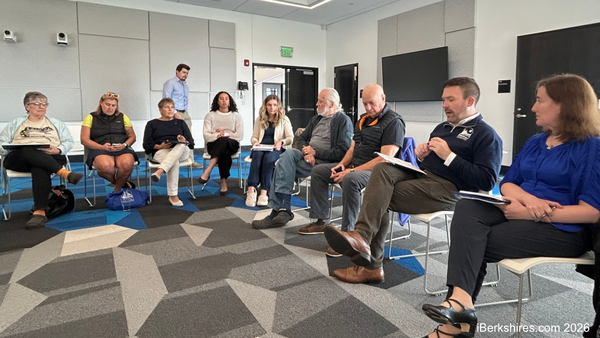
During Wednesday's Homelessness Advisory Committee meeting, Director of Community Development Justine Dodds reported that Mayor Peter Marchetti has been communicating with the "Homes not Handcuffs" advocacy group. Members have spoken against the proposal consistently during open microphone and have urged better solutions.
"[Marchetti] said that he is looking for a solution to the behaviors in downtown rather than anything else, and that he is supportive of any solution that may come forward," she told the committee.
"As you may be aware, the criminalization has been taken out, and there have been some changes. He met with the Board of Health, and they're interested in also providing some input into this as well."
The mayor has been open to amendments since proposing the ordinance months ago, removing criminalization language, changing the fine structure, and adding exceptions for individuals sleeping in cars or escaping danger.
Director of Public Health Andy Cambi has asked that councilors refer the ordinance to the Pittsfield Board of Health for review and consultation.
He cited four reasons for the request:
1. The enforcement of this ordinance is being assigned to the Department of Public Health. The Board of Health oversees the Health Department.
2. The issues the ordinance seeks to address — such as sanitation, waste disposal, and
exposure to environmental hazards — are fundamentally public health concerns that
directly impact the well-being of all Pittsfield residents.
3. The Board of Health, as the city's established public health authority, is best positioned to provide expert guidance in ensuring that the ordinance is effective, enforceable, and consistent with best practices in public health.
4. Collaboration between the City Council and the Board of Health will help ensure that the ordinance balances the goals of public safety, community health, and the fair treatment of affected individuals.
Cambi also asked that the city partner with the Board of Health to develop an enforcement framework that prioritizes public health.
Ward 1 Councilor Kenneth Warren proposed eight amendments to the ordinance to fine-tune language, restrict enforcement to the Downtown Creative District, and amend the section about storage of personal property that he finds authoritarian.
He also asked that if approved, the ordinance take effect on Sept. 15, 2025, conditioned by the mayor reporting back to the City Council by its first meeting in September that it has investigated and explored alternative locations for temporary shelter, alternative camping sites, and/or overnight bathroom facilities.
"In addition, this report shall indicate the status and/or progress of the city's provision of storage lockers for personal property belonging to the unhoused," Warren wrote, explaining that this would ensure that these issues would receive some focused attention.
Ward 5 Councilor Patrick Kavey and Ward 6 Councilor Dina Lampiasi have requested that the administration provide quarterly reports to the City Council detailing enforcement actions taken under the city's anti-camping ordinance. The two also petitioned for the development of a designated emergency safe camping plan for unhoused individuals in the city, and a written opinion from the state Attorney General's Office regarding the legal standing and enforceability of the proposed ordinance related to camping in public spaces.
Community members have cited lawsuits in other communities over similar ordinances and cautioned about legal issues.
"In light of legal developments at both the state and federal levels, it is in the City's best interest to ensure that our local ordinances remain constitutional, enforceable, and consistent with current legal standards," they wrote.
"We further request that, once this guidance is received, a summary be provided to the
Pittsfield City Council and made available to the public, so that all stakeholders can move forward with clarity and confidence."
Tags: camping, homeless, ordinances,