Rabbi Lynn Liberman came to head Congregation Knesset Israel Aug. 1 of this year. She came to the Berkshires from St. Louis, Mo. where she had been seven years as an associate rabbi. While there, she founded Doorways, an organization dedicated to housing people with HIV/AIDS. She had had her own pulpit before that in Florida, she said, and she grew up at the other end of the Appalachian Mountains. “In a funny way, I recognize them.â€
She was ordained in 1993, and part of third entering class of women rabbis at the Jewish Theological Seminary of New York. Women rabbis have been ordained in her Conservative movement since 1984. There are close to 200 women ordained as conservative rabbis now, she said: a small but significant number. Conservative women rabbis serve in the United States, Europe, Israel and South America, though there were more in South America before the crisis in Argentina.
Liberman grew up in Knoxville, Tenn., and went to the University of Wisconsin. “I grew up in a small community like this,†she said. She was connected to being Jewish, but there were not a lot of choices. So she got involved in what there was: JCC, youth group, synagogue, and Jewish summer camp in Wisconsin. “It gave me the lesson that I could be a normal kid, playing basketball . . . and yet do it in a Jewish way.â€
The Conservative Jewish movement had just ordained its first woman rabbi when she graduated the University of Wisconsin. She graduated with a degree in sociology, grabbed a handful of job applications and went to Israel for a year. She was looking at rabbinical school and jobs in social service and Jewish education. Rabbinical school seemed to touch on both other fields. It seemed like a mechanical decision at the time, she said, but something probably guided her to it. She loves being a rabbi, especially a congregational rabbi. “There’s never a day without something needing attending to.â€
Students need an undergraduate degree for rabbinical school. It lasts five to seven years. Liberman learned Biblical, Rabbinic and modern Hebrew and read the great works in those languages. She learned textual interpretation, and also Aramaic, which is still spoken in one small village in Eastern Europe, though in a more modern form than the Aramaic of the Talmud.
Being a rabbi is like being clergy in other denominations, Liberman said. She has developed friendships with other clergy in other areas. Her work is to guide her community in their connection to God, strengthening their roots and understanding. It is teaching, counseling, planning, and administration. She supervises programs at Knesset Israel, makes sure the kitchen is kosher, and sits with families experiencing the loss of loved ones.
In the pulpit, she gets to touch on a lot of areas, she said, celebrating life cycle events with the congregation and drawing closer to God. “That is a very particular aspect of our place in the world,†she said; “It’s a God given place. First and foremost, I’m a person of faith.†It is vital that people discover a faith tradition, whatever it is — Christian, Ba’hai, Muslim. Faith explains the unexplainable, “even if not a good explanation.†It explains and celebrates what makes a sunrise, or how to get through a difficult situation. All faiths are important, and should not be twisted, she said.
What does it mean to be a Conservative Jew? The Jewish world is divided by titles: Orthodox, the most traditional; Reform, the most liberal; and Conservative, in the middle. “Conservative Judaism strives to have an outlook that says tradition is important,†Liberman said. “Jewish law is born out of it; it is a guiding force. But we are living today.†Conservative Judaism strives to make 4,000 year old tradition relevant in the modern world and still maintain traditional authenticity. It deals with questions the Talmud could not address directly: What does it mean to drive a car? What does it mean to observe Shabbat today?
The Jewish faith recognizes cycles of time. In a given day, a Jew is conscious of morning, noon and evening, Liberman said. The Jewish day stretches from daybreak to nightfall. “You wake up and acknowledge the miracle or waking. There is a prayer that thanks God for giving back your soul.†Shabbat is a day of rest that ends each week. “You are coming to a stop. You’re saying, ‘I’ve had my creative influence on the world . . . now it is time for me to rest and be at peace.’ †Shabbat is a time for family, relaxation, study. Some people look at it and say, it is bound by so many rules, she said — the rules are in fact measures of freedom. “If one thing we don’t do on Shabbat is answer the phone, for 25 hours the phone won’t ring,†and she will have no guilt about it. As a student, she loved Shabbat. She would not study on Shabbat, and she began the week feeling rested.
The Jewish calendar is based on a lunar month. It is marked by annual events and new year festivals. The faith greets life cycle moments with rituals: births, coming of age, weddings and deaths. Conservative Judaism is interested in connecting with current life cycle changes too, Liberman said. Conservative congregations write new rituals for new changes: the moment when parents say goodbye to college-bound kids, for example. “The parent saying, for 18 years this child came through the doors of my house every day. Now he will not.â€
Some women’s rhythms are not so well understood, and the congregation has created new ceremonies for them. What does it mean when a women gets divorced? There is a a legal ritual already set for divorce, but the faith’s rituals go beyond that. They recognize the emotional transition. They also recognize menopause.
Judaism is bound up in ritual and community and family, Liberman said. All rituals, large and small, are meant to be like doorways. She struggles to teach congregants that doing ritual is important and meaningful, but just doing a ritual is only half of it. Hanukkah is not just lighting candles; it is religious freedom. “People get caught on the surface of an activity.â€
Think of baseball, she suggested as an example. The 7th inning stretch, what’s that about? It was instituted originally to relieve people who had been sitting for ages. It has gathered a mystique around it. At a Chicago Cubs game, it has become a ritual: everyone stands and sings a particular song.
Last year, she was in St. Louis after Sept. 11. The stadium substituted “God Bless America†for “Take Me Out to the Ball Game.†In Israel and Europe, checking bags is common, but she had never before come to a baseball game and had a bag checked. Then at the 7th inning, when she expected to glory in baseball, she was instead reminded to be proud of America. People needed that ritual moment, she said. She came back later and found the old song reinstated, and she wondered, have we moved pass Sept. 11?
People add ritual to life. “When you wake up, what do you do?†Liberman asked. She brushes her teeth — otherwise the whole day feels weird. Then she wakes the kids and showers. She asked people, “if you don’t do that, what happens to your day?†Rituals give order and meaning to existence. Rituals in many faith traditions surround heart-wrenching moments, like the death of a loved one. Jewish rituals have a passage to them. At the end of a life, the Jewish rituals begin with supporting the family at the moment of loss. They carry through the funeral and afterward. They create a safe, supportive community and a guide to get through something that is, without them, profoundly overwhelming.
Jewish life in the Berkshires is perhaps somewhat richer than it was in Knoxville, Liberman said. The Berkshires have a number of Reconstructionist and Reform congregations. Knesset Israel is the only Conservative congregation. The Jewish Federation in Pittsfield serves a kosher senior hot lunch. Because of the Berkshires’ geographic proximity to Boston and New York, there are Jewish elements in the Berkshire summer season, like Klezmer bands and Golda’s Balcony, William Gibson’s play based on the life of Golda Meir at Shakespeare & Company. Berkshire Hadassah, primarily a women’s group, supports hospitals in Israel. And Liberman said she had been thinking it has been a while since the congregation had a kosher wine tasting.
Liberman has lived in Israel numerous times, she said. “It is important place to the world . . . It is a remarkable country. It was the gift given to Abraham when he was told to get up and go somewhere.†Moses led his people toward it for 40 years and died before he reached it himself. Israel today has a beautiful Ba’hai Temple, Christian and Muslim sites, and a unique history, because it is important to so many faiths.
If you would like to contribute information on this article, contact us at info@iberkshires.com.
Your Comments
iBerkshires.com welcomes critical, respectful dialogue. Name-calling, personal attacks, libel, slander or foul language is not allowed. All comments are reviewed before posting and will be deleted or edited as necessary.
No Comments
MCLA Announces Four Finalists for Next President
NORTH ADAMS, Mass. — Massachusetts College of Liberal Arts announced four finalists for the position of president, following a national search.
The finalists were selected by the MCLA Presidential Search Committee and will participate in on-campus visits scheduled for the weeks of April 6 and April 13.
The successful candidate will replace President James Birge, who is retiring at the end of the term.
The four finalists are David Jenemann, Michael J. Middleton, Sherri Givens Mylott, and Diana L. Rogers-Adkinson.
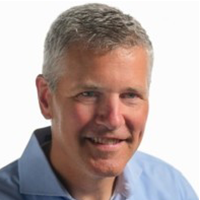
David Jenemann
David Jenemann is dean of the Patrick Leahy Honors College and professor of English and film and television studies at the University of Vermont, where he oversees recruitment, retention, curricular innovation, and advancement for an interdisciplinary college serving undergraduates from across the university, including UVM's campuswide Office of Fellowships, Opportunities, and Undergraduate Research.
An internationally recognized scholar, he has published three books and numerous articles, with research spanning intellectual and cultural history, mass media, and the intersection of sports and society.
He holds a doctor of philosophy from the University of Minnesota and completed the Institute for Management and Leadership in Education at Harvard Graduate School of Education.
For many years, the town of Lee has had to struggle with an outdated and crowded Police Department station located in its Town Hall, which was built in 1874. Its nearby fire station was originally constructed to house horse-drawn firefighting vehicles. click for more
The organization had successfully grown over the past 20 years and, by the end of the decade, would see its campaign drives pass the $100,000 mark and the number of agencies under its umbrella grow to 17. click for more
The City Council got an update on what's up in the school system and its president was inducted into the mayor's Women's Leadership Hall of Fame. click for more