Two centuries of women's history in Williamstown is topic of project

Print Story | Email Story
When Fannie Tash was 11 years old, she started working as assistant in her father, John Tash’s, grocery store on Water Street. That was in 1922, and she ran the store for more than 50 years, its candy counter serving as a magnet for generations of Williamstown children. And women in the family of Roxana Freeman Duncett were among the first African-American women to travel to Liberia as teachers in the 19th century, subsequently returning to Troy, N.Y., to work in the first school there for African-American children. These and other women in the work force in Williamstown, through 1953, are the focus of a research project sponsored by the House of Local History and underwritten with a $2,500 grant from the Massachusetts Foundation for the Humanities. The collaborative grant program is in conjunction with the Bay State Historical Society. Titled “Becoming Visible: Two Centuries of Women’s History in Williamstown,” the project will be presented at the HLH Sunday, March 26, at 2 p.m. Scholar-in-residence Marla Miller, with the assistance of Jill Mudgett, collaborating scholar, examined the lives of women in Williamstown as revealed in records through 1953, focusing on women and work. Miller is assistant professor of history at the UMass-Amherst; Mudgett is a graduate student in the history department. Miller, whose specialties include U.S. women’s history and the social history of Colonial America, completed a comprehensive inventory of the historical assets in the village center, a project in 1997-98 initiated by the Historical Commission and funded by the Mass. Historical Commission. In the course of that research, she noted that she found evidence of extensive entrepreneurial activity by women at the turn of the century — references to women who were shopkeepers, dressmakers, store managers, peddlers. She worked on a similar project at Historic Deerfield, where she developed a guide to women’s history that had been hidden within the manuscript collection because it was overlooked by traditional finding aids. Miller earned her Ph.D. in U.S. history in 1997 from the University of North Carolina at Chapel Hill, where her dissertation was titled My Daily Bread Depends Upon my Labor: Craftswomen, Community and the Marketplace in Rural New England, 1740-1820. Miller also received her M.A. from UNC, and her B.A. in the History of Culture from the University of Wisconsin at Madison in 1988. Mudgett, a Ph.D. candidate at UMass, holds an M.S. in American and New England studies from the University of Southern Maine, and a B.A. in historic preservation and women’s studies from Goucher College. In her scholar’s statement, Miller said that in her research, she “found colonial gentlewomen who managed the town’s most privileged households, freedwomen who migrated to Williamstown in the years following the Civil War, cotton (millworkers) who gambled on upward mobility by abandoning factory work to open their own dressmaking shops, and businesswomen who oversaw the day-to-day operations of stores owned — and so known in the historical records — by their husbands.” Miller wrote that the materials could potentially “continue dismantling longstanding myths about women’s participation in the public world of work. Calling Williamstown “an extraordinarily well-documented small-town community,” Miller wrote that the town “affords an unusual opportunity to investigate not only the ways in which women in rural Massachusetts have entered the work force from the Colonial era to the mid-20th century, but also the means by which that activity has been obscured in the documentary record.” “Pulling together and investigating further the clues and fragments ... yield[s] a picture of women’s labor history that will unsettle longstanding beliefs about women, work and business in rural Massachusetts communities,” she wrote. HLH curator Nancy Burstein, in the project description, wrote that the scholar-in-residence grant enables the organization “to begin the systematic documentation and interpretation of the role of minorities and other under-documented groups in the history of our community. “Despite the commonly held belief that married women did not enter the work force until the second half of the 20th century, documentary records from Williamstown — including newspaper clippings, census records, business directories, organizational records, and oral histories — indicate women in the work force far earlier, unsettling longstanding beliefs about the roles of women in rural Massachusetts communities.” “One of the most significant changes in the current approach to history has been an attempt to make it more inclusive. In the past, the lives and contributions of minorities, whether African-American, Native American, immigrant groups or women, have been neglected, giving the appearance of a past inhabited solely by white, protestant males,” she wrote. And while academic institutions and large museums have tried to shift their focus to include formerly excluded groups, and to alter the way history is taught, that shift is “harder for small, local historical societies without resources. “In order to present an accurate picture of a town’s past, and to be meaningful and relevant to its entire audience, it is incumbent upon local historical societies to preserve and present history that is inclusive of all elements of the town.” This week, Burstein said the research is a matter of “finding them and pulling them out.” “I’m really excited by it. As a feminist myself, I’m delighted to learn what we have in the collection about the accomplishments of women in Williamstown at a time when we thought women were just sitting home.”
If you would like to contribute information on this article, contact us at info@iberkshires.com.

Weekend Outlook: Hopping Good Fun

By Breanna SteeleiBerkshires Staff

Check out the events happening this weekend including First Friday, Easter events, music series, and more.

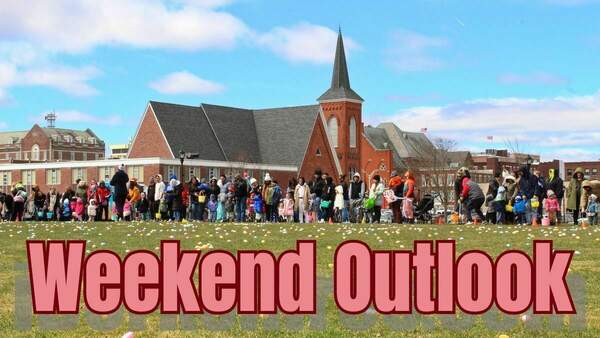
Check out our list of Easter egg hunts in the county for the family as well.

Editor's Pick

First Friday
Downtown North Adams
Time: 5 to 9 p.m.

Spring is here so kick it off with music, art, and games that will fill downtown North Adams for its First Friday event, themed "Clean and Green." 

Participating businesses will have extended hours and many galleries will host openings, closings, and other special events.

More information and event line-up here.

Multiple Days 

Adaptive Cultural Kitchen Clubs
65 Depot St., Dalton
Every Saturday in April from 12-1 p.m.

Bring your kids ages 5 to 9 to learn cooking with these hands-on lessons to build kitchen confidence and make snacks. To register contact BCArc Family Support at jmiddleton@bcarc.org or 413-464-7262, Ext. 119, or or Rania at rania@familieslikeoursinc.com or 413-854-3971

More information here.

Easter Rock Hunt at The Glen
Greylock Glen, Adams
April 4-12

Hike at the Greylock Glen and try to find as many painted rocks as you can on the Meadow Loop Trail.

More information here.

Friday

Paint and Snack Teen Programming
Berkshire Athenaeum, Pittsfield
Time: 1 p.m.

Enjoy snacks and soda and get creative with paint. For more information call the Youth Services Department: 413-499-9480, Ext. 203 or youngadult@pittsfieldlibrary.org

More information here.

Sunset Beaver Watch
Pleasant Valley Wildlife Sanctuary, Lenox
Time: 6 to 7:30 p.m.

NOTE: This event is full but you can sign the waitlist. More information here.

See the sanctuary's beavers in action. Hike about two miles to get a glimpse of what they do when they harvest trees.

Lilly of the Valley Bluegrass Solo
The Tap Room, Lanesborough
Time: 8 p.m.

Enjoy live music and food this Friday night. Bring your dancing shoes and enjoy bluegrass music.

More information here.

Saturday

Pancake Fun Run and Egg Hunt
Allendale Shopping Center, Pittsfield
Time: 8:45 a.m.

Join the Berkshire Running Center for its first pancake fun run and pickup surprises from the Easter Bunny along the way.

More information here.

Easter Bunny Hop Train
Berkshire Scenic Railway Museum, Adams
Departure Times: 11:30 a.m., 1:30 p.m., and 3 p.m. 

The Easter Bunny will hop onto the Hoosac Valley Train to greet families and give out colored eggs. 

Tickets in coach range from $4 to $22; first class ranges from $4 to $37. A first-class table, which includes seats for four, is $127.20. 

More information and tickets here.

Breakfast with the Easter Bunny
Shire Tavern, Dalton
Time: 8 to 11 a.m.

Includes a breakfast buffet and picture opportunities with the Easter Bunny. All of the proceeds go to benefit Strong Little Souls, a local nonprofit dedicated to supporting families affected by pediatric cancer.

More information and tickets here.

Hop on Over and Celebrate with Us
North Adams Commons
Time: 2 p.m.

Join the nursing and rehabilitation facility to celebrate Easter with photo ops with the bunny, sweet treats, and gifts. 

More information here.

North Adams Farmers Market
Hotel Downstreet, North Adams
Time: 9 to 1
 
Winter market runs the first Saturday of the month through May 1. Makers on Main will be operating next to the market with local artists and crafters. 
 
More information on the makers here and the farmers market here
 
Bennington Museum Reopening
Bennington, Vt.
Time: 10 to 4
 
The Bennington Museum reopens to the public with the annual student art show, hands-on activities, a reception, music, dance and the opening of the new Folk and Craft Gallery on the first floor. The Battle of Bennington exhibit will also be on display. The Antiques Appraisal Fair runs from 1 to 4 p.m. in the Paresky Education Center. 
View Full Story

More North Adams Stories