Williamstown's Historic Homes Featured on Tour
 WILLIAMSTOWN, Mass. — The saying goes, "If walls could talk what stories they could tell." The Williamstown House of Local History does not let "stories" that historic houses hold go untold, but unearths them through research.
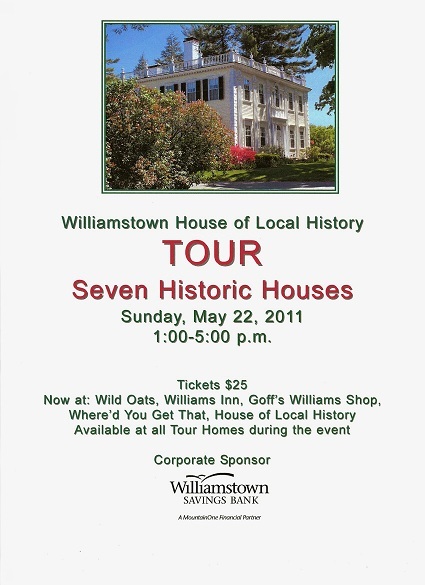
 On Sunday, May 22, the House of Local History will present a Historic House Tour featuring seven dwellings built in the 18th, 19th and early 20th century.
The oldest building on the tour is the Hopkins/Cushman house, which was built in the 1770s, according to information from the Registry of Deeds. The house was on an extensive tract of land in the northwest corner of Williamstown that Amos L. Hopkins bought in 1889. He maintained the house as living quarters for the staff that worked at his gentleman's farm, known as Buxton Farm.
After Hopkins died in 1912, the property changed hands several times and part of it was divided into parcels. In 1935, the name Buxton Farm was changed to Hopkins Memorial Forest. The property was five acres when present owners Michael and Lisa Rudolph Cushman bought it in 1997. They have remodeled certain areas of the house, and have added a half bathroom. But exterior of the front of the house remains true to its historical character.
 The "story" of the Danforth/Conforti house begins with Keyes Danforth Sr. and his wife, Polly, building a small house on Main Street that they lived in from 1819 to 1893. Their son Keyes extended the first floor of the house and added more bedrooms to the second floor.
 The land and house became part of the Lawrie Estate in 1906; Alvah Lawrie was president of American Aluminum Corp., which became Alcoa Aluminum. In 1953, the estate of Alvah Lawrie sold all of the land to Sprague Electric Co. and, in 1960, Sprague subdivided the land into building lots.
Over the years, several owners made renovations and additions to the Danforth House, such as putting in a pool and extensive gardens. Since buying the house in 1994, the present owners Michael and Licia Conforti have done some cosmetic changes and made a studio in a the barn/stable.
The Ide/Phillips House was designed by Ralph Adams Cram, a prolific and influential American architect. Among Cram's work are Philips Exeter Academy in Exeter, N.H.; the J.W. Morgan Post Office and courthouse in Boston and the Cathedral of St. John the Divine in New York City.
 Built by James M. Ide in 1910, the Ide House has been owned by many families. When Robert J. Widen, co-founder and president of R.J. Tannery, bought the house in 1943, "it became one-half house and one-half golf club," according to a quote attributed to Walden. Golf was a daily event as the home bordered the 14th hole of Taconic Golf Course. "A family dinner bell told us when it was time to leave the golf course each evening," Widen had said.
Widen's brother, William Widen, bought the G.A. Cluett/Nurmi House in 1943.
George Cluett built the house in 1912-1913 to provide rooms for the help and as a place to wash first carriages and then cars of the Cluett estate. Under William Widen's ownership, rooms were modified into kitchen, bath, dining room and parlor. The garage was converted into the "Big Room," where parties were enjoyed. In the Big Room, the fireplace is suitably very large with a huge flagstone hearth.
 Robert Nurmi is the present owner of the house.
The Sloan/Williams President House is situated on Main Street, where there is more foot traffic than in most parts of town. And people who have admired the house and wondered what the interior is like will be able to satisfy their curiosity by taking the Historic House Tour.
It was in 1801 that Gen. Samuel Sloan, who had served in the Revolutionary War, built the house that would become home to Williams presidents. Since 1858, 13 presidents and their families have lived in the 18-room house.
Though the President's House is used for official entertaining, a visitor would have no doubt that it is a personal residence. The signs are clear: photos of children displayed on console tables, a TV in the family room, and a dog stretched out in front of the fireplace in the living room.
 The mantels and interior carving on the only original fireplace on the first floor are of local origin. And the stairs are original, with side brackets carved with rosettes and lotus flowers.
 The Tenney/Bowden House on Park Street was built in 1903 by Sanborn Gove Tenney for his wife, Sarah, who wanted a grand and elegant house like one she had known in Bennington, Vt.
The Tenneys' daughter Sarah (Sally) Tenney Osburn was a very generous benefactor to several nonprofit organizations in town. When the house was bequeathed to Osburn, she lived there until she married late in life and sold the house. The next owners, Robert and Lee Dalzel, sold the house to George Roming in 1991. Since 2008, William Boden has owned it.
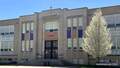
The Church Corner apartment building on Cole Avenue is one of a kind in town, as it was formerly a house of worship - St. Raphael Catholic Church.
 The church was built in 1891 with money raised by a group of 12 French-Canadians. John M. Cole sold the main parcel of land to Bishop O'Reilly for $1,500 and the total cost of building the church was $15,000. The first Mass was celebrated on April 5, 1889, though the church was not completed until 1891.
 The rectory was built 1894, at a cost of $5,000. It was a huge sum then, and parishioners made sacrifices to contribute and raise the money.
After World War II, the church was renovated, and new stained glass designed by Albert Roy was installed. At about the same time, excavation began on the basement, which would serve as a Parish Hall
When St. Raphael's was closed with a last Mass on May 27, 2007, a 117-year history ended. The town's Affordable Housing Committee stepped in and town meeting voted Community Preservation Funds to allow it to transform the church and rectory into housing.
 In January 2011, Church Corner became a reality, with eight apartments in all. The stained-glass windows and steeple have been removed, but the front double-door is the same one parishioners entered to attend Sunday Mass, baptisms, weddings ... and for those parishioners memories linger.
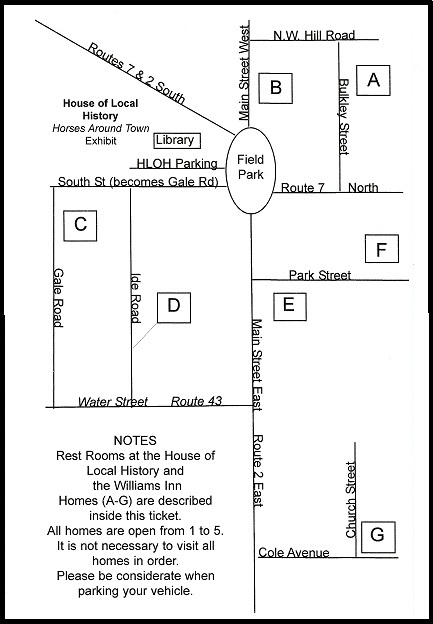
 The Historic House Tour will take place Sunday, May 22, from 1 to 5, rain or shine. Tickets at $25 may be purchased in advance at Wild Oats, Williams Inn, Goff's Williams Shop, Where'd Your Get That? and the House of Local History, or at all Tour Homes during the event.
Directors of the Local House of History will be head docents at each house, with volunteers assisting. Proceeds benefit the historic society.
 |
 |