BRTA Seeking Input on Transportation Fare Changes
|
|

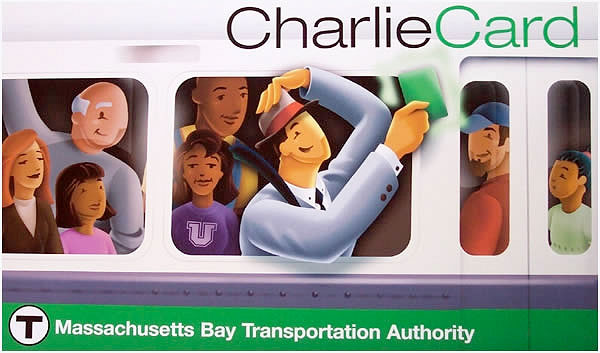 The BRTA is holding three public hearings next week on proposes fare changes that would include the introduction of the CharlieCard.
NORTH ADAMS, Mass. — The CharlieCard could be making appearance in the Berkshires soon.
The automated-fare smart card was introduced into the Massachusetts Bay Transportation Authority in 2006 with the expectation of gradually expanding it beyond the T to buses, ferries and commuter rail across the state
The CharlieCard is part of a proposal to restructure fares in the Berkshire Regional Transit Authority system.
The BRTA has been working over the past few years to eliminate unused stops and expand service along more traveled ways. It provides public transportation to 22 towns in Berkshire County and had a ridership of 600,000 in 2010.
The new fare structure was voted on at the BRTA Advisory Board's meeting on Nov. 29.
The transit authority is seeking input on the changes at three public meetings next week. It says the changes would be revenue neutral and would explore unlimited ride pass options, while also integrating the CharlieCard (which can be topped off at vending machines or online). A brochure about the changes can be found here.
Paratransit fares are expected to remain the same or decline.
Currently the full fare is $1.25 per zone (community) with a maxiumum charge for four zones and $21 for 20-zone pase Half-fares (elderly & disabled) are 60 cents and $10.
The new structure would be "Local" (in-town or an adjoining town, with Pittsfield, Dalton and Hinsdale as one Local); and Systemwide (three or more towns).
Riders using the CharlieCard would be able to change buses within 60 minutes, have free local transfers and a discounted systemwide transfer of $2.20.
Fixed route local fares would be $1.75 (85 cents) a ride or $1.40 (70 cents) on the CharlieCard. Local passes would be $13 ($10) for seven days and $52 ($39) for 30 days; systemwide passes would be $10 per day, $35 ($26) for seven days and $140 ($105) for 30 days.
The biggest changes would be in the school passes and the elimination of B-Cool passes; all the fares would be passed on full semester or 30 days. Fares for K-12 students would change from $75 a semester to $26 for 30 days and college students to $52 for 30 days (local); college student semester passes would be $250 systemwide.
Paratransit services would stay the same or be reduced in some instances.
Public meetings will be held:
• Monday, Feb. 25, in the North Adams City Council Chambers from 10:30 to noon
• Monday, Feb. 25, in the BRTA Board Room, One Columbus Ave., Pittsfield, from 1:30 to 3:30
• Tuesday, Feb. 26, in the Fire Station Meeting Room, 37 State Road, Great Barrington, from 10:00 to 11:30 a.m.
Comments may also be submitted in writing to:
BRTA, One Columbus Avenue, Suite 201, Pittsfield, MA 01201
Comments also accepted at info@berkshirerta.com or 413-499-2782.
Tags: BRTA, bus fares, bus routes,