BMC To Raze Houses For Expanded Parking

By Joe DurwiniBerkshires Correspondent
Print Story | Email Story

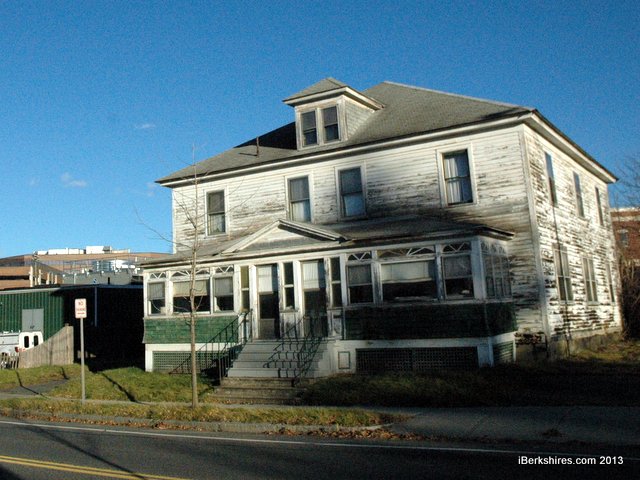
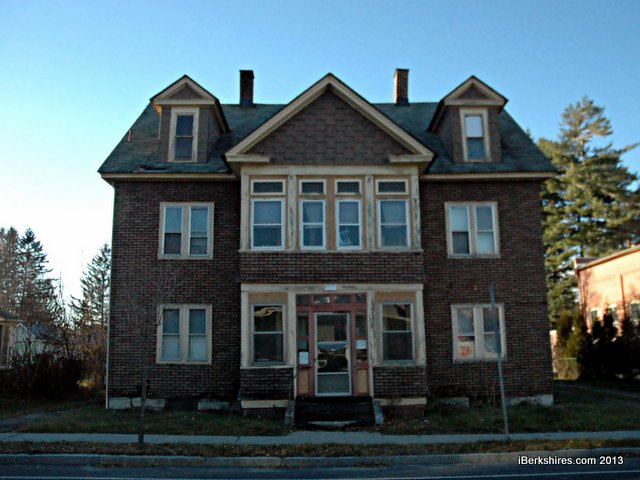
Seymour Street was once a Polish immigrant community but now two of those historic homes are being demolished for parking.

PITTSFIELD, Mass. — The city's Historical Commission raised no objection to the demolition of two dilapidated tenement houses on Seymour Street to make way for a Berkshire Medical Center parking lot.
 
Thomas Romeo, vice president of physician services for Berkshire Medical Center said the institution is preparing to purchase two abutting lots near the former Holy Family Church with the intent to demolish the two derelict buildings on either side of the street.
 
"We don't have any intention of building anything there, so it will probably be parking," Romeo told the commission on Monday.
 
Romeo said the houses, located opposite one another at 118-120 and 125-127 Seymour Street, have been largely vacant for years and are in a serious state of disrepair, one recently condemned by the Board of Health.
 
"They were afraid of the structure itself not being able to carry the load of the house," said Romeo, who explained that the owners were anxious to unload these troubled properties.
 
The former is an eclectic colonial revival built in 1923, with the latter a cross-gabled Queen Anne built in 1896, both historically associated with the Szymanski family in a neighborhood historically known for its close-knit Polish immigrants community.
 
Due to their age of more than 75 years, approval of the Historic Commission was sought under requirements of the City's 2007 Demoliton Delay Ordinance.
 
The commission found no major preservation significance in either the architecture or past ownership of the houses, beyond their being among many examples of a historic neighborhood dynamic which no longer exists.
 

The homes are more than 75 years old.

"It's part of the whole lost Polish community that was there," lamented commission member Kathleen Reilly. "It's a sad fact, but it's a fact that the whole neighborhood is pretty much gone." 
 
The land which the houses occupy at the end of Seymour Street was once owned by prominent resident Henry Kent, for whom nearby Kent Avenue is named.
 
A portion at one time was owned by Berkshire Street Railway, which initially used the adjacent church building before acquiring its larger East Street facility in 1912.
 
 In 1924, that structure became Holy Family Church, serving as an anchor for the evolving immigrant neighborhood around it.
 
"I didn't notice anything glaringly significant," said Todd Burdick of the vacant properties. "There doesn't seem to have any major historical association."
 
Berkshire Health Systems already acquired one adjacent property on Seymour, which now houses cooling equipment for the facility as well as parking, but Romeo said additional lots on either side would further benefit patient access to the hospital and nearby Crane Center.
 
"Our point is to try to get our patients as close to the building as we possibly can," Romeo said. 


125 127 Seymour Demo App & Historical Review by Joe Durwin


http://www.scribd.com/doc/185604671/118-120-Seymour-Demo-App-Historical-Review
 

If you would like to contribute information on this article, contact us at info@iberkshires.com.

Pittsfield Holds Second Master Plan Workshop

By Brittany PolitoiBerkshires Staff

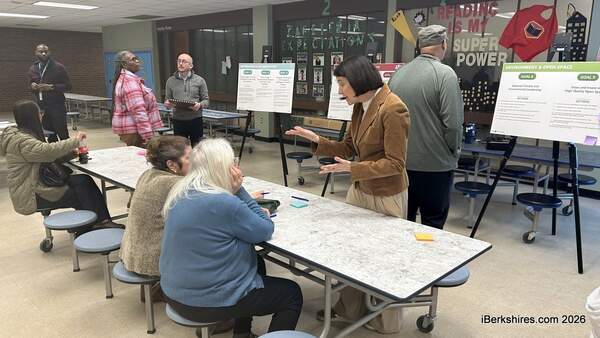
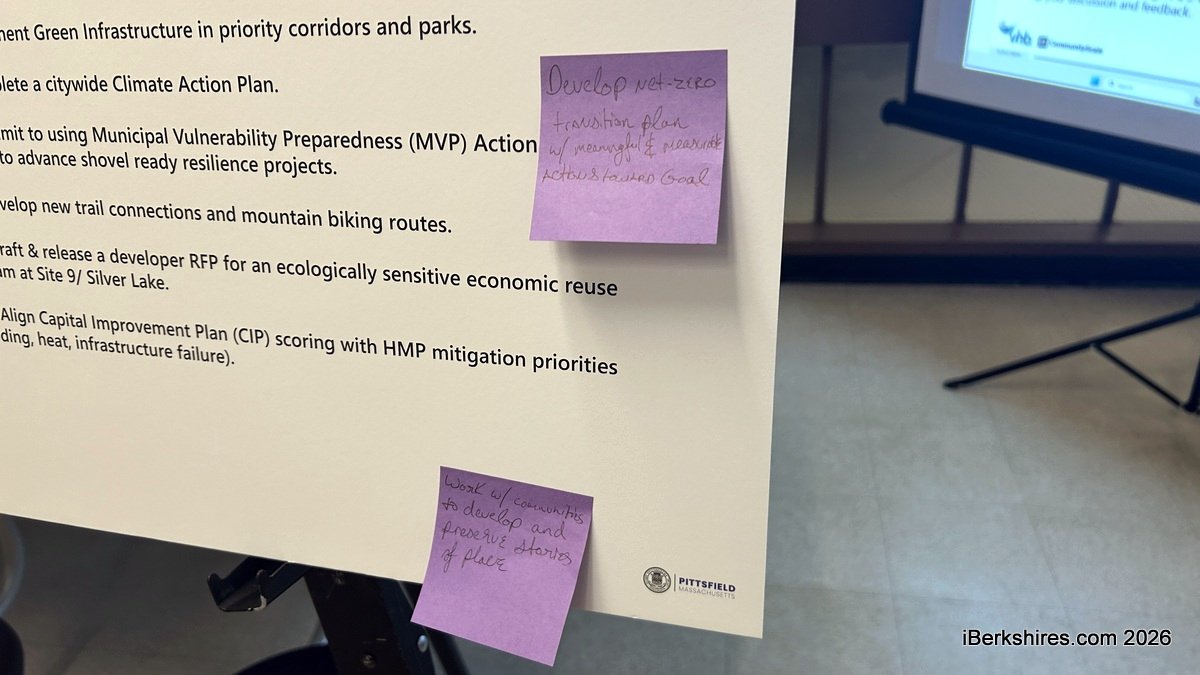
Participants added notes to the sectors  such as transportation, open space and neighborhoods  being reviewed by the Master Plan Steering Committee. 

PITTSFIELD, Mass.— The city is about halfway through developing its new master plan, and held a second community workshop this past Thursday. 

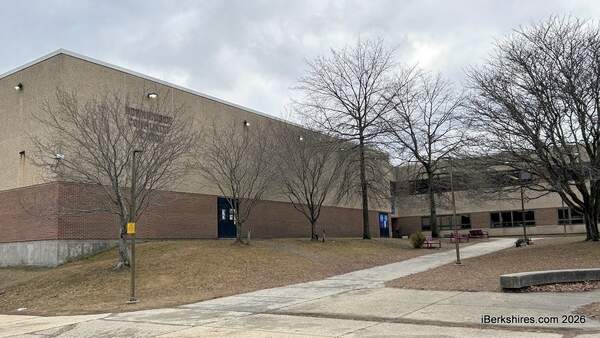
"Basically, we're talking to people from Pittsfield and trying to figure out, among a broad sector of issues that affect us, what is our goal and vision for the next 10 years, where we want Pittsfield to be in 10 years, and what changes do we want to see?" Director of Community Development Justine Dodds explained to about 20 community members and city staff at Conte Community School. 

"That will be broken down into some goals and objectives and then some measurable action items that we can all take as a community to move that forward."  

The Pittsfield Master Plan is the policy guide for future physical development, covering land use, infrastructure, sustainability, and more. The plan was last updated in 2009, and Pittsfield has engaged the VHB engineering firm and CommunityScale consultants to bring it through 2036. 

There have been two public listening sessions, a Master Plan Advisory Committee guiding the work, and small focus groups for each section. On poster boards, residents were able to see and mark the draft goals and actions under six themes: economic development, housing opportunities, transportation and infrastructure, environment and open space, neighborhoods and community, and governance and collaboration. 

In November 2025, community members participated in a similar exercise at City Hall. 

Transportation and infrastructure had several notes on them. Suggestions included using infrastructure to address the urban heat island effect, a light rail system, and continuing to implement Complete Streets standards for roadway construction projects. 

"I want to ride my bike to my friend's house safely," one respondent wrote. 

Under economic development, people suggested digital business infrastructure for the downtown, food hall opportunities, and nightlife opportunities. 

View Full Story

More Pittsfield Stories