Shepard Leaving BRTA Administrator Post
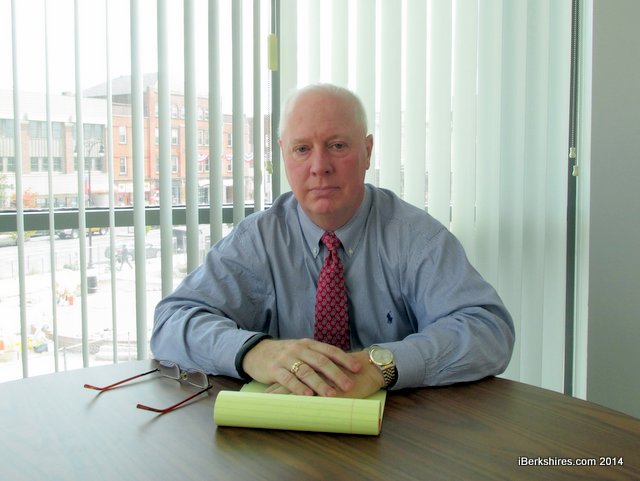 Gary Shepard has spent the last six years trying to modernize the county's public transportation system. Gary Shepard has spent the last six years trying to modernize the county's public transportation system. |
Shepard filed his resignation two weeks ago with the advisory board to take a position with a private, non-profit organization. Shepard didn't say exactly where he is going, instead leaving it to his new employer to make any type of announcement.
His last day with the BRTA will be on Oct. 31.
"A new opportunity presented itself. I think after six years we've accomplished quite a bit and it is time to move on," Shepard said in an interview on Monday.
The Adams native took over the BRTA from Charles MacNeil in 2008, becoming just the fifth BRTA administrator since its formation in 1974. He had previously headed the Pioneer Valley Transit Authority.
"I view this as more than just a transportation company. I view it — and I think my board and my staff agree — we're part of the economic development of this region," he said. "We can be a value-added component to the quality of life for the customers we serve."
Particularly, Shepard focused on improving customer service through creating flexible routes and bringing new technology into play.
"I'm very proud of the approach we've taken to go from passenger to customer. People using our vehicles were always called the passenger and I always felt that to be a passive term — in other words take it or leave it. That's not how I approach things. I consider them customers," he said. "I want to take them where they want to go and when they want to get there."
He remembers taking the bus in Adams when he was first hired. The bus traveled down Summer Street instead of Park Street and then onto Hoosac.The reason, he said, was because it used to stop at the welfare office — which had been torn down years ago.
"I knew those routes hadn't been looked at in a while," he said.
Immediately he launched a route analysis. From then on, every six months the organization surveyed riders to help make their experience better. The BRTA began switching out the large buses for smaller ones and implemented route deviations — meaning someone can call ahead and the bus will go off the scheduled route to make stops.
"Because of the new technology we have greater flexibility to be more responsive," Shepard said.
New technology will allow for more route variations through a dispatch and scheduling center. The organization just won a $2 million grant to open a call center, hiring veterans from Soldier On.
Meanwhile, automatic phone calls are set to be made for elderly and disabled people reminding them of the time and date of transportation. And in Williamstown, the organization launched the pilot program for Route 7 with buses equipped with QR codes and WiFi. The organization also launched Charlie Card technology for payments and passes.
Shepard said he placed a focus on working with municipalities and schools to figure out how the organization can service them. The organization also weathered the threat of a closure of the human service transportation scheduler office — which would have led to customers needing to call Fitchburg for service.
"We've got a six-year contract. Last year at this time, they wanted to eliminate us. We were able to make the case with the help of our vendors and we were awarded a six-year contract," Shepard said.
At the Intermodal Center, the organization also opened up classroom space with the Massachusetts College of Liberal Arts and Berkshire Community College. More than 1,000 students per year travel through the building — many of them using public transportation, Shepard said.
Throughout all of that, fare have stayed the same, though some of the structure has changed.
"We've done a lot but there is a lot more to do," he said.
Ideally, he wants half-hour headways and service on nights and on Sundays.
"We can do better. We want to do better. We want to provide later night services. Our customers want it. We don't provide any Sunday service," Shepard said.
He says if the state invested an additional $9 million over five years or $12 million over 10 years, the county could have the transportation system it needs. The Massachusetts Bay Transit Authority is automatically given 2.25 percent of the sales tax for improvements out east and Shepard says the pennies of that generated from Berkshire County would be $27 million — much more than the minimum needed.
"It is really about equity and fairness, economic and social justice," he said.
More than half of BRTA's riders use it to get to work — thus reducing the jobs they can have — and more than 64 percent of the riders do not have a car in their entire family.
"It is not like you are looking for new revenue. It is just keeping a piece of it that is generated here," Shepard said.
He credits the board and the staff for creating the plan to improve the system and working toward that end. He says he will be working hard up until his last day to keep the projects moving.
An administrator search committee has been formed and resumes for Shepard's successor were asked to be submitted by Monday afternoon.
Tags: administrator, BRTA, bus routes, transportation,