'Criminal' Reveals the Human Stories Behind the Crimes
NORTH ADAMS, Mass. — Podcasts about serial killers are part of the modern aural landscape, a combination of the heightened interest in true crime and the ability of anyone with a computer to create a podcast. Boasting journalistic chops and professional production, the podcast "Criminal" exists as the gold standard of the genre, not just telling stories about crime, but examining the human stories revealed through the crimes.
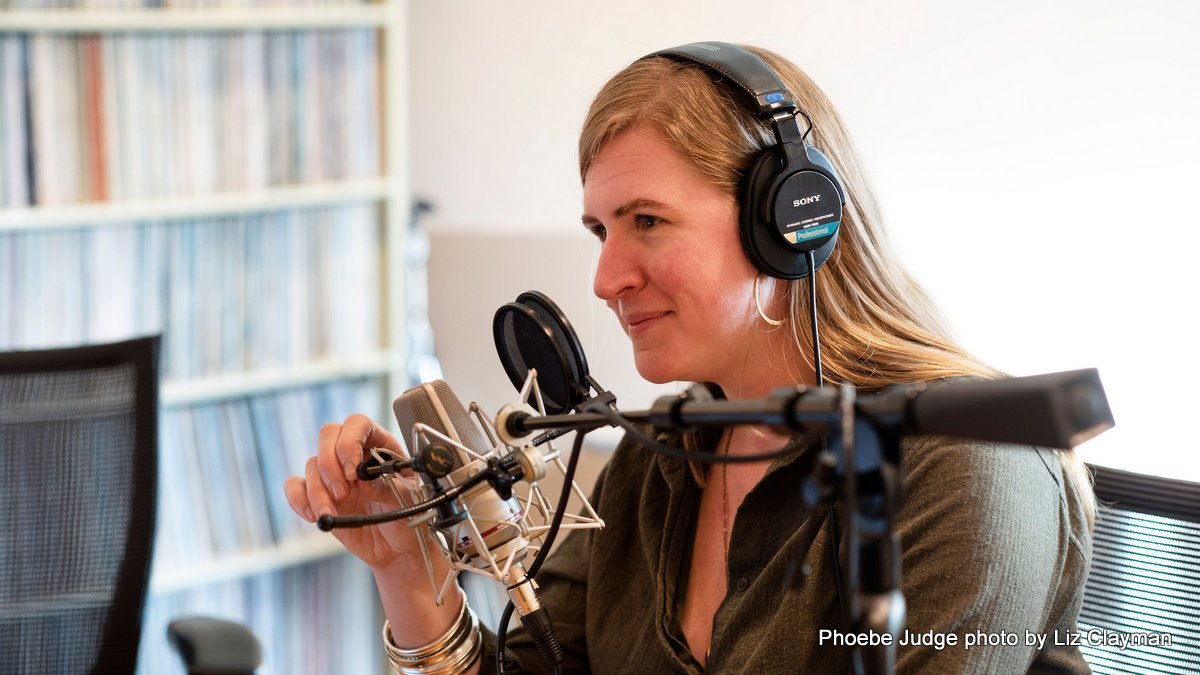
For the last six years, host Phoebe Judge has guided her audience through crimes in history and more recent transgressions. Sometimes they have a larger social significance, other times they bring to light curious characters. Sometimes they reveal the inner workings of those who commit crimes, other times how a life of criminality affects loved ones. Sometimes it's all about the victim. Regardless, it's always complex and always revealing.
The "Criminal" podcast will record live at Massachusetts Museum of Contemporary Art on Saturday, Feb. 22, at 8 p.m. The show is sold out, but the recorded episode will be made available.
The live version will feature brand-new, never before heard stories from Judge, with a live music score and original animations by illustrator Juliana Sanders.
"If you were to close your eyes at one of these live shows, you might think you are listening to an episode of 'Criminal,'" Judge said.
When Judge first sat down with producer Lauren Spohrer in 2014, not only was true crime not as huge of an American obsession as it currently is, but podcasting had not yet come into its own as a medium of huge popularity. "Serial," the true-crime investigative podcast that helped make the medium a mainstream sensation, was still a year off.
Judge was working at WUNC in North Carolina — an NPR station where the show is still produced — and had built her cred as a reporter there, and earlier in Mississippi and then in India. The show she was co-hosting, "The Story," had just been canceled and she and Spohrer were devising their next project.
"She said to me, 'People who listen to public radio also watch 'Law & Order.' They may not want to admit it, but they do. What about a crime show?'" Judge said. "When she said that, I thought it was the smartest thing because I realized we were never going to run out of stories. Crime stories are necessarily intriguing. And because we've taken this broad look, this broad definition of what the word crime is, we get to tell really rich and varied stories."
Judge admits that "Criminal" was partly a reaction against other shows that they felt sensationalized people's tragedies and "had some sort of end game of judgment — good, bad, right, wrong."
That approach set "Criminal" apart from what existed, and it helped once "Serial" became a hit and people sought out other podcasts. "Criminal" offered something more than retelling gruesome details or promising to solve cold cases. Its purview was nothing less than an examination of the human condition by finding out why people do the things they do.
"I've always said that someone who's a real real true-crime fan might be a little disappointed if they listen to 'Criminal,'" Judge said. "When we created 'Criminal,' there was nothing else like 'Criminal.' There was nothing that we were trying to mimic or copy. We created this just out of our own heads.
"And we have kept our heads down in the last five years and continued to make the show they originally set out to make. We haven't changed at all. Now true crime is all around us and I'm sure that we have benefited. It hasn't informed our show at all or the creation of our show. And I think that's good."
It has always been important to Judge that the show wasn't dominated by her voice or any other meant to lecture listeners. She wanted to include as many ordinary people's voices as possible.
"When I first started as a reporter in Mississippi I would spend my days talking to governors and lawyers and politicians and legal experts and that was all well and good," Judge said, "but what I quickly found out is that, whatever a politician or expert or governor is going tell you in two minutes, 15 seconds talking to the real human being who's talking about their own experiences is going to be the thing that someone remembers."
Judge believes that the best episodes of "Criminal" are the ones that feature her voice the least, the ones that allow her to get out of the way of the story. This also allows the show to give a voice to people who might not always have one. That's a huge concern to Judge and the rest of the "Criminal" staff.
"We're very aware of the fact if we had the last four episodes be about crimes that happened in New York City, all focused on white men over the age of 40, well we don't want to do another of those stories right now. We want to have a varied range of voices on our shows."
Judge's concern about diversity doesn't just stop with her own show. She looks over the current, vast landscape of podcasting and sees room for improvement.
"If you were to take a survey of the 350,000 podcasts or whatever there are on iTunes, I think that what we would say is that there's certainly a lack of diversity in those shows," she said. "There's a lack of diversity in the host. There's a lack of diversity in the topics. There's a lack of diversity in the people that are being interviewed or portrayed on those shows. I think that's a real gap. I think that this whole world is a little too white still. And I think that is something that should change."
As part of the effort to diversity, Judge would also like to see more efforts to bring in older audiences who less typically use the technology in their pockets to its full potential. It's an issue she's encountered in her own experience and she believes it's key to reaching untapped audiences.
Judge's view is that podcasting has matured in the last few years to include numerous shows that are equal in production, presentation, and journalism to what listeners are accustomed to on any NPR show. The quality is there, now's the time to expand awareness and access to a wider, more diverse audience that will appreciate it.
"Young people are on their phones, they're mobile, they're using things all the time," she said, "while you have people over 54 who, yes, they have an iPhone but they use it as a phone. They're not using this as their second arm. When I first told my father that I was going to start a podcast, his answer was, 'I don't understand how anyone's going to find it, Phoebe.' So I still think that we are dealing with a real education issue."
"I think also there's the problem of this word 'podcast.' What does that mean? I mean, that's a terrible word. I like the word 'show' and it happens to be you find it on your phone, you don't find it on the radio."
Judge and Spohrer have attempted to do their part in representation and finding new audiences through their latest show, which has a similar mission as "Criminal," but instead serves it through telling stories about love. It's called, appropriately, "This Is Love."
"Criminal," meanwhile, continues as ever, still refusing to change just to be part of the crowd, embracing nuance and trusting its audience. Judge just doesn't have it in her to be sensationalistic. Her approach is the exact opposite, and "Criminal" isn't likely to ever change from that.
"The greatest compliment I ever got about 'Criminal,' the one that has always stuck with me, is someone once said, 'Criminal is a quiet show and that's it,'" Judge said. "If that's all we are, then I'm happy to be that."
Tags: Crime, podcasts,