Baker Easing Occupancy Levels for Low-Risk Communities
BOSTON — Communities at low-risk for COVID-19 transmission will be able to increase occupancy at a number of indoor and outdoor venues beginning next week.
Gyms, museums, libraries and indoor and outdoor performance venues will be able to open to 50 percent occupancy; also allowed to open are such indoor recreational facilities such as laser tag and skating; and all retail fitting rooms.
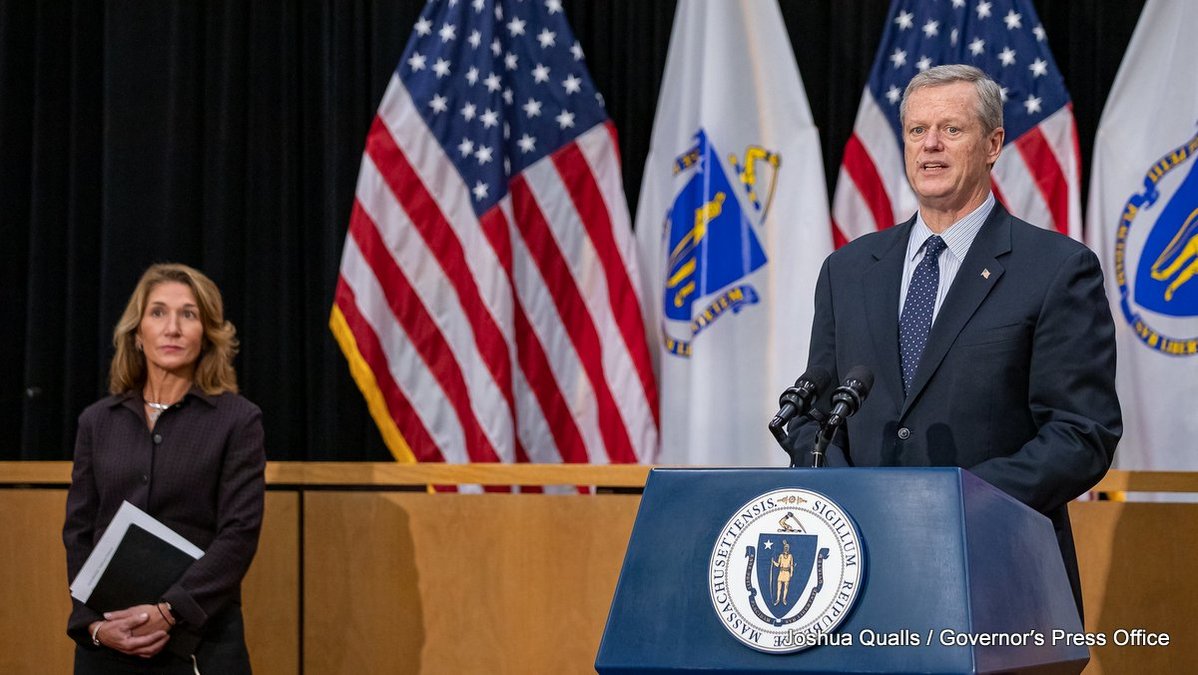
"Step 2 opens up a limited set of industries, certain types of indoor recreation that have not previously been permitted to operate since we announced the original emergency order back in March," Gov. Charlie Baker said on Tuesday. "We've learned a lot through our own tracing efforts and by watching other states who were hard hit by COVID early on as well. We've seen that the activities we're moving forward with today have not led to significant transmission in other states."
Baker said he has signed an executive order effective Monday, Oct. 5, that will allow communities that remain at low-risk for at least three cycles to enter Step 2 of Phase III in the state's reopening plan.
Communities considered "low risk" for transmission of the novel coronavirus are those that record eight or fewer positive cases per 100,000 residents per week. The state's tracking map records those municipalities as gray, green or yellow, levels that most Berkshire communities have been at for weeks. Communities are at higher risk — in the red level — will continue at Step 1. There are more than a dozen communities in the red level, all in the eastern part of the state.
People, businesses and venues will still be required to abide by social distancing, sanitation and masking. Phase III began in July.
"Most businesses have been open for a few months now, and the data makes clear that people have been acting responsibly in most circumstances," said Baker.
The governor touted the advances made in testing, including averaging 55,000 tests a day with a quick turnaround and a tracing program staffed by 1,900 people that is able to reach more than 90 percent of contacts within 48 hours.
"We were very limited in what we knew about the virus and the tools that we had available to keep people healthy, safe and informed," he said. "We've ramped up our public health resources to the point where we're now outperforming most other states in the country. Our testing capacity has greatly improved overall, and has climbed to unprecedented levels."
However, he added that individuals and families need to keep wearing face coverings avoiding large gatherings, staying home, especially when they feel sick and following the guidance and the advisories. The governor made a clear distinction between informal gatherings such as parties that have resulted in COVID-19 breakouts and the increasing occupancy in venues that have rules and structure. There were very few examples of significant spread in structured settings, he said.
In response to a question about roller rinks reopening, he said people still move around but there is guidance on how these venues should operate.
"That roller rink has guidance and that roller rink has protocols in place and everybody's going to be expected to follow them, and they're designed to do one thing, which is to keep people safe and limit the spread between and among the people who are there," Baker said. "I would much rather have that family do that than go participate in a big backyard barbecue, no masks, no social distancing, shared food off a buffet and all this stuff that time and time again, it's what's translating into clusters and case run up here in the commonwealth."
Health and Human Services Secretary Marylou Sudders said the partnership between state and local inspections on "vigilant monitoring" has been successful in bringing down transmission rates in high-risk communities.
"Our team is very active and engaged with these municipal leaders and their teams, especially important as we head into the fall and winter," she said. "These communities include Chelsea, Everett, Lawrence, Lynn, Revere and Framingham, working closely with municipal leadership, local mayors' public health officers and police chiefs, this collaborative effort is focusing on enforcement, such as ensuring gatherings and homes and public settings remains small, and within required guidance limits.
"Over the past five weeks, [Alcoholic Beverages Control Commission] and [Division of Professional Licensure] have visited or inspected announced to 5,400 places of businesse. Enforcement operations were conducted in 75 municipalities, where an estimated 950 licensed establishments were checked. Nearly all were found to be in compliance."
Effective Oct. 5, a limited number of sectors will be eligible to reopen, with restrictions, in Step II of Phase III for lower risk communities only:
- Indoor performance venues will be permitted to open with 50 percent capacity with a maximum of 250 people
- Outdoor performance venue capacity will increase to 50 percent with a max of 250 people.
- For arcades and indoor and outdoor recreation businesses, additional Step II activities like trampolines, obstacle courses, roller rinks and laser tag will also be permitted to open and capacity will increase to 50 percent.
- Fitting rooms will be permitted to open in all types of retail stores.
- Gyms, museums, libraries and driving and flight schools will also be permitted to increase their capacity to 50 percent.
Revised Gatherings Order:
- The limit for indoor gatherings remains at a maximum of 25 people for all communities.
- Outdoor gatherings at private residences and in private backyards will remain at a maximum of 50 people for all communities.
- Outdoor gatherings at event venues and in public settings will have a limit of 50 people in Step I communities, and a limit of 100 people in lower risk, Step II communities.
Tags: COVID-19,
More Coronavirus Updates